Stucco Repair in Vancouver
· Serving Vancouver, BC
Allweathercoating repairs cracked, water-damaged, and deteriorating stucco on strata and multifamily buildings across Vancouver, North Vancouver, West Vancouver, and Burnaby, with texture-matched patching and a moisture assessment before any crack gets sealed over.
- IRATA Certified
- SPRAT Certified
- WorkSafeBC Compliant
- WCB & Liability Insured
- Texture-Matched Repairs
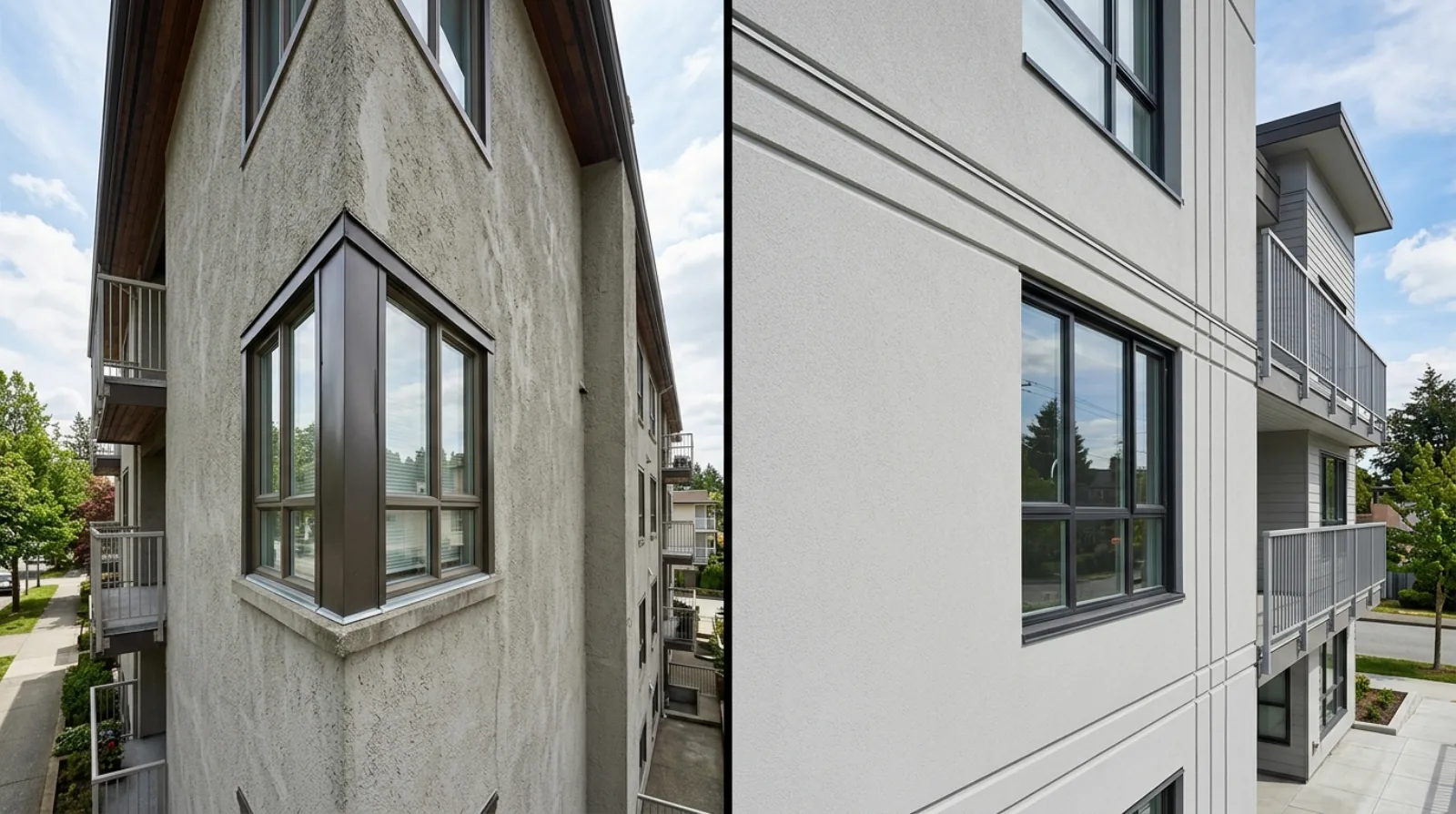
"Water was getting behind the stucco at three window corners on our low-rise and staining the drywall inside. Allweathercoating traced it to failed sealant, not a stucco problem, fixed the actual cause, and the crack patches are invisible from the parking lot."
Common Problems Solved
- Hairline and structural cracking that lets wind-driven rain track behind the stucco into the wall assembly.
- Rust staining bleeding through the surface, signalling corroding lath or fasteners underneath.
- Soft spots or hollow sounds when the wall is tapped, meaning water has already reached the sheathing.
- Mismatched patches from previous DIY or low-quality repairs that stand out from the original texture.
Benefits for Property Managers
- Texture-matched patching that is not visible from the street once painted.
- Moisture testing before repair, so water already in the wall is not sealed in.
- Rope access reaches upper-storey cracks without scaffolding on most buildings.
- Distinguishes cosmetic cracking from a real water-damage problem before you pay for the wrong repair.
Our Execution Process
Moisture Assessment
Test suspect areas with a moisture meter before any crack is sealed, so we are not trapping water that has already entered the wall.
Cause Diagnosis
Determine whether the crack is cosmetic movement cracking or a symptom of a failed sealant joint, missing control joint, or deeper water damage.
Cut Back & Prep
Remove loose or delaminated stucco back to sound substrate, treat any exposed lath corrosion.
Texture-Matched Patch
Rebuild the section with the correct aggregate size and application technique so the repair disappears once painted.
Elastomeric Recoat
Where the whole elevation needs it, apply a breathable elastomeric coating to bridge hairline cracking and extend the service life of the wall.
Stucco Crack and Water Damage Repair for Metro Vancouver Buildings
Stucco is a durable, low-maintenance cladding, but it is not immune to Metro Vancouver's wind-driven rain and the building movement that comes with seasonal temperature swings. Most stucco damage falls into two categories: cosmetic cracking from thermal and settlement movement, and water damage where a crack, a failed sealant joint, or a missing control joint has let moisture behind the stucco face. Treating both the same way is how repairs fail. A crack sealed over active water damage traps the moisture inside the wall and accelerates rot; a full moisture-driven repair applied to simple cosmetic cracking wastes money on a wall that was never actually letting water in.
Diagnosing the Crack Before Repairing It
Not every stucco crack means the same thing. Fine map cracking spread evenly across a wall face is usually shrinkage or thermal movement and is mostly cosmetic, though it should still be addressed with an elastomeric coating over time to stop water absorption. Vertical cracks at window corners, horizontal cracks along missing or failed control joints, and any crack showing rust staining are higher priority, since these are the locations most likely to be letting water track behind the cladding. We test moisture content at suspect areas before committing to a repair method, because the correct fix for a dry cosmetic crack and a wet, water-damaged section are not the same job.
Texture-Matched Patch Repair
The visible quality of a stucco repair comes down to the texture match. Vancouver stucco ranges from smooth sand finish to heavy dash or knockdown texture, and matching the aggregate size and application technique to the original is what makes a patch disappear once painted rather than remaining visible from the street for the life of the building. We cut back to sound substrate, address any corroded lath or fasteners found underneath, and rebuild the profile in the correct number of coats before finishing to match.
Rainscreen and EIFS Considerations
Older Vancouver buildings, particularly those built before rainscreen requirements took effect in the city's building by-law in the late 1990s, often have face-sealed stucco with no drainage cavity behind it, which puts the entire weather-resistance burden on the stucco surface and its joints. Newer buildings may have EIFS (Exterior Insulation and Finish System), a synthetic stucco look-alike over rigid foam insulation that requires a different repair approach entirely, since any crack is a more direct path to the foam substrate behind it. We assess which system a building actually has before scoping a repair, since the two are frequently confused from the street.
Elastomeric Coating as a Preventive Measure
For a stucco wall showing widespread fine cracking rather than isolated problem areas, an elastomeric coating applied over the full elevation is often more cost-effective than patching dozens of individual hairlines. The coating stretches to bridge minor cracking and adds a breathable, weatherproof layer over the whole surface. See our exterior coatings service for the full scope of that option.
How Much Does Stucco Repair Cost in Vancouver?
Cost depends on the extent of the cracking, whether water damage has already reached the sheathing, and the access method required. Isolated crack repairs on a low-rise building are a modest cost per opening. A wall showing widespread cracking, or repairs that require cutting back into water-damaged sheathing and framing before rebuilding the stucco, cost significantly more and may extend into structural carpentry. We provide itemized quotes after an on-site assessment rather than a flat per-square-foot number, since the diagnosis genuinely changes the scope.
Common Questions About Stucco Repair in Vancouver
How do I know if a stucco crack is just cosmetic or a real water problem?
Fine, hairline map cracking spread evenly across a wall face is usually cosmetic movement cracking. Vertical cracks at window corners, horizontal cracks along missing control joints, any crack with rust staining bleeding through, or soft spots when you press on the wall all point to actual water damage behind the surface. We test moisture content at suspect areas before repairing, because the correct fix is different for each case, and sealing over an active water problem traps the moisture inside the wall.
Can you match the texture of my existing stucco?
Yes. We match the aggregate size and application technique to the surrounding surface, whether it is smooth sand finish, heavy dash, or knockdown texture, so the patch is not visible once painted. Mismatched texture is the most common complaint we hear about previous repairs from other contractors.
What is the difference between EIFS and traditional stucco, and does it change the repair?
Traditional stucco is a cement-based finish over metal lath and a moisture barrier on the structural sheathing. EIFS looks similar from the street but is a synthetic-acrylic finish over rigid foam insulation. Every crack in EIFS is a more direct path to the foam substrate behind it, so EIFS repairs need to match the exact original system and are less forgiving of delay than traditional stucco. See our <a href="/resources/eifs-vs-traditional-stucco-bc-multifamily/">EIFS vs. traditional stucco guide</a> for the full comparison.
Safety & Access Considerations
Performing stucco repair in vancouver requires meticulous planning under WorkSafeBC regulations. Our operations are governed by qualified SPRAT/IRATA technicians who conduct risk assessments, verify structural roof anchors, and set up secondary backup systems. We coordinate ground barricades to isolate work areas, keeping residents, shoppers, and pedestrians safe on the ground.
View Our Safety StandardsRelated Guides & Resources
- Exterior Coatings Resource Hub — Elastomeric recoat as a preventive follow-up to stucco crack repair
- Stucco Crack Repair Before the Wet Season — Which cracks matter and the pre-storm repair window
- EIFS vs. Traditional Stucco — How the two systems differ and fail differently
Frequently Asked Questions
How do I know if a stucco crack is just cosmetic or a real water problem?
Fine, hairline map cracking spread evenly across a wall face is usually cosmetic movement cracking. Vertical cracks at window corners, horizontal cracks along missing control joints, any crack with rust staining bleeding through, or soft spots when you press on the wall all point to actual water damage behind the surface. We test moisture content at suspect areas before repairing, because the correct fix is different for each case, and sealing over an active water problem traps the moisture inside the wall.
Can you match the texture of my existing stucco?
Yes. We match the aggregate size and application technique to the surrounding surface, whether it is smooth sand finish, heavy dash, or knockdown texture, so the patch is not visible once painted. Mismatched texture is the most common complaint we hear about previous repairs from other contractors.
What is the difference between EIFS and traditional stucco, and does it change the repair?
Traditional stucco is a cement-based finish over metal lath and a moisture barrier on the structural sheathing. EIFS looks similar from the street but is a synthetic-acrylic finish over rigid foam insulation. Every crack in EIFS is a more direct path to the foam substrate behind it, so EIFS repairs need to match the exact original system and are less forgiving of delay than traditional stucco. See our <a href="/resources/eifs-vs-traditional-stucco-bc-multifamily/">EIFS vs. traditional stucco guide</a> for the full comparison.
When is the best time of year to repair stucco cracks in Vancouver?
Late summer, roughly August and September, is the practical working window. Sealants and patching compounds need dry substrate and temperatures above 5°C to cure properly, which rules out most outdoor stucco work from mid-November through March. Repairing cracks before the October wet season starts is far cheaper than dealing with water damage that has already gotten in.
Do you repair rope-access stucco cracks on high-rise buildings?
Yes. For upper-storey cracks on strata towers, our IRATA and SPRAT certified technicians rig from certified roof anchors and reach the repair area without the cost or disruption of scaffolding, following WorkSafeBC Part 11 two-rope requirements throughout.
Does a strata need an engineer to approve stucco crack repair?
For typical hairline and small crack repairs on a wood-frame low-rise, engineering sign-off is usually not required. If the cracking indicates structural movement or settlement, or if the repair requires opening the wall assembly to inspect or rebuild it, a building envelope engineer should assess the cause before repair begins.
Can stucco cracks be sealed without repainting the whole wall?
Isolated crack repairs can often be spot-patched and touched up without a full repaint, provided the paint match is close and the patches are limited in number. A wall with widespread cracking usually looks better, and holds up longer, with a full elastomeric recoat across the elevation rather than a patchwork of individual touch-ups.
What causes stucco cracking on Vancouver buildings?
Most cracking comes from building movement: thermal expansion and contraction, settlement, and seasonal moisture cycling. On older Lower Mainland stucco from the 1980s and 1990s, missing control joints are the single biggest reason walls develop long cracks. On newer rainscreen stucco, cracking usually traces movement at window openings, panel edges, and transitions between different materials.
Protect Your Strata or Commercial Building Today
Contact Vancouver’s commercial exterior maintenance specialists. Get fully insured high-rise window cleaning, waterproofing, and building envelope repair.