Roof recover vs. full tear-off on a Vancouver low-slope roof: when an overlay is honest and when it hides a problem
A recover is only defensible when the existing roof is a single layer, a moisture scan shows it is dry, and the deck is sound and able to carry the extra weight. In that case it saves real money and disruption, and a recover over a sound dry roof can last the full service life of a new membrane. But if the assembly is wet, the deck is suspect, or the roof already carries two layers, an overlay seals in a problem and general code practice will not allow it anyway, since a low-slope roof is capped at two total coverings. The cheaper number on the quote is meaningless until you know the layer count and the moisture condition, because those two facts decide which option is actually cheaper over the life of the roof.
A recover suits a building with a single, sound, dry roof and a reserve fund that is not yet ready for a full replacement. It buys planned years at lower cost, as long as the council budgets the future tear-off as a second, mandatory event. A tear-off suits a roof that already has two layers, shows moisture in a scan, has a questionable deck, or is simply at the end of its life. It costs more today, but it documents and repairs the deck, resets the layer count to zero, and gives you the broadest warranty. This guide walks through how a roofer confirms which case you are in before the budget is set.
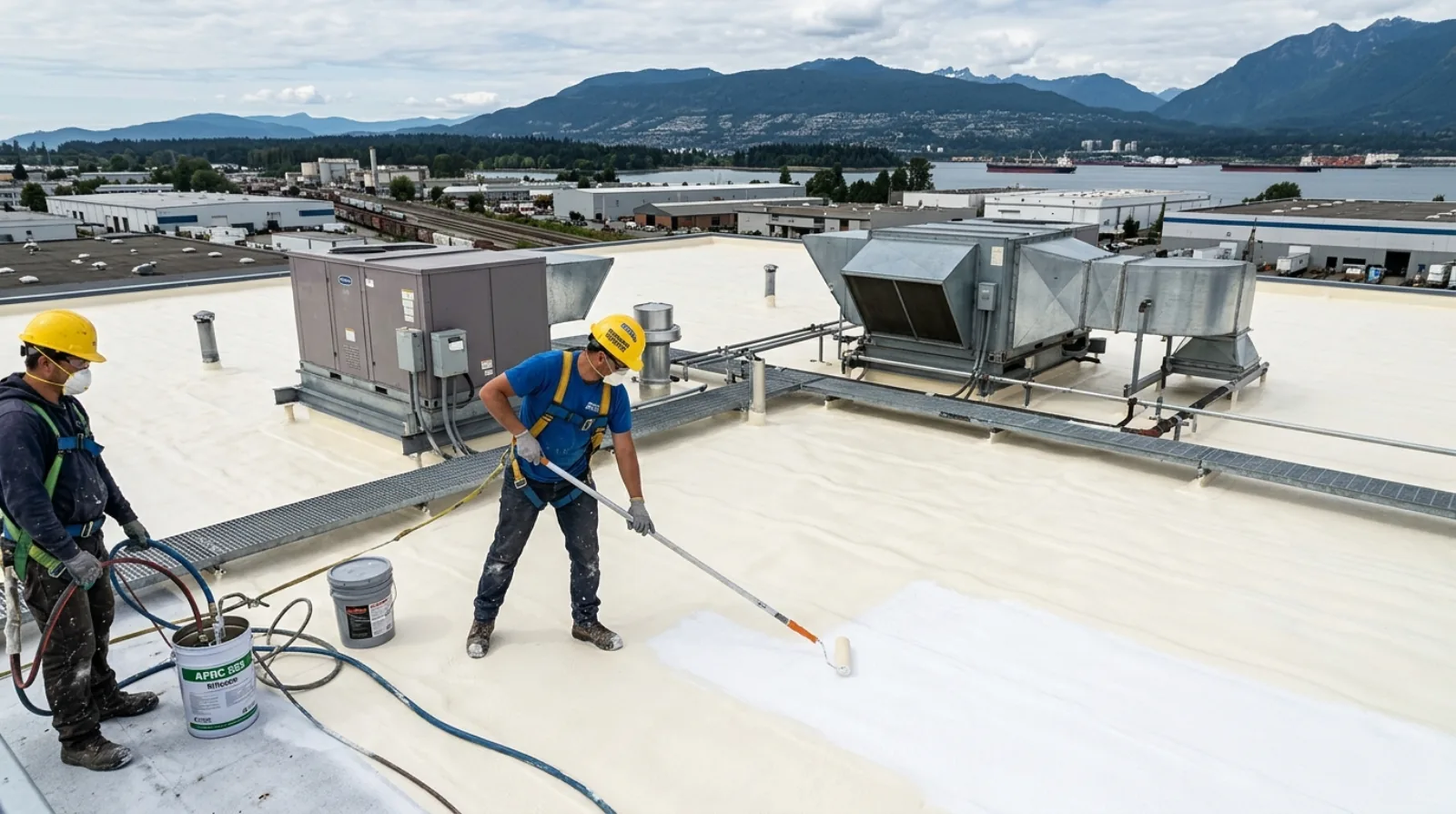
Roof recover (overlay)
A new membrane installed over the existing roof, without stripping the old assembly back to the deck. Usually a cover board or insulation overlay goes down first, then the new membrane. Faster and cheaper on paper, but only valid under a narrow set of conditions.
Full tear-off and replacement
The existing roof is stripped down to the structural deck. The deck and any wet insulation are inspected, then repaired or replaced, and a complete new assembly (vapour barrier, insulation, cover board, membrane) is installed over a known, dry base.
How a roof recover actually works
A recover leaves the old roof in place and installs a new membrane over it. In practice it is not just gluing a new sheet onto the old one. A proper recover starts by removing loose gravel, blisters, and failed flashing, then laying a cover board (usually a firm, moisture-resistant board) so the new membrane has a smooth, dry, uniform surface to bond to. On some assemblies an insulation overlay board goes down first to add thermal value and smooth out the old surface further. Then the new membrane goes on: mechanically fastened, adhered, or torch-applied, depending on the system.
On paper this is attractive. No tear-off labour, no bins of old roofing hauled through the strata loading bay, no deck sitting exposed to a Vancouver rain cell overnight. The catch is that you never see what is underneath. The new membrane follows the shape of the existing roof, and any wet insulation, rotted wood deck, or corroded metal decking stays sealed in, out of sight, still working against the building. A recover is a good roof only when what it covers is already a good roof.
How a full tear-off works
A tear-off strips everything above the structural deck. The old membrane, the old insulation, the old cover board, and the failed flashings all come off and get hauled away. With the deck open, the crew inspects it: they look for corrosion on a metal deck, rot or delamination in a wood deck, fastener pull-out, and low spots that pond water. Anything wet or failed is repaired or replaced while it is visible. Then a full new assembly is built from the deck up: a vapour or air barrier, insulation, a cover board, and the new membrane, all installed to the manufacturer specification.
The value of a tear-off is not the new membrane, which you get either way. It is the inspection and the fresh, dry base. You start the new roof over a known condition instead of an unknown one, and you document the deck so the next council knows what they have. That is why a tear-off is the honest answer whenever there is real doubt about what the old roof is hiding.
The layer limit is the first thing to confirm
General building code practice in Canada, following the International Building Code and most Canadian jurisdictions, caps a low-slope roof at two total coverings. The original roof, plus one overlay. Once a roof carries two layers, a recover is off the table and the roof has to come off to the deck. The limit exists for good reasons: stacked layers add dead load the deck was never sized for, they trap heat and moisture between membranes, and a multi-layer roof is very hard to diagnose when it starts to leak.
So before anyone talks price, confirm how many layers the roof already has. It is not always obvious from the surface, and old work orders are not always accurate, especially on buildings from the leaky-condo era where roofs were sometimes patched and overlaid more than the paperwork shows. A test cut through the assembly settles it. Because this is a hard limit rather than a preference, verify the specific requirement with your local building authority and the membrane manufacturer, not with a rule of thumb. In BC, roofing provisions for smaller Part 9 buildings live in Section 9.26 of the BC Building Code, and RCABC roofing practice standards govern most commercial and strata work. If you are weighing this against a broader repair scope, our page on envelope repair vs. recladding covers how a roof decision fits into a larger building plan.
Trapped moisture is the risk that gets people
A recover seals in whatever water is already in the assembly. If the existing insulation is wet and you overlay a new membrane, that moisture has nowhere to escape. It keeps degrading the insulation and attacking the deck from below while the roof looks perfect from above. Wet insulation also loses most of its thermal value, so the building pays more to heat and cool while the hidden damage grows. By the time it shows up as a leak or a soft deck, you are looking at a full tear-off you thought you had deferred for years, plus deck repair you could have caught earlier.
On a metal deck the risk is sharper. Water held against steel under wet insulation corrodes it, and corroded decking loses structural capacity you cannot see from the roof surface. On a wood deck the same trapped water rots the sheathing. Either way, the overlay that was supposed to save money becomes the reason a roof project turns into a structural repair. This is not a rare edge case in Metro Vancouver. It is the normal outcome of overlaying a wet roof in a wet climate.
Why the moisture survey is the deciding test
You cannot judge a recover by eye. The deciding test is a roof moisture survey, done before any decision. There are three common methods, and a good roofer uses them together. An infrared scan reads temperature differences on the roof surface after the sun sets, because wet areas hold heat differently than dry insulation, so they show up as warm patterns. It has limits: shaded areas and cool overcast evenings can hide the pattern, which is why it is verified. A nuclear gauge or a capacitance meter reads moisture directly, the nuclear gauge by sensing hydrogen in trapped water and the capacitance meter by reading how easily current passes through wet versus dry material. Core cuts, small sections cut out of the roof, confirm what the meters found and also reveal the true layer count. ASTM C1153 is the standard that governs how infrared survey results get verified with cores.
The survey is the difference between a defensible recover and a gamble. A clean, dry scan means an overlay is a reasonable use of strata funds. A scan showing saturation means the recover would just be hiding a problem. This one step, more than any other, separates a recover that lasts from one that fails in a few years. If water is already tracking into the building, our waterproofing team can help find the source before any roofing approach is chosen.
Added dead load and the structural check
A recover is not weightless. You add a cover board, sometimes an insulation overlay board, and a new membrane on top of the roof that is already there. On a newer building designed with headroom in the structure, that added dead load is usually fine. On an older deck sized decades ago for a single roof, it may not be, and it needs an engineer to confirm the deck can carry it before you overlay. This check matters most on the buildings people most want to recover: older strata and commercial roofs where the budget is tight and the structure was never generous to begin with.
A tear-off sidesteps this problem, because you remove one roof and install one roof, so the deck carries roughly what it always did. That is another reason a roof already at two layers has to go to the deck: a third layer piles even more weight onto a structure that has already taken on more than it was designed for. When a proposal recommends a recover, ask whether the deck load was checked. If the answer is a shrug, the scope is not finished.
Why the BC coast changes the answer
Metro Vancouver sees over 1,100 mm of rain a year, and low-slope roofs sit under that rain for a large share of the calendar. Aging assemblies here take on water in the insulation more often than owners expect, especially where drainage is poor or flashings have failed. That raises the odds that any given old roof is holding water, which is exactly why the moisture survey is not optional on the coast. The same climate shrinks the window for a tear-off, because the deck cannot sit open through a rain event, so tear-off work has to be staged by section and timed around dry days.
Elevation adds freeze-thaw. Buildings higher up on the North Shore and in the eastern suburbs freeze overnight in winter. Water trapped in a roof at those elevations freezes, expands, and cracks the assembly, then thaws and drives deeper, doing more damage each cycle. On a higher-elevation building, trapped moisture is not just a slow rot problem, it is an active freeze-thaw problem, and that tilts the honest answer toward a tear-off even when the layer count alone would allow an overlay. The wetter and colder the exposure, the less forgiving a recover over a marginal roof becomes.
How each option fails early
A recover fails from two directions. From below, trapped moisture in wet insulation keeps working on the deck and shortens the life of the new membrane, so a roof that should last decades starts leaking in a few years. From above, any detail left unresolved, a failed parapet flashing, a cracked penetration, a bad drain, leaks the same as it did before, and because the water now runs under a fresh membrane, it travels sideways and is harder to trace. Most failed recovers in Metro Vancouver trace back to a skipped moisture survey or a detail that was papered over instead of repaired.
A tear-off fails mainly from workmanship, not hidden conditions. The common failures are bad detailing at parapets and penetrations, seams that are not properly welded or torched, a deck repair skipped to save a day, or a new roof laid over the same ponding without correcting the slope. The difference is that these are visible during the work. A roof consultant or a diligent building envelope contractor inspecting the job can catch them before the roof closes up, which is why third-party inspection on a tear-off pays for itself.
What the cost actually depends on
On a recover, the cost drivers are the cover board and membrane system, the amount of failed flashing and detail work that has to be redone, and the moisture survey and structural check. Tear-off is stripped out, so labour and disposal are lower. The number that quietly decides everything is whether the survey was done, because an overlay on a wet roof is not cheap at all once you add the eventual tear-off it forces.
On a tear-off, the drivers are the tear-off labour and disposal, the new assembly, the detail work, and a deck-and-insulation contingency for whatever the crew finds once the roof is open. That contingency is the honest part of a tear-off quote. A proposal with no allowance for deck repair is either optimistic or hiding the number. We do not publish dollar figures because they swing too much with roof size, access, membrane type, and what the deck turns out to need, but the drivers above are what separate a real quote from a low-ball one. For a fuller picture of how these scopes are priced and staged, see our building envelope repair service.
Lifecycle cost, not just this year's price
The right way to compare the two is over the full life of the roof, not on the quote for this year. A recover over a sound, dry, single-layer roof can deliver a full new-membrane service life at a lower price, which makes it genuinely cheaper over the cycle for that building. A recover over a compromised assembly is the opposite: you pay for the overlay, the trapped moisture cuts its life short, and then you pay for the full tear-off you were trying to avoid, plus the extra deck damage the trapped water caused in the meantime. That is why a cheap recover over a wet or two-layer roof is a false economy, not a saving.
There is also the layer math. Every defensible recover still uses up the one overlay the code allows, so it locks in a mandatory tear-off as the next roofing event. A strata council doing lifecycle planning should treat the recover and that future tear-off as two line items, both in the depreciation report, so the reserve fund is sized for the real remaining cost, not just the low number this year. Our sibling guide on parkade traffic membrane vs. sealer walks through the same lifecycle logic for a different assembly.
Warranty reality
A warranty on a recover is only as good as the substrate it sits on. Membrane manufacturers set conditions for a recover, and a common one is that the existing assembly must be dry and sound. The RCABC RoofStar Guarantee, which covers a lot of commercial and strata roofing in BC, requires the existing roof to be demonstrably dry and free of wet material, so wet insulation has to be removed before the guarantee applies. Overlay a wet roof to save the removal cost and you can end up with a new membrane that carries no meaningful warranty, because the substrate never met the manufacturer condition.
A tear-off makes the warranty simple. With a known dry deck and a new assembly built to specification, a full material and labour warranty, including a RoofStar Guarantee, is straightforward to obtain. So if the warranty coverage you want depends on a documented dry substrate, that requirement by itself can push the honest answer toward a tear-off. Get the manufacturer warranty terms in writing before you approve a recover, and confirm the installer actually meets the substrate condition, not just the membrane spec.
Where a recover is genuinely the right call
None of this means recover is the lazy answer. On the right roof it is the smart one. When the roof is a single covering, a moisture survey confirms it is dry, the deck is sound and has the load capacity, and drainage works, a recover gives you a full new-membrane life at lower cost and far less disruption to residents. That is a legitimate use of strata funds, especially when the reserve is not ready for a full replacement and the depreciation report supports buying planned years. The honest requirement is only that the council budget the future tear-off as a second event, because the overlay uses the one allowed layer.
The mistake is not choosing a recover. The mistake is choosing it without the two checks, or choosing a tear-off on a roof that did not need one. Both errors come from deciding on price instead of on the moisture condition and the layer count. Get those facts, and the right call for that specific roof follows from them.
What neither option changes
Neither approach fixes a roof that is leaking through its details rather than its field. Failed flashings, open parapet joints, and cracked penetrations still have to be addressed regardless of whether you recover or tear off, and a new membrane laid over an unresolved detail leak will disappoint fast. The same goes for drainage: a roof that ponds because of low spots or blocked drains needs the slope and the drains corrected, not just a new surface over the same puddles.
For a building where the roof problem is really one symptom of a wider envelope issue, the roof decision should be scoped alongside the walls, windows, and sealant, not in isolation. Our building envelope repair team assesses the roof, the details, and the rest of the assembly together, and our building restoration crews handle the larger resets, so the roofing budget is based on the whole picture instead of one surface. If your building envelope decision is really about walls, the sibling guides on rainscreen vs. face-sealed walls and torch-on vs. single-ply membranes cover the related choices.
How to read a roofing proposal for this scope
A sound proposal shows its work. It states the confirmed layer count and how it was verified (a test cut, not a guess), it includes or references a moisture survey with the method used, it describes the deck and drainage condition, and it names the cover board and membrane system with the manufacturer warranty terms in writing. It addresses the details by name: parapets, penetrations, drains, and flashings. On a recover it confirms the deck load was checked. On a tear-off it carries a contingency for deck and insulation repair found once the roof is open.
A weak proposal leads with a low number and leaves those items out. It states the layer count with no test cut, skips the survey, says nothing about the deck, glosses over the details, and treats the recover as a permanent fix rather than one that uses the allowed overlay. When two bids are far apart, the cheaper one has usually dropped the survey, the cover board, the detail work, or the deck contingency, which are the exact items that decide whether the roof lasts on the coast. A proposal that omits them is not cheaper, it just moves the cost to a future emergency.
Four Metro Vancouver roofs and the honest call
1980s concrete-frame commercial building, Burnaby, single-layer roof, tight reserve fund
A four-storey concrete office building near Metrotown has a low-slope roof with one original built-up covering. There are no active leaks. The strata is not ready for a full roof replacement this year. Before scoping anything, the roofer confirms one layer by test cut and runs an infrared scan backed by a few core cuts.
Recover (the cheaper option) is the honest call here.
The scan comes back dry, the deck is a sound concrete slab with plenty of load capacity, and the roof is a single layer. All the conditions for a defensible overlay are met. A cover board and a new membrane over the existing roof gives a full new-membrane service life at lower cost and disruption, and it keeps the parkade and loading bay clear. The council should still budget the future tear-off as a planned second event, because this overlay uses up the one layer the code allows. This is the case people wrongly assume is always a corner-cut. It is not. When the roof is sound, dry, and single-layer, recover is the right economic choice.
Wood-frame four-storey strata, North Shore, north-facing low-slope roof over walkways
A leaky-condo-era wood-frame building in North Vancouver has a low-slope roof section over exterior walkways. Residents report occasional ceiling stains after heavy rain. Old work orders mention a patch and a partial overlay done years ago. A test cut finds two membrane layers, and the moisture scan shows saturated insulation across the north edge where a parapet flashing has failed.
Full tear-off to the deck, with the parapet detail rebuilt.
Two facts decide it. First, there are already two layers, so an overlay is not code-compliant and a third layer cannot go on. Second, the scan shows wet insulation, which means water is already feeding the wood deck below. On a wood-frame North Shore building with steady coastal rain, saturated insulation left in place keeps rotting the deck and would void any warranty. The right scope strips to the deck, replaces the rotted sheathing, corrects the parapet flashing that caused the leak, and builds a fresh assembly. Skipping this to save money would seal the rot in and turn a roof project into a structural repair later.
Downtown mixed-use tower, West End, metal deck roof with unknown history
A mid-rise residential tower in the West End has a low-slope roof over a steel deck. The building changed property managers twice, and no one has clear records of past roofing work. There is one slow leak near a mechanical curb. The council wants the cheapest fix.
Do the survey first, then most likely tear-off, but let the scan decide.
You cannot price this honestly without the two checks. A test cut reveals the real layer count, and the scan reveals whether the metal deck is being corroded by trapped moisture. Metal decking is unforgiving: once water sits against it under wet insulation, it corrodes and loses capacity, and you cannot see that from above. If the scan is clean and it is a single layer, a recover with the mechanical curb detail rebuilt is defensible. If the scan shows moisture at the curb and along the deck, tear-off is the only safe path, because sealing water against a corroding steel deck is how a slow leak becomes a deck-replacement job. The cheapest fix is whatever the survey supports, not whatever costs least on the quote.
Higher-elevation strata, freeze-thaw exposure, ponding at the drains
A strata building at higher elevation on the North Shore sees freezing overnight in winter. Its low-slope roof ponds water around two interior drains. The scan shows moisture rings spreading out from both drains, and a test cut confirms a single layer with wet insulation in those zones.
Tear-off of the affected assembly, with drainage corrected.
It is a single layer, so on paper a recover is allowed. But the insulation is wet at the drains, and at this elevation that water freezes and thaws through the winter, which expands and cracks the assembly and drives the moisture deeper each cycle. Overlaying it would seal frozen and thawing water into the roof. The honest scope removes the wet insulation, corrects the ponding by improving slope to the drains or adding tapered insulation, and installs a new assembly that actually drains. Freeze-thaw at elevation is exactly the condition where trapped moisture does the most damage, so this is a clear tear-off even though the layer count alone would have allowed an overlay.
Decision framework: ten questions that point to the right approach
| Question | Points to | Reason |
|---|---|---|
| How many roof layers are already there? | Two layers means tear-off | General building code practice allows a maximum of two total coverings on a low-slope roof. If you already have two, an overlay is not an option and the roof has to come off to the deck. Confirm the exact requirement with your local building authority and the membrane manufacturer before you scope the work. |
| Has a moisture survey been done? | No survey, no recover | You cannot decide on a recover without knowing whether the assembly is wet. An infrared scan, a nuclear or capacitance meter, or core cuts find trapped moisture before you seal it in. Skipping this step is the single most common reason a Vancouver recover fails within a few years. |
| Is the existing insulation wet? | Wet means tear-off | Wet insulation loses its thermal value and keeps feeding water into the deck. An overlay traps it. Only a tear-off lets you pull the saturated material out and dry the deck before rebuilding. RCABC guarantee rules require wet material to be removed, not covered. |
| Is the structural deck sound? | Suspect deck means tear-off | A recover hides the deck completely. If there is any question about rot in a wood deck or corrosion in metal decking, especially near roof drains and parapets, you need eyes on it, and that means stripping the roof. |
| Can the deck carry more weight? | Get a structural check | A recover adds a cover board, sometimes an insulation overlay, and a new membrane on top of the old roof. On an older deck sized for one roof, that added dead load needs an engineer to confirm it is acceptable before you overlay. |
| Single layer, dry, sound deck? | Recover is fair | This is the case where an overlay genuinely makes sense. One covering, a clean moisture scan, a solid deck, and enough load capacity means a recover saves money and disruption without cutting a corner. A recover is not automatically the cheap wrong answer. |
| How does the reserve fund line up? | Depends on the depreciation report | A recover buys years at lower cost, but it only defers the eventual tear-off, it does not remove it. A strata council should weigh the overlay against the timing in the depreciation report so the roof budget matches the true remaining life, not just the cheapest option this year. |
| Are there active leaks now? | Find the source first | A recover over an active leak can spread the water sideways under the new membrane and make the source harder to find later. Track down where water is entering, and confirm it is not a flashing or drain problem, before choosing an approach. |
| Is the leak in the field or the details? | Detail leaks need repair either way | Failed parapet joints, cracked penetrations, and worn flashings leak regardless of the field membrane. Neither a recover nor a tear-off fixes a detail leak on its own, so the details have to be corrected as part of the scope no matter which path you pick. |
| Will the manufacturer warrant it? | No warranty over unknown substrate | Most membrane manufacturers will not issue a full warranty on a recover over a wet or undocumented assembly. If the warranty you want requires a known dry substrate, that requirement itself may push the honest answer toward a tear-off. |
Questions to ask before you approve the scope
-
How many roofing layers are on the roof right now, and how did you confirm it?
Red flag: A confident number with no test cut. The layer count decides whether a recover is even legal. If a contractor states it from the surface or from old paperwork without cutting into the assembly, they are guessing.
-
Have you run a moisture survey, and can I see the results?
Red flag: Recommending a recover with no scan, or "we don't need one, it looks fine from up here." Infrared, nuclear or capacitance readings, or core cuts are how you know the roof is dry. No survey means no honest recover recommendation.
-
What did you find at the deck, drains, and parapets?
Red flag: Vague answers or no mention of the details. Most low-slope leaks start at flashings, penetrations, and drains, not in the open field. A contractor who has not looked closely at those has not really assessed the roof.
-
Has an engineer confirmed the deck can carry the added weight of a recover?
Red flag: Brushing off the load question. A recover adds a cover board, sometimes an overlay, and a new membrane. On an older deck that extra dead load needs a structural check, not an assumption.
-
Will the membrane manufacturer issue a full warranty on this substrate?
Red flag: "The warranty is fine" with no manufacturer sign-off on the existing roof. Manufacturers set conditions for a recover, and most will not warrant one over a wet or unknown assembly. Get it in writing from the manufacturer, not just the installer.
-
How will you handle drainage and ponding?
Red flag: A plan that lays new membrane over the same low spots. A roof that ponds needs slope corrected with tapered insulation or drain work. A new surface over old puddles ponds again on day one.
-
How will you stage the work around Vancouver rain?
Red flag: A tear-off plan with no weather staging. An open deck cannot sit under a rain cell overnight. A real plan works in sections, dries in each area, and keeps the building watertight through the job.
-
What happens to the reserve fund timeline if we recover instead of tear off?
Red flag: Presenting the recover as a permanent fix. A recover defers the tear-off, it does not cancel it, and it uses the one allowed overlay. A contractor who does not frame it as two events is selling the cheaper number, not the full picture.
-
Is the roof problem part of a wider envelope issue?
Red flag: Treating the roof in isolation when walls, windows, or sealant are also failing. On many buildings the roof leak is one symptom. The scope should look at the whole envelope so the budget is set on the real problem.
Quick answers
How many roofing layers does the code allow on a low-slope roof in BC?
The general principle across Canadian building codes is a maximum of two total roof coverings on a low-slope roof. That means the original roof plus one overlay. Once a roof carries two layers, a further recover is not permitted and the roof must be torn off to the deck before a new covering goes on. This is the common rule, but layer limits and how they are applied can vary by building and by jurisdiction, so confirm the exact requirement with your local building authority and the roofing system manufacturer before you commit to a recover. In BC, roofing on smaller Part 9 buildings falls under Section 9.26 of the BC Building Code, and RCABC roofing practice standards apply on most commercial and strata work. The reason the limit exists is weight and performance: stacked layers add dead load the deck was never designed for, they trap heat and moisture between membranes, and a multi-layer roof is far harder to diagnose when it leaks. On an older Metro Vancouver building, always confirm the existing layer count before assuming a recover is even on the table.
Why is a moisture survey required before choosing a roof recover?
Because a recover seals in whatever is already there. If the existing insulation or membrane holds water and you overlay a new membrane on top, that trapped moisture has nowhere to go. It keeps degrading the insulation and attacking the deck from underneath, out of sight, while the roof looks brand new from above. A moisture survey (an infrared scan, a nuclear or capacitance meter reading, or core cuts through the assembly) maps the wet areas before any decision is made. In our coastal climate, where a roof takes on rain load through most of the year, wet insulation is common on aging low-slope roofs, and it is the reason so many recovers done without a scan fail early. If the survey comes back dry, a recover is defensible. If it shows saturated areas, overlaying them hides a problem that will resurface and cost more later.
When is a roof recover a false economy?
A recover is a false economy whenever it seals in a problem you will pay to fix again. The clearest cases: the assembly is wet and a scan proves it, the deck is suspect, or the roof already has two layers and an overlay is not even code-compliant. In all of those, the lower upfront price is misleading, because the recover shortens the life of the new membrane and forces a full tear-off sooner than planned. There is also a subtler trap. A recover that passes the moisture and deck test still uses up your one allowed overlay, so the next roofing event on that building will have to be a tear-off no matter what. A strata council should look at that in the depreciation report and decide whether spending less now, and locking in a mandatory tear-off later, actually fits the reserve fund timeline. Sometimes it does. Sometimes paying for the tear-off now is the cheaper path over the full cycle.
Roof recover and tear-off questions
How many roofing layers does the code allow on a low-slope roof in BC?
The general principle across Canadian building codes is a maximum of two total roof coverings on a low-slope roof. That means the original roof plus one overlay. Once a roof carries two layers, a further recover is not permitted and the roof must be torn off to the deck before a new covering goes on. This is the common rule, but layer limits and how they are applied can vary by building and by jurisdiction, so confirm the exact requirement with your local building authority and the roofing system manufacturer before you commit to a recover. In BC, roofing on smaller Part 9 buildings falls under Section 9.26 of the BC Building Code, and RCABC roofing practice standards apply on most commercial and strata work. The reason the limit exists is weight and performance: stacked layers add dead load the deck was never designed for, they trap heat and moisture between membranes, and a multi-layer roof is far harder to diagnose when it leaks. On an older Metro Vancouver building, always confirm the existing layer count before assuming a recover is even on the table.
Why is a moisture survey required before choosing a roof recover?
Because a recover seals in whatever is already there. If the existing insulation or membrane holds water and you overlay a new membrane on top, that trapped moisture has nowhere to go. It keeps degrading the insulation and attacking the deck from underneath, out of sight, while the roof looks brand new from above. A moisture survey (an infrared scan, a nuclear or capacitance meter reading, or core cuts through the assembly) maps the wet areas before any decision is made. In our coastal climate, where a roof takes on rain load through most of the year, wet insulation is common on aging low-slope roofs, and it is the reason so many recovers done without a scan fail early. If the survey comes back dry, a recover is defensible. If it shows saturated areas, overlaying them hides a problem that will resurface and cost more later.
When is a roof recover a false economy?
A recover is a false economy whenever it seals in a problem you will pay to fix again. The clearest cases: the assembly is wet and a scan proves it, the deck is suspect, or the roof already has two layers and an overlay is not even code-compliant. In all of those, the lower upfront price is misleading, because the recover shortens the life of the new membrane and forces a full tear-off sooner than planned. There is also a subtler trap. A recover that passes the moisture and deck test still uses up your one allowed overlay, so the next roofing event on that building will have to be a tear-off no matter what. A strata council should look at that in the depreciation report and decide whether spending less now, and locking in a mandatory tear-off later, actually fits the reserve fund timeline. Sometimes it does. Sometimes paying for the tear-off now is the cheaper path over the full cycle.
Can you recover a roof that already has two membranes?
Generally no. The common code practice of two total coverings means a roof with two layers has already used its allowed overlay, so the next step must be a full tear-off to the deck. Adding a third layer stacks more dead load onto a deck that was not designed for it and makes the assembly nearly impossible to diagnose when it leaks. Before you scope any roof, confirm how many layers are actually present, because it is not always obvious from the surface and old work orders are not always accurate. On buildings from the leaky-condo era in Metro Vancouver, roofs have sometimes been patched and overlaid more than the paperwork shows. A test cut through the assembly, done by the roofer, confirms the real layer count. Verify the specific requirement with your local building authority, since this is where the code sets a hard limit, not a preference.
What does a tear-off let you catch that a recover hides?
Everything below the old membrane. A tear-off exposes the full structural deck, so the crew can see and document corrosion on metal decking, rot in a wood deck, fastener pull-out, delaminated insulation, and low spots that pond water after rain. Any wet insulation comes off with the old roof rather than getting sealed under a new one. The deck dries and gets repaired before the new assembly goes down, which means the new roof is installed over a known, sound base instead of over an unknown. A recover gives you none of that visibility. The new membrane simply drapes over whatever is underneath, good or bad, and any hidden defect keeps working out of sight. For a building where the roof history is unclear or there are signs of past leaks, that inspection is worth the extra cost and disruption of a tear-off.
How does Vancouver rain load affect the recover versus tear-off decision?
It pushes the decision toward being careful about trapped moisture. Metro Vancouver sees over 1,100 mm of rain a year, and low-slope roofs sit under that rain for a large share of the year, so aging assemblies tend to accumulate water in the insulation over time, especially where drainage is poor or flashings have failed. That makes a moisture scan more important here than in a dry climate, because the odds that an old roof is holding water are higher. Our long wet season also shrinks the window for a tear-off, since the deck cannot sit exposed through a rain event, so tear-off scheduling on a coastal building has to follow the weather and stage the work by section. A recover has a scheduling advantage in that the deck is never open, but that advantage is worthless if the scan shows the assembly is wet. The rain load is exactly why you do not skip the survey and hope for the best.
What is a cover board and why does a recover usually need one?
A cover board is a thin, firm layer, often a moisture-resistant board, that goes down over the old roof before the new membrane. It does a few jobs at once. It gives the new membrane a smooth, uniform surface to bond to instead of the lumps and seams of the old roof, it adds a small amount of impact and puncture resistance, and it helps separate the new membrane from whatever is below. On a recover you almost always want one, because the existing surface is rarely flat or clean enough for a new membrane to sit on directly. The cover board also adds a little weight, which is part of why the deck load has to be checked. If a recover proposal skips the cover board and just glues or fastens a new membrane straight onto the old roof, ask why, because that is often a sign of a rushed, low-bid scope.
Does wet insulation left under a recover really void the warranty?
In most cases yes. Membrane manufacturers set conditions for a recover, and a common one is that the existing assembly must be dry and sound. The RCABC RoofStar Guarantee, which covers a lot of commercial and strata roofing in BC, requires the existing roof to be demonstrably dry and free of wet material, so any wet insulation has to be replaced before the guarantee applies. If a contractor overlays a wet assembly to save the cost of removing it, you can end up with a brand-new membrane that carries no meaningful warranty, because the substrate never met the manufacturer condition. That is the worst of both worlds: you paid for a new roof, the water underneath keeps working on the deck, and you have no warranty to fall back on when it fails. This is why the moisture survey is not optional if you want a warranted recover.
How should a strata plan a roof recover or tear-off in the reserve fund?
Start with the depreciation report and the real remaining life of the current roof, not with the cheapest option available this year. A recover lowers the immediate cost and disruption, which can help a reserve fund that is not ready for a full replacement, but it only defers the tear-off, it does not remove it, and it uses up the one overlay the code allows. So the honest way to budget it is as two events: the recover now, and the mandatory tear-off later when the recovered roof reaches end of life. If the reserve can support a tear-off now and the roof is due, doing it once is often cheaper over the full cycle and resets the layer count for the future. If the reserve is tight and a moisture scan confirms the roof is dry and single-layer, a recover is a legitimate way to buy planned years while the fund catches up. Either way, get the moisture survey and layer count first, because the whole budget decision depends on them. Confirm reserve fund and voting requirements with your licensed strata manager, since major roof work usually needs the right approval at a general meeting.
Can a recover be done in sections while the building stays occupied?
Yes, and staging is one of the real advantages of a recover on an occupied strata. Because the deck is never opened up, the roof stays watertight through the work, so a recover can move across the roof in sections with far less risk to the units below. A tear-off can also be staged, but each open section has to be dried in the same day and cannot sit exposed to rain overnight, which makes the schedule more sensitive to weather. For residents, a recover usually means less noise, fewer bins and cranes, and no period where the roof over their unit is open. That said, staging convenience is never a reason to choose a recover if the moisture scan or layer count says the roof needs a tear-off. Comfort during the work does not fix a wet assembly.
How do I read a roofing proposal to tell a good recover from a bad one?
Look for the checks, not just the price. A sound recover proposal states the confirmed layer count and how it was verified, includes or references a moisture survey, describes the deck and drainage condition, and names the cover board and membrane system with the manufacturer warranty terms. It should also address the details: parapets, penetrations, drains, and flashings. A weak proposal leads with a low number, skips the survey, states the layer count without a test cut, says nothing about the deck, and glosses over the details. If two bids are far apart on price, the cheaper one has usually left out the survey, the cover board, the detail work, or the deck contingency. On a Vancouver roof those are the exact items that decide whether the roof lasts, so a proposal that omits them is not actually cheaper, it just moves the cost to a future emergency.
Is a recover always the wrong choice on an older Vancouver building?
No, and that is a common misread. Age alone does not rule out a recover. What rules it out is a wet assembly, two existing layers, a suspect deck, or a deck that cannot carry the extra weight. An older building whose roof happens to be a single, sound, dry layer over a solid deck is a fair candidate for a recover, and choosing one there is not cutting a corner. The mistake owners make is the opposite reflex too: assuming a recover is always the smart cheap move because it costs less on the quote. Both reflexes skip the two facts that matter, the moisture condition and the layer count. Get those first, and the right answer for that specific roof follows from them, regardless of how old the building is.
Find out whether your roof can be recovered or needs a full tear-off
We assess low-slope commercial and strata roofs across Vancouver, North Vancouver, West Vancouver, and Burnaby, confirming the layer count, running a moisture survey, and checking the deck and drainage, so your council has the facts to choose the right approach and budget it against the depreciation report.