Podium and planter drainage
The courtyard between the towers, the landscaped terrace over the lobby, the garden strip along the parkade edge: on most Metro Vancouver strata sites these are podium decks, roofs wearing a disguise. Their drains are buried under soil and pavers, their drainage layer is a plastic sheet nobody has seen since construction, and the first person to learn about a failure is usually whoever parks under it.
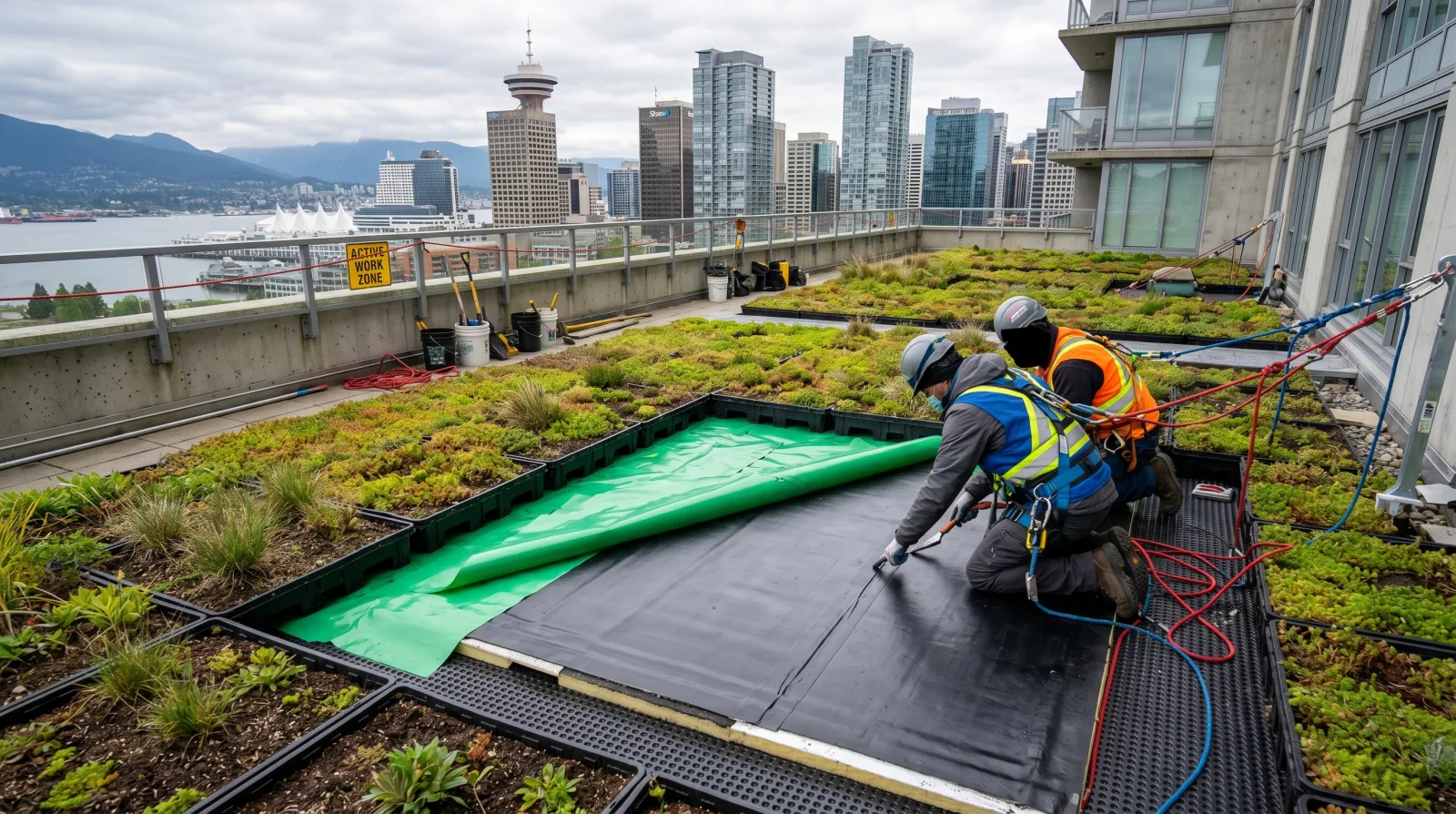
A roof you can park under and plant a tree on
A podium deck is a structural slab over occupied space, waterproofed like a roof, then buried under everything a landscape architect can draw: growing medium, trees, lawn, pavers on pedestals, benches, sometimes a water feature. The waterproofing membrane on that slab does the same job as the membrane on the main roof. The difference is access. A roof membrane can be inspected by walking on it. A podium membrane sits under tonnes of overburden, and every look at it costs an excavation.
That inversion changes how drainage has to work. On a roof, water moves across the surface where problems are visible. On a podium, water disappears into the ground the moment it lands and does all of its work out of sight, in a thin engineered gap between the soil and the membrane. When the system is healthy nobody thinks about it for years at a stretch. When it fails, the failure surfaces one level down, in the parkade, wearing the costume of a membrane leak.
The buried layers, from planting soil to structure
Most podium assemblies in the region stack up the same way. Reading the table from top to bottom follows a raindrop's path.
| Layer | What it does | How it fails |
|---|---|---|
| Wear surface | Pavers, planting soil, or lawn. Sheds some water sideways, passes the rest down. | Settlement creates low spots; moss and silt seal paver joints so water pools instead of passing through. |
| Filter fabric | Lets water through while holding back soil fines. | Blinds over with silt and organics until it behaves like a tarp. |
| Drain mat | Dimpled sheet holding open a gap that carries water sideways to the drains. | Crushed by point loads, clogged with fines, or bridged by roots; the gap closes and flow stops. |
| Protection board | Shields the membrane from shovels, pedestals, and roots. | Missing sections from past landscaping work leave the membrane exposed to damage. |
| Waterproofing membrane | The actual roof over the parkade or amenity space below. | Attacked by standing water wherever the layers above stop draining; repairs need excavation. |
| Structural slab and drains | Slopes to drain bodies that carry water into the building's storm piping. | Drain sumps silt up, root-bound outlets choke, and piping between access points blocks unseen. |
Every layer above the membrane exists to answer one question: how does water get to the drain without sitting on the waterproofing? And every failure in the stack has the same result, water resting on the membrane, which is precisely the condition membranes age fastest under, on podiums as on the balconies and decks higher up the building.
Planters: small gardens, concentrated risk
A planter over occupied space is the podium problem in miniature and intensified. It holds saturated soil year round, its drain passes every drop the irrigation system adds through the dry months, and its filter fabric receives a constant rain of fines and organics. Roots grow toward the one reliable water source in the box, which is the drain. We open planter drains on Burnaby and Vancouver podiums that have not seen daylight since the landscaping went in decades earlier, and the sump contents look like potting soil because, by then, they are.
Trees raise the stakes again. A tree planted as a sapling at construction becomes, thirty years later, a significant load with a root system that has spent its whole life exploring the drainage layer. Root barriers and generous drain access were cheap on the drawings. Retrofitting either one means excavating a mature garden.
Failure surfaces downstairs
Because the drainage is invisible, the diagnosis starts one level down. Efflorescence blooming on the parkade ceiling, damp rings at slab joints, rust tracks at reinforcing steel, drips that follow storms by a few hours: these are podium drainage symptoms as often as they are membrane symptoms, and telling the two apart matters because the fixes differ by an order of magnitude in disruption. Our article on parkade waterproofing problems to watch covers the from-below evidence in detail, and the parkade waterproofing hub covers the membrane systems themselves.
The sequence we follow on an investigation is drainage first, membrane second. Open every catch basin and cleanout, clear the sumps, flow-test the outlets, check the irrigation for leaks, and only then start attributing the remaining moisture to the membrane. It is the same discipline that applies across the whole building drainage hub: confirm the water has a working way out before concluding that the waterproofing has failed.
What maintenance looks like when the system is buried
Podium drainage maintenance is a round of access points. Catch basin lids come up, sumps get cleared by hand, outlets get flow-tested, planter inspection chambers get checked, and anything that will not flow gets a camera down the pipe. The round is quick on a podium built with good access and miserable on one without, which is why the first visit should produce a map: every basin, cleanout, and chamber on the deck, photographed and located, so no future visit misses one.
Timed before the fall storms, alongside the rest of the schedule in the seasonal drainage maintenance calendar, that round costs a strata very little. Skipped for enough years, it converts into concrete restoration and membrane excavation through our parkade waterproofing service, with the landscaping bill on top. Few line items in a maintenance budget buy more protection per dollar than opening lids on a podium once a year.
Quick answers
What is podium drainage on a strata building?
Podium drainage is the buried system that moves water off the landscaped deck sitting over a parkade, lobby, or amenity level. Water passes down through pavers or soil, travels sideways along a drainage layer on top of the waterproofing membrane, and exits through drains set at the membrane level. Almost none of it is visible from the surface, which is what separates podium drainage from every other system on the building.
What is a drain mat on a podium deck?
A drain mat, also called a drainage composite, is a dimpled plastic sheet with a filter fabric bonded to one face, laid over the waterproofing membrane. The dimples hold open a thin gap that lets water flow sideways to the drains even with soil, sand, or pavers pressing down from above, while the fabric keeps fine particles out of that gap. When the fabric blinds over with silt, the gap stops flowing and water sits on the membrane instead.
What does protection board do over a membrane?
Protection board is a rigid sheet placed over the waterproofing membrane before soil, gravel, and pavers go on top. Its job is to take the abuse: shovel strikes during planting, point loads from paver pedestals, and root pressure from maturing landscaping. The membrane under a podium cannot be patched without excavation, so the protection board exists to make sure nothing sharp or heavy reaches it during construction or the decades of gardening that follow.
Podium and planter drainage questions
What is podium drainage on a strata building?
Podium drainage is the buried system that moves water off the landscaped deck sitting over a parkade, lobby, or amenity level. Water passes down through pavers or soil, travels sideways along a drainage layer on top of the waterproofing membrane, and exits through drains set at the membrane level. Almost none of it is visible from the surface, which is what separates podium drainage from every other system on the building.
What is a drain mat on a podium deck?
A drain mat, also called a drainage composite, is a dimpled plastic sheet with a filter fabric bonded to one face, laid over the waterproofing membrane. The dimples hold open a thin gap that lets water flow sideways to the drains even with soil, sand, or pavers pressing down from above, while the fabric keeps fine particles out of that gap. When the fabric blinds over with silt, the gap stops flowing and water sits on the membrane instead.
What does protection board do over a membrane?
Protection board is a rigid sheet placed over the waterproofing membrane before soil, gravel, and pavers go on top. Its job is to take the abuse: shovel strikes during planting, point loads from paver pedestals, and root pressure from maturing landscaping. The membrane under a podium cannot be patched without excavation, so the protection board exists to make sure nothing sharp or heavy reaches it during construction or the decades of gardening that follow.
Why do planter drains silt up?
Planter drains silt up because a planter is a box of soil that water washes through constantly. Irrigation and rain carry fines downward year after year, the filter fabric over the drainage layer slowly blinds with those particles, and organic material from roots and mulch adds to the mat. Unlike a roof drain, the process is invisible, and the first sign is often a planter that stays waterlogged or a stain in the parkade below.
How do you inspect drains buried under pavers and soil?
Buried podium drains are inspected through their access points: catch basin lids set flush in the paving, cleanouts at pipe runs, and inspection chambers in larger planters. A proper check lifts those lids, clears the sumps, and flow-tests the outlets. Where symptoms suggest a blockage between access points, a camera goes down the pipe. If a podium was built without accessible cleanouts, that fact belongs in the strata's planning, because it turns every future problem into an excavation.
What are the signs podium drainage is failing?
Podium drainage failure shows at the edges of the system. Watch for planters that stay saturated days after rain, moss and algae spreading across pavers, efflorescence or damp patches on the parkade ceiling below, drip stains at slab joints, and musty smells in storage rooms under the deck. Because the drainage layer itself is buried, these secondary signs are usually the only warning a strata gets before water starts working on the membrane full time.
Can tree roots damage podium drainage?
Tree roots are one of the main long-term threats to podium drainage. Roots follow water, so they grow toward drains, wrap them, and enter through any gap in a fitting. They also compress and penetrate the drainage layer, closing the gap water needs to move sideways. Trees in podium planters were often planted small and forty years of growth was left off the drawings. Root barriers and species choice matter at design time, and root-cutting is a recurring maintenance cost after that.
Does irrigation make planter drainage worse?
Irrigation adds a second water source the planter drainage has to carry, and it runs through the dry months when nobody is thinking about drainage at all. Overwatering keeps soil saturated, accelerates silt migration into the filter fabric, and hides a partly blocked drain because the soil never dries enough for anyone to notice. A leaking irrigation line buried in a planter can also mimic a membrane failure below, so drainage investigations on podiums should always check the irrigation first.
What happens in the parkade when a podium drain blocks?
When a podium drain blocks, water builds in the drainage layer and sits on the waterproofing membrane until it finds a weakness: a seam, a penetration, a joint detail. The leak then appears on the parkade ceiling below, often at a slab joint or light fixture some distance from the actual blockage. Chronic cases show up as efflorescence, rust staining at rebar, and dripping after every storm, the same damage pattern covered in our parkade waterproofing resources.
How often should podium and planter drains be checked?
Podium catch basins and planter drains should be opened and cleared at least annually, with the visit timed before the fall storm season, and buildings with heavy planting or known silt problems benefit from a spring check as well. The schedule matters less than the coverage: every access point on the podium needs to be on a list somewhere, because the basin nobody knows about is the one that blocks. Tying the round to the building's wider drainage calendar keeps it from being forgotten.
Can planters sit directly on the waterproofing membrane?
Planters should never bear directly on a bare waterproofing membrane. Good practice separates them with protection board and a drainage layer, so the planter's weight spreads safely and water leaving the soil has somewhere to go. Site-built planters that were formed straight onto the membrane, or moveable planters parked on it for years, create trapped-moisture zones and point loads at exactly the layer the whole podium depends on. Where that condition exists, it belongs on the strata's risk list.
Stains on the parkade ceiling under your courtyard?
We open, clear, and map podium catch basins and planter drains on strata buildings across Vancouver, Burnaby, and the North Shore, and we separate drainage problems from membrane problems before anyone prices an excavation.