Staged vs whole-building remediation
When envelope remediation lands on a council agenda, the sequencing question follows immediately: repair the failing elevation now, or wrap the whole building in one project. Both answers are legitimate, and each one has a failure mode. Staging done honestly matches money to a local problem; staging done hopefully spreads a misdiagnosis across ten years of levies. The difference is decided before any scaffold goes up, in the diagnosis.
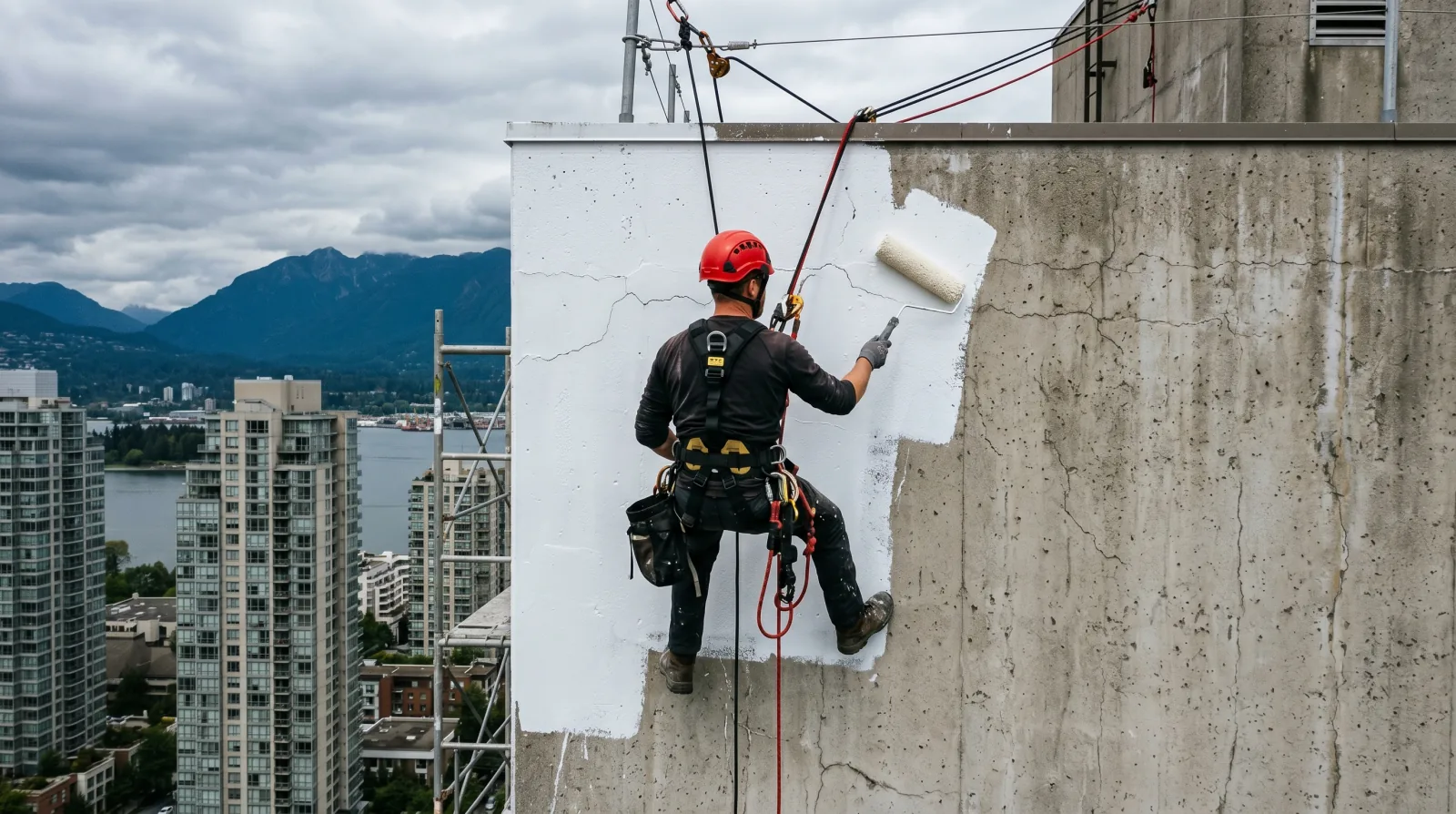
Two honest strategies, two failure modes
A staged program treats elevations as separate patients: the weather wall that failed gets rebuilt to the standard described in our retrofit process guide, and the walls that test sound get monitoring and their turn in the plan. A whole-building wrap treats the envelope as one system and rebuilds it in one continuous project. Neither is inherently prudent or reckless. Each is the correct response to a different diagnosis, and the expensive mistakes come from matching the strategy to the budget instead of to the wall.
The staging failure mode deserves its reputation. A strata recladding one elevation at a time, chasing leaks that migrate ahead of the work, is buying a full remediation in its costliest format while the walls that wait keep rotting. But the wrap has a failure mode too: a building that fully reclads all four elevations because one deck interface leaked has spent a fortune answering a question nobody asked. Our envelope repair vs recladding guide covers that scale of overcorrection from the repair side.
What the decision actually turns on
The damage maps to one exposure
When exploratory openings show a failure concentrated on the weather wall, typically the south or southeast elevation taking the storm wind, while other elevations test dry, the problem is local and a staged repair answers it honestly. Exposure-driven failure is real: the same assembly can fail on one face and perform on another for decades.
The failure is a detail, and the assembly is sound
A missing kickout, a bad deck interface, a run of failed head flashings: when the diagnosis isolates specific details and the wall around them holds up under probing, targeted remediation of those details, elevation by elevation as budget allows, treats what is actually wrong instead of financing a rebuild the building does not need.
Funding cannot reach a full wrap
Sometimes staging is simply what the reserve and the owners can carry, and pretending otherwise stalls all work while the wall keeps failing. An honest staged plan does the worst elevation first, to the final detail standard, and writes the remaining phases into the depreciation report as scheduled, priced intentions.
The assembly itself is the diagnosis
When openings on multiple elevations find the same story, face-sealed walls holding moisture, rot at test cuts on more than one face, the failure is systemic. Staging a systemic failure buys years of repeated mobilization while the untouched walls deteriorate, and the last phase pays for the damage that grew during the wait.
The building keeps leaking somewhere new
A history of leak repairs that migrate around the building is the classic sign that each fix treated an exit point of a wall-wide problem. When the complaint log spans elevations and years, elevational thinking is how a strata spends remediation money on symptoms across a decade of levies.
Access and disruption dominate the economics
Every phase pays again for mobilization, access, hoarding, and consultant startup, and every phase reopens the disruption argument with residents. Where the per-phase overhead is large relative to the wall work, on towers especially, one continuous project converts repeated fixed costs into a single one.
The diagnosis buys the right to stage
Every factor above depends on evidence that only investigation produces. The non-negotiable step is testing the quiet elevations: exploratory openings and moisture readings on the walls without complaints, so the comparison is between measured conditions rather than between a known failure and an assumption. Metro Vancouver's exposure pattern makes this concrete. The south and southeast faces take the storm wind and fail first, and a dry north wall genuinely may be decades from trouble, but "may" is what the openings exist to replace. A methodical route to that evidence is laid out in our leak investigation guide, and if there is any doubt about what assembly the walls even are, start with is my building rainscreened.
Beware the diagnosis that arrives pre-shrunk to the reserve balance. A scope drawn around available funds, then justified afterward, is how misdiagnoses get sequenced. The honest order runs the other way: findings first, program second, funding conversation third, even when the third step is hard.
Making a staged program hold together
A staged program that works has three habits. It builds phase one to the final standard, with the same barrier, flashing profiles, and details later phases will match, and it documents everything so the standard survives council turnover. It writes the remaining phases into the depreciation report as named, timed commitments, the funding logic covered in our code and warranty guide. And it keeps the waiting elevations honestly maintained in the meantime: sealant renewed, weeps kept draining, and interim protection like crack repair and coatings where the consultant supports it, work our crews handle by rope access between phases through our building envelope repair service.
Staging, done that way, is simply a whole-building plan on a longer clock. The rainscreen hub opened with a wall that manages water by design; this is the same idea applied to money. Decide from evidence, sequence deliberately, and the building ends up dry either way.
Quick answers
Can a strata remediate one elevation at a time?
A strata can remediate one elevation at a time, and staged remediation is common across Metro Vancouver, but staging is only honest when the diagnosis supports it. If exploratory openings show damage confined to one exposure while other walls test sound, an elevation-by-elevation program treats the real problem within real budgets. If the failure is the wall assembly itself, staging spreads a systemic problem across a decade of separate projects.
When is staged envelope remediation the right choice?
Staged remediation is right when three things line up. The diagnosis is local: openings confirm the failure sits on specific elevations or details, and the rest of the building tests dry. The first phase is built to the final standard, no interim patches dressed as remediation. And the remaining phases are written into the depreciation report as scheduled work rather than left as hopes. Under those conditions, staging is planning, done honestly.
When does staged remediation spread a misdiagnosis?
Staging spreads a misdiagnosis when the scope was drawn around the budget instead of the evidence. The pattern: a leaking elevation gets reclad, the leaks migrate, another phase follows, and years later the strata has bought a whole-building remediation in the most expensive format available, in pieces, with damage compounding in the walls that waited. The tell is a diagnosis that never tested the quiet elevations before declaring the loud one unique.
Remediation strategy questions
Can a strata remediate one elevation at a time?
A strata can remediate one elevation at a time, and staged remediation is common across Metro Vancouver, but staging is only honest when the diagnosis supports it. If exploratory openings show damage confined to one exposure while other walls test sound, an elevation-by-elevation program treats the real problem within real budgets. If the failure is the wall assembly itself, staging spreads a systemic problem across a decade of separate projects.
When is staged envelope remediation the right choice?
Staged remediation is right when three things line up. The diagnosis is local: openings confirm the failure sits on specific elevations or details, and the rest of the building tests dry. The first phase is built to the final standard, no interim patches dressed as remediation. And the remaining phases are written into the depreciation report as scheduled work rather than left as hopes. Under those conditions, staging is planning, done honestly.
When does staged remediation spread a misdiagnosis?
Staging spreads a misdiagnosis when the scope was drawn around the budget instead of the evidence. The pattern: a leaking elevation gets reclad, the leaks migrate, another phase follows, and years later the strata has bought a whole-building remediation in the most expensive format available, in pieces, with damage compounding in the walls that waited. The tell is a diagnosis that never tested the quiet elevations before declaring the loud one unique.
What is a whole-building envelope remediation?
A whole-building remediation, the full wrap, takes every elevation through the same rebuild in one continuous project: strip, structural repair, new barrier, flashings, strapping, and cladding, all sides, one mobilization. It suits systemic failures, where the wall assembly rather than a detail is the diagnosis. It concentrates cost and disruption into one window, and it produces one consistent wall with one warranty date instead of a patchwork.
How do councils decide between staged and whole-building work?
Councils decide between staging and the full wrap on evidence: exploratory openings across all elevations, including the ones without complaints, so the comparison is between tested walls rather than between a known problem and an assumption. The envelope consultant maps the findings, and the choice usually makes itself. Damage confined to one exposure supports staging; the same failure on multiple faces supports one continuous project. Untested walls decide nothing.
Is staged remediation cheaper than a whole-building project?
Staged remediation is cheaper per year and usually costlier in total, though the sizes of both effects depend on the building. Each phase repeats mobilization, access setup, hoarding, and consultant startup, and deferred elevations keep deteriorating while they wait, so later phases buy more repair. What staging buys is affordability: smaller levies spread over time. Honest comparisons price the whole program either way, and no fixed rule substitutes for that.
What role does diagnosis play before staging envelope work?
Diagnosis is the license to stage. Staging assumes the failure is local, and only investigation can prove that: openings on quiet elevations as well as loud ones, moisture readings, and a consultant’s map of where the assembly holds and where it fails. Skipping that step turns staging into a wager that the untested walls are fine. The cost of proper investigation is small against the cost of sequencing a systemic failure one surprise at a time.
How does staging affect special levies and reserve planning?
Staging converts one large levy into a series of smaller ones, which is often what makes remediation possible for owners on fixed incomes and stratas with thin reserves. The discipline is writing the whole program into the depreciation report: each phase named, timed, and priced, so buyers and lenders see a plan in progress. A first phase with no funded successors reads as a building that fixed one wall and stopped, which is also how it performs.
Can a staged project mix repairs and recladding?
A staged program can mix scopes, and well-diagnosed ones often do: full recladding for the failed weather elevation, flashing and sealant remediation for a face with detail problems, and monitoring for walls that test dry. The mix must come from the evidence, elevation by elevation, with each scope built to the same detail standard so the building converges on one performance level. What a mix must never be is a discount version of the same repair everywhere.
What happens if only the worst elevation is fixed?
Fixing only the worst elevation produces one of two futures, and the diagnosis decides which. If that elevation was genuinely the problem, the building is fine: the repair holds, the other walls keep testing dry, and the strata bought exactly the remediation it needed. If the failure was systemic, the next-worst wall inherits the title, leaks migrate, and each year of delay grows the eventual scope. The elevations that were never opened hold the answer.
Do staged phases need the same consultant and details throughout?
Carrying one consultant and one detail set across staged phases is worth protecting. The phases may be years apart under different councils, and continuity is what keeps phase three matching phase one: same barrier system, same flashing profiles, same tie-in details where new wall meets old. Document everything after each phase, specifications, as-builts, and photos, so even if the team changes, the standard survives the turnover intact.
Deciding how much of the building to fix?
We give stratas across Vancouver, Burnaby, and the North Shore the evidence side of this decision: assessments, interim protection, and remediation work scoped to what the walls actually show.