Telling Residents What's Coming: Communication on an Envelope Project
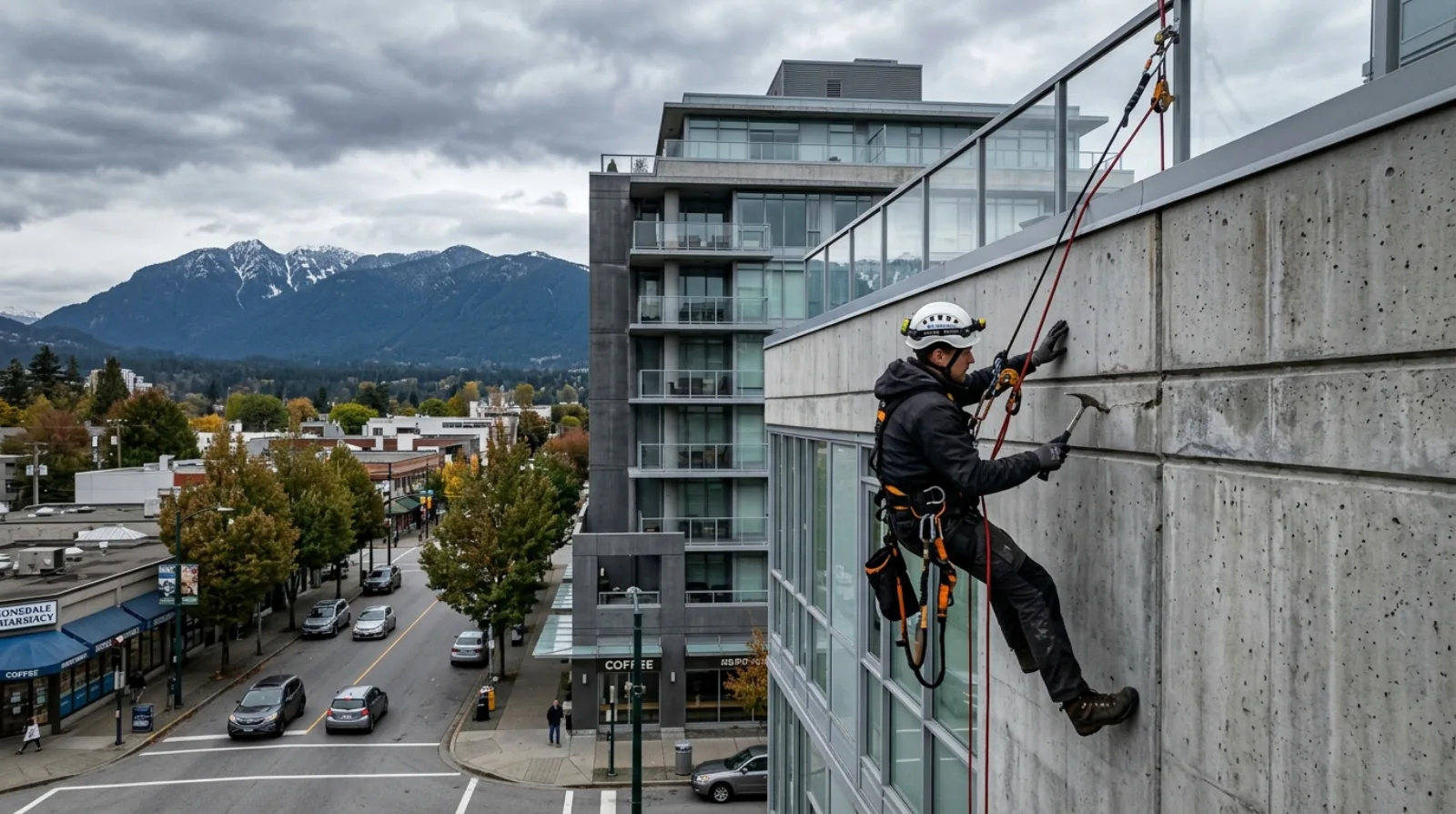
A resident opens their blinds on a weekday morning and finds a person suspended on a rope directly outside the window. Nobody told them it was happening. That afternoon the property manager receives an angry email.
Same building, same technician, same work. This time the resident received a notice three days earlier saying crews would be working on the west elevation Tuesday through Thursday. They closed the blinds on Monday evening and thought nothing more about it.
The work is identical. The experience is completely different, and so is the volume of complaints the council has to deal with.
On envelope restoration projects, most resident friction comes from surprise rather than from the work itself. That is genuinely good news, because surprise is the one variable a council can control entirely.
What residents actually need to know
The list is short, and almost every complaint traces back to one of these items going unsaid.
When work starts and how long it will last. A rough duration is fine. People plan around a known end date far better than an open-ended one.
The daily working hours. Residents who work shifts, work from home, or have young children need this to plan. Working hours are normally governed by the municipal noise bylaw for the area, and the project should state its hours and stay inside them.
Whether anyone will be visible outside their windows, and when. This is the privacy question, and it is the one that generates the strongest reactions when unaddressed.
Whether they need to clear the balcony, and by when. With enough time to actually do it, and a statement of what happens to anything left behind.
Whether windows need to stay closed. During coating, sealant, and pressure washing work, this matters, and residents need to know which days apply to them.
Who to contact with a problem. One name, one reliable method of contact, and a stated expectation of when they will respond.
Six items. A notice that covers all six prevents most of the questions a project generates.
Sequence the communication
A single announcement at the start does not work, because a message sent six weeks before the work reaches someone’s unit has been forgotten by the time it matters.
Announce the project before the contract is signed. Residents should hear about a major project from their council, at a meeting or in a circulated notice, rather than discovering it from a sign on the door. Explain what is being done, why the building needs it, and roughly when. This is also where the funding conversation belongs, since a project of this scale usually involves the contingency reserve or a special levy, as set out in the guide on contingency reserve fund versus special levy.
Send a detailed notice before work begins. Two to three weeks ahead, covering all six items above for the project as a whole, plus the point of contact.
Give elevation-specific notice. This is the part most often skipped and the part that matters most. A general notice saying work starts in March does not tell the resident on the north side when to clear their balcony. Each elevation or section needs its own notice several days ahead, naming the units affected, the dates, and the specific actions required of those residents.
Update on a predictable schedule. Weekly is usually right. What matters more than frequency is consistency, because residents who know an update is coming stop calling to ask.
Close the project formally. Tell people it is finished, what was done, how remaining deficiencies will be handled, and how to report a problem later. Projects that simply stop leave residents unsure whether the crew is coming back.
The balcony problem
Balcony clearing generates more friction than any other single item, and it is worth handling carefully.
Where work involves the balcony surface, the railings, or the wall behind them, everything has to come off. Furniture, planters, barbecues, storage, bikes. The crew needs a clear working area, and items left in place get damaged or prevent the work from happening.
Three things make this go smoothly.
Give real notice with a specific deadline date. Finding somewhere to put a season’s worth of balcony furniture takes more than a day.
State clearly what happens to items not removed. Whether they will be moved by the crew at the resident’s risk, or whether the unit will be skipped and rescheduled at the owner’s cost. Either policy works; an unstated policy produces disputes.
Say when they can put it back. Membrane and coating work needs cure time, and putting furniture back too early damages a new surface. This is a real technical constraint, not an arbitrary rule, and explaining the reason gets far better compliance than the instruction alone.
For projects involving balcony membrane work specifically, residents should also be told what the finished surface will look like, since the appearance differs from what was there before. The context is covered in the post on vinyl deck versus liquid membrane.
Privacy and rope access
Rope access work puts technicians directly outside windows, and residents deserve advance notice of that specifically.
The message is straightforward: technicians will be working on your elevation on these dates during these hours, they are focused on the building rather than on the units, and you may wish to close blinds during that period.
That last part matters. Professional crews do not look into units and are entirely occupied with the work in front of them. But a resident who has been told in advance can make their own choice about blinds, and that sense of control is what separates an acceptable situation from an intrusive one.
Residents also frequently ask why rope access is being used at all. A brief explanation helps: it reaches areas other methods cannot, it does not occupy the ground around the building for months, and it lets crews move to the areas needing work rather than working sequentially across a whole face. The comparison is set out in the guide on rope access versus scaffolding and swing stage.
One point of contact
Residents will try to talk to the crew. This has to be redirected, for two reasons.
A technician suspended on rope cannot stop to answer questions, and a resident calling from a balcony to someone working overhead is a genuine safety distraction.
And crews do not have project-level information. They know what they are doing today. Questions about schedule, scope, and what happens next belong with whoever is managing the project.
Name one person, usually the property manager or a designated council member. Give a real contact method and a stated response time. Then actually respond, because a contact who does not reply sends residents back to the crew.
The contractor benefits from this too. A single channel means they receive coordinated information rather than being stopped repeatedly, and it means resident concerns reach them in a form they can act on.
Delays
Weather delays are normal in this climate. Sealants and coatings have temperature and moisture limits for application and cure, and working outside those limits produces failures, as explained in the post on cold weather coating application and the guide on scheduling envelope work in a wet climate.
Residents accept weather delays when they are told about them. What generates real frustration is a schedule that quietly slips with no acknowledgement, because it reads as nobody being in charge.
Communicate delays as soon as they are known, with the reason and a revised expectation. A message saying the north elevation is pushed to next week because of rain, and here is the new date, keeps confidence intact. Silence does not.
This is a cost item, not just goodwill
It is easy to file communication under courtesy. It has a direct effect on the project budget.
Crews stopped repeatedly by residents lose working time. Balconies not cleared on schedule mean units skipped and revisited, which on an access-heavy project means remobilizing. Access refused because a resident was not told means rescheduling. Council and property manager hours spent handling complaints are real hours.
On a project where access is a major cost component, schedule performance drives the final number. A project where residents know what is happening, have cleared what needed clearing, and are not stopping the crew simply runs faster.
The one thing to get right
If a council does only one thing beyond the standard notices, make it the elevation-specific advance notice: the units affected, the dates, the hours, and what those residents need to do.
That single message prevents the person-outside-the-window surprise, the uncleared balcony, and most of the scheduling friction. It takes very little effort compared to what it prevents.
Sources and further reading
- Strata Property Act (British Columbia), notice and common property provisions, referenced 2026
- City of Vancouver Noise Control By-law, construction hours provisions, referenced 2026
- WorkSafeBC, Occupational Health and Safety Regulation Part 34 (Rope Access), referenced 2026
- BC Housing, Building Enclosure Renewal Guide, project delivery considerations, referenced 2026
- Allweathercoating project coordination records, Metro Vancouver, 2026
Frequently Asked Questions
More from BC Strata Building Envelope Guide
Why Restoration Budgets Grow After the Work Starts
Envelope restoration is the one kind of construction where the real scope is hidden until demolition begins. Councils that understand why handle the change orders far better.
Read article →The Survey That Has to Happen Before Anyone Touches the Building
Older sealants, coatings, and roofing can contain asbestos or lead. In BC the survey is a legal requirement before demolition work starts, and finding out late stops the job.
Read article →The Contingency Line: Why Envelope Budgets Need Room for the Unknown
You cannot see behind cladding until it comes off. A restoration budget without a contingency is a budget that will be exceeded, and everyone in the room knows it.
Read article →