Ponding water warning signs
A building records its own drainage problems. Ponds leave rings, overflows leave stains, chronic damp grows algae in tidy lines, and an overloaded gutter writes stripes down its own face. Most of this evidence survives for months and much of it reads from the sidewalk. This guide covers how to read it, and how to tell the maintenance findings from the structural ones.
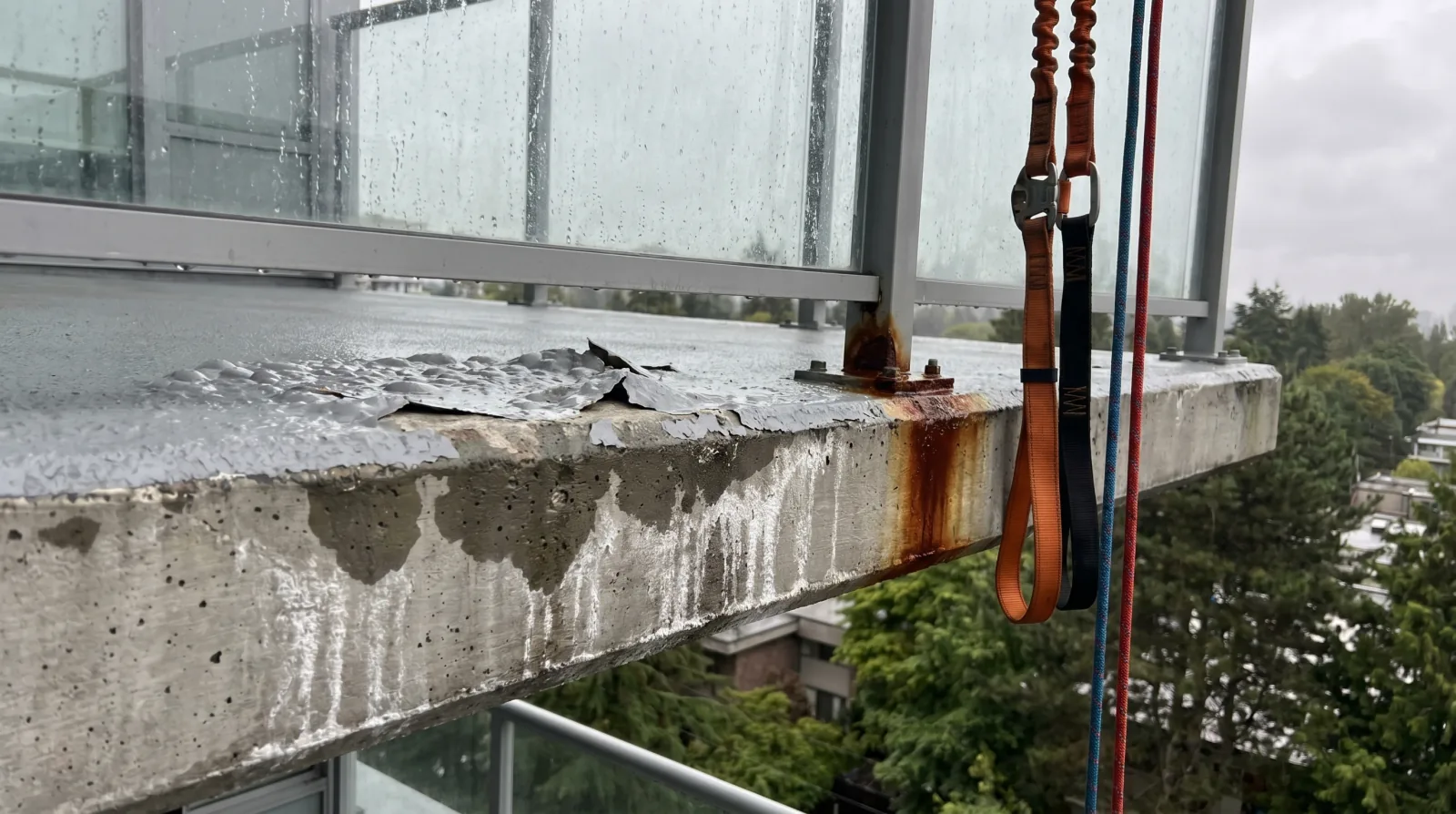
Why the reading matters before the repair
Water standing where it should not is the symptom. What a strata council does next depends entirely on the cause, and the causes span two different budgets. A blocked outlet is a maintenance item, fixed in an afternoon from a rope or a roof hatch. A slope that no longer reaches the drain, or a structure that has deflected into a new low spot, is a capital conversation that belongs in depreciation planning. Misread the signs and you either pay capital prices for a cleaning problem or clean, season after season, around a problem cleaning cannot touch.
The evidence sorts the two out surprisingly well, because blockages and geometry leave different fingerprints. That sorting is the whole discipline of this page, and it sits inside the larger diagnostic sequence of the building drainage hub: confirm how the water is supposed to leave, check whether it can, and only then start asking questions about membranes and structure.
The five signs, ranked by urgency
Overflow outlets running in ordinary rain
UrgentAn overflow exists to flow only when the primary path has failed. One discharging during routine rain means water is already standing at overflow height on the roof or deck above, full time. The primary drain needs clearing now, before a real storm arrives on top of the standing water.
Interior stains that follow storms
UrgentA ceiling or wall stain that appears or darkens within hours of heavy rain means water is entering the assembly, and ponding above a blocked outlet is one of the most common drivers. The drainage check comes first, because clearing an outlet can stop the leak the same day, while membrane investigation takes longer.
Sagging gutter runs
Act soonA gutter line that dips visibly between hangers has been carrying standing water and saturated debris. The sag ponds more water, which deepens the sag. It also warns that the fascia behind the hangers may be softening. Rehang and clear before the fall storms, and probe the wood while access is up.
Ponding rings and silt lines
Act soonConcentric dirt rings on a roof or deck mark the footprint of a recurring pond, each ring a waterline from a different drying cycle. Silt and debris tide marks do the same. The pond itself may be invisible on a dry day, but the rings say water stands here after every rain, and standing water is how membranes age fastest.
Algae, moss, and dark staining
MonitorGreen or black growth needs sustained moisture, so its pattern maps where water lingers: a moss arc around a low spot, an algae line along a parapet base, dark staining below a drip line. Growth develops over seasons rather than storms, making it the long-term record. Watch it, photograph it, and compare year to year.
Rings: the pond that photographs itself
A pond on a dry day is invisible, which is why rings matter. As standing water evaporates it retreats in stages, and each pause deposits a line of silt, dust, and organic film. The result is a bullseye of concentric waterlines marking the pond's full footprint and its history. Rings hugging a drain say the outlet runs slow or blocked, the situation covered in the flat roof drains guide. Rings out in the field of the roof, away from every outlet, say the surface geometry has changed, and the water now settles where no drain was ever placed.
Depth of staining tracks age. A faint single ring can follow one blocked autumn. Heavy, layered, algae-colonized rings mean years. Both are worth photographing with something for scale, because the comparison photo two years later answers the question councils argue about most: is it getting worse?
The growth layer: algae, moss, and what they know
Biology is slower than weather, and that is its diagnostic value. Rain stains fade and rings can wash off in a hard storm, but algae and moss need months of reliable moisture to establish. Wherever they grow, water lingers as a rule rather than an exception. A moss arc on a roof maps a chronic low spot. An algae stripe down a wall below a scupper records repeated discharge. A green line along the base of a parapet upstand shows where every storm's water waits before it finds the outlet.
On decks and walkways the same reading applies underfoot, with the added stakes that lingering moisture sits directly on the membrane, the failure sequence described in the balcony and deck drains guide. Growth is also worth removing once it has been read and photographed, since moss holds water against the surface and feeds debris into the very outlets the deck depends on.
Drainage problem or structure problem
The separating question is always position: where does the water sit relative to where it is meant to leave? Ponds at outlets are blockages. Ponds at midspan, in field areas, or against details with no outlet nearby are geometry: original construction that was too flat, insulation crushed by traffic, or structural deflection accumulated over decades. A second check is persistence. A blockage pond disappears the day the outlet is cleared and stays gone. A geometry pond returns with the first rain after every cleaning, in the same footprint, indifferent to how clean the drains are.
A geometry finding is planning work: it goes on the record, feeds the depreciation plan, and gets engineered out with tapered insulation or re-sloping at the next membrane renewal. What should not wait is the combination case: geometry ponding plus an interior stain, which means the standing water has found a way in, and the tracing work of our leak repair and water ingress service comes before any capital planning.
Make the reading routine
None of this requires a specialist for the first pass. A council member or property manager walking the building after a storm, phone camera out, covering the roof if safely accessible and the perimeter from the ground, gathers most of the evidence this page describes in half an hour. The findings then decide who gets called: a rope access drainage crew for the blockages, an assessment for anything structural, and the storm-season schedule for everything that can wait for its slot in the calendar. The buildings that avoid November surprises are rarely the ones with the newest membranes. They are the ones where somebody reads the rings.
Quick answers
What do ponding rings on a roof or deck mean?
Ponding rings are concentric bands of dirt and silt left behind as a recurring pond dries down in stages, each ring an old waterline. They mean water stands at that spot after every rain, even if the surface looks dry today. Rings around a drain point to a blocked or slow outlet, while rings away from any drain point to a low spot the drainage cannot reach, which is a slope problem rather than a blockage.
What are algae lines and why do they matter?
Algae lines are bands of green or black growth that develop where a surface stays wet long enough between rains for organisms to establish. Because growth takes seasons, an algae line is evidence of a chronic condition rather than one bad storm: water has been lingering along that line for a long time. On parapets and walls, algae below an opening also records where overflow has been discharging repeatedly.
How do you tell a drainage problem from a slope problem?
Watch where the water sits relative to the outlets. A pond directly over or against a drain, scupper, or gutter outlet means the path is blocked: clear it and the pond leaves. A pond sitting away from every outlet, in the middle of a roof or a deck corner, means the surface no longer directs water to the drainage, and no amount of cleaning will move it. Blockages are maintenance. Slope corrections are construction, usually done at membrane renewal.
Ponding water questions
What do ponding rings on a roof or deck mean?
Ponding rings are concentric bands of dirt and silt left behind as a recurring pond dries down in stages, each ring an old waterline. They mean water stands at that spot after every rain, even if the surface looks dry today. Rings around a drain point to a blocked or slow outlet, while rings away from any drain point to a low spot the drainage cannot reach, which is a slope problem rather than a blockage.
What are algae lines and why do they matter?
Algae lines are bands of green or black growth that develop where a surface stays wet long enough between rains for organisms to establish. Because growth takes seasons, an algae line is evidence of a chronic condition rather than one bad storm: water has been lingering along that line for a long time. On parapets and walls, algae below an opening also records where overflow has been discharging repeatedly.
How do you tell a drainage problem from a slope problem?
Watch where the water sits relative to the outlets. A pond directly over or against a drain, scupper, or gutter outlet means the path is blocked: clear it and the pond leaves. A pond sitting away from every outlet, in the middle of a roof or a deck corner, means the surface no longer directs water to the drainage, and no amount of cleaning will move it. Blockages are maintenance. Slope corrections are construction, usually done at membrane renewal.
Why does ponding get worse over time?
Ponding feeds itself. Standing water deposits silt that builds up the pond edges, grows algae that traps more debris, and adds weight that deepens structural deflection in the low spot. Insulation under a pond can crush and degrade, lowering the spot further. Each cycle enlarges the footprint slightly, which is why the same roof photographed two years apart often shows rings spreading. Early ponding is the cheap stage to intervene in.
What does a sagging gutter line indicate?
A sagging gutter line indicates the trough has been carrying sustained weight, which means standing water and saturated debris rather than the brief flows it was designed for. The sag creates a permanent pond in the trough that overflows in any hard rain. It also raises a structural question at the fascia, since hangers rarely pull out of sound wood. Treat a visible sag as both a cleaning task and a prompt to check the wood behind.
What does tiger striping on a gutter face mean?
Tiger striping, the vertical bands of grey and brown running down the outside face of a gutter, records repeated overflow carrying dirt over the lip. Each storm adds a layer, so strong striping means the trough has been overflowing for many storms. The stripes localize the problem for you: striping below one section points at a sag or blockage there, while striping along the whole run suggests the gutter has lost its fall or cannot handle the roof area feeding it.
Can ponding warning signs be spotted from the ground?
Several ponding signs read clearly from the ground. Overflow scuppers discharging in light rain, staining fans below parapet outlets, tiger striping on gutter faces, sagging gutter lines against the roof edge, moss along an eave, and algae streaks below any opening all show from a sidewalk. A pair of binoculars and a walk around the building after a storm is a legitimate inspection method, and it costs a strata council nothing but half an hour.
When is ponding water urgent?
Ponding turns urgent when it pairs with a second sign: an interior stain that tracks storms, an overflow running full time, water climbing toward a door threshold, or ponding deep and wide enough to raise weight concerns on a large roof. Any of those combinations deserves a call this week rather than this season. Ponding alone, with no interior evidence and clear overflows, is a maintenance flag: schedule the drainage check and monitor.
Does moss growth on a roof or deck mean a leak?
Moss means sustained surface moisture, and by itself says nothing about whether water has entered the building. Its value is as a map: moss establishes exactly where the surface stays wet, so its pattern shows the low spots, the slow-draining zones, and the shaded corners that never dry. Moss also holds water against the membrane and sheds debris into drains as it breaks up, so it contributes to future problems while marking present ones.
What is structural deflection and how does it cause ponding?
Structural deflection is the gradual downward bending of a roof or floor structure under its own weight and loads over years. A deck built with modest slope can deflect enough at midspan that the low point moves away from the drain, and water follows the new geometry rather than the drawings. Ponding from deflection sits at midspan, away from outlets, and returns immediately after every clean. The durable fix is re-establishing slope during membrane renewal.
What ponding records should a strata keep?
A strata should keep dated photographs of every recurring pond, ring pattern, algae line, and overflow stain, taken from the same vantage points each time, ideally after storms. Two or three years of these photos turn arguments about whether things are getting worse into a visible answer, support depreciation report consultants with real evidence, and let a council time slope corrections and membrane work from trend data rather than from the first interior leak.
Rings on the roof? Stripes on the gutters?
We read the ponding evidence on strata and commercial buildings across Vancouver, Burnaby, and the North Shore, clear what is blocked, and tell you plainly which findings are maintenance and which belong in your capital plan.