Storm damage triage
The storm passes, the phone starts. A tile down in the third-floor corridor, water in unit 1204, something metal banging on the roof. Triage is deciding, quickly and in the right order, what threatens people, what is actively getting worse, and what can wait for the work list. Get the order right and a bad night stays a maintenance story instead of becoming an insurance one.
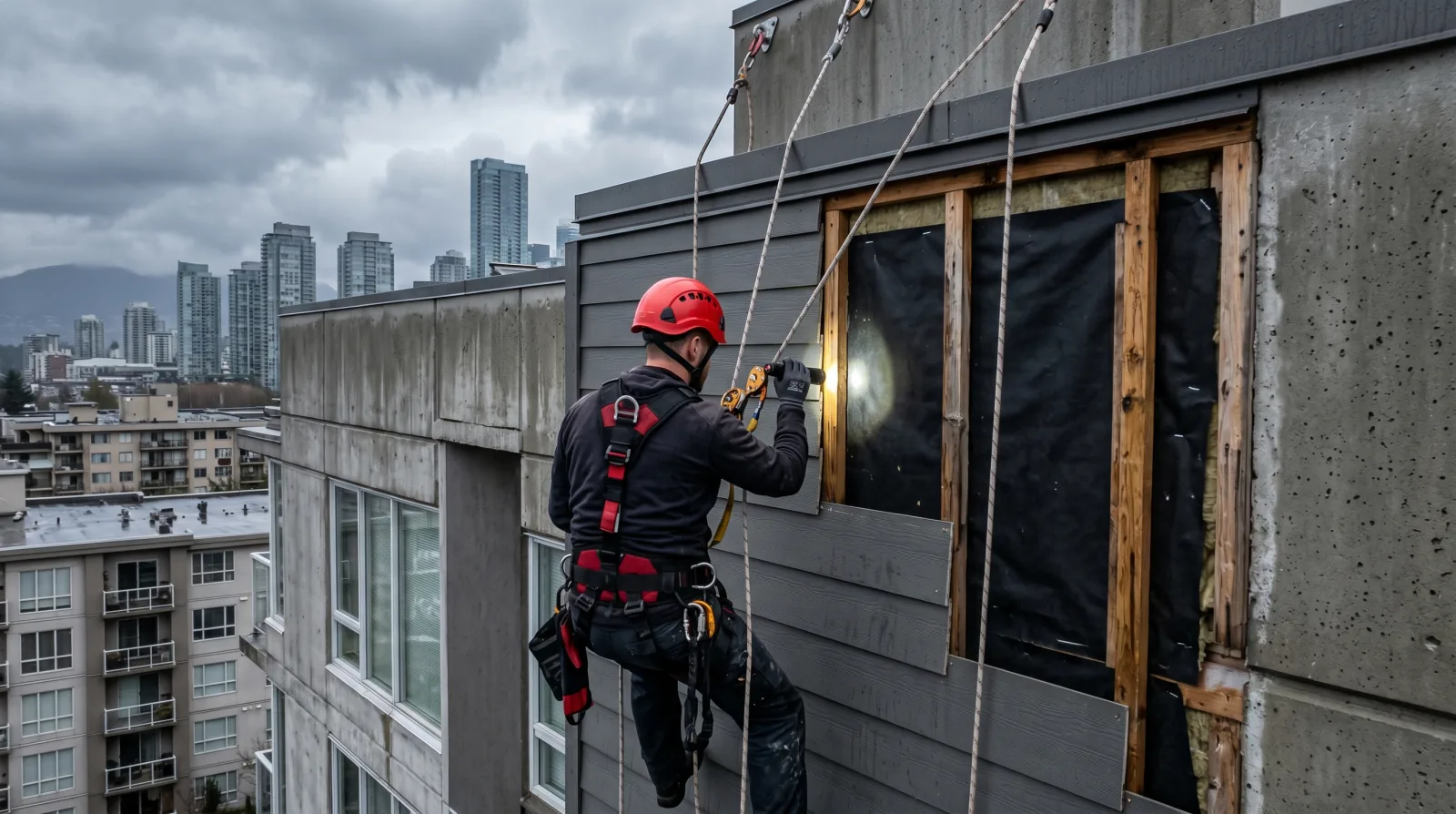
The order matters more than the speed
Post-storm mistakes are usually ordering mistakes. Someone mops the corridor before anyone looks in the plenum. The roof pond gets noticed a week later. The council debates a stained wall while cap flashing hangs over the sidewalk. The sequence below is how we run it: people first, moving water second, drainage third, evidence last. It is the same discipline as the pre-storm checklist, pointed in the other direction.
One habit carries most of the value: while water is still moving, look. An active leak shows you its path. A dried stain makes you reconstruct it. Half the diagnostic budget of a winter leak investigation goes to recreating what someone could have photographed during the storm.
The triage list, ranked
Anything that could fall: loose flashing, cladding, glass, or debris overhead
Safety comes before waterproofing. Cap metal peeled up by wind, a cracked pane, or cladding hanging by a fastener over a walkway needs the area barricaded now and a crew dispatched. On towers this is a same-day rope access job; nothing else on this list matters until people below are protected.
Active water: dripping ceilings, running walls, water in electrical rooms
Water still moving means the path is open and the damage is compounding. Contain it, protect what is below, shut off affected circuits through a qualified person, and get the source traced while it is running. An active leak is far easier to diagnose than a dry stain, so this is also the best diagnostic moment you will get.
Dropped or stained ceiling tiles in corridors and amenity rooms
A ceiling tile does not wet itself. Water reached the plenum from somewhere, often an envelope breach one or more floors up, travelling along structure before it dropped. Lift the tile, look, and trace upward. Treating the tile as the problem, replacing it and repainting, is how small breaches get an extra year to grow.
Ponding on roofs and decks that has not drained hours after the rain stopped
Standing water after a storm means a blocked drain or scupper is holding a pond against the membrane. Clear the blockage before the next system arrives. Check the overflow scuppers at the same time; if the pond reached them, the primary drain has been restricted for a while.
New stains, damp patches, or efflorescence on walls and soffits
Water got in somewhere and has already stopped, or slowed. Photograph and log each location, compare against your pre-storm photos, and schedule investigation. These are the findings that reward the monitoring routine, because a stain that grows storm by storm is a breach, while one that never changes may be historic.
Wind-scattered debris, displaced pavers, bent railings, cosmetic scuffs
Genuinely cosmetic damage can wait for the spring work list. The discipline is confirming it is cosmetic: a displaced paver row can hide a punctured membrane underneath, and a bent railing can mean a loosened anchor. Note it, photograph it, and fold the check into the next scheduled visit.
Why the ceiling tile deserves its reputation
The dropped ceiling tile earns a special mention because it is the most misread symptom in strata buildings. The tile is where the water ended, not where it entered. In a concrete tower, water from a failed joint on floor 12 can track along a beam, find a conduit penetration, and drop a tile on floor 10. In a wood-frame low-rise it travels along sheathing and top plates. When the response is "replace the tile and repaint," the breach gets another year of wet seasons to work on the assembly, unrecorded.
So the rule is: every wet tile gets its plenum looked at, and every trail gets followed until it goes cold or goes outside. When it goes outside, the envelope entry point becomes the repair scope, and that is where our leak repair and water ingress service picks up, with water testing and rope access inspection when the path is not obvious. Buildings from Vancouver's face-sealed era earn extra suspicion here; the wall behind the cladding may be managing water badly in ways the corridor ceiling only hints at, a history covered in our article on the rainscreen and leaky condo legacy.
Urgent versus cosmetic is a judgment about trajectory
The dividing line is not how bad it looks today; it is whether it will be worse next week. A dramatic slick of ponded water on a membrane in good condition may drain and leave nothing. A quiet damp patch that returns after every storm is an assembly getting wetter all winter. Triage by trajectory: active and growing beats static and ugly, every time.
That judgment needs data, which is why the walk ends with the log. Photograph every finding, date it, and keep it with the strata records, the practice detailed in documenting damage for insurance. And when a finding needs a stopgap before a crew can get to it, do the stopgap correctly: temporary repairs done right covers what buys time and what traps water. The wider seasonal rhythm this fits into lives in the storm season readiness hub.
Quick answers
What should be checked first after a storm?
Check for safety hazards first: loose flashing, cladding, or glass that could fall on people, and water near electrical equipment. Then find active water, anywhere it is still dripping or running, because open paths are easiest to trace while flowing. Then walk the roof and drains to confirm they cleared, and finally sweep for new stains and damp patches. Safety, active water, drainage, evidence: in that order.
Is a dropped or stained ceiling tile after a storm serious?
Treat it as serious until traced. A stained or collapsed ceiling tile means water reached the ceiling plenum, and in a multi-storey building the entry point is often an envelope breach one or several floors above, with the water travelling along beams and conduit before dropping. Replacing the tile without finding the path leaves the breach open. Lift the tile, look for the wet trail, and follow it up.
What storm damage counts as urgent for a strata building?
Urgent means it threatens people or is actively getting worse: anything loose at height that could fall, water running into suites or common areas, water near electrical rooms or elevators, and blocked drains holding ponds against roof membranes with more rain forecast. These justify same-day response. Most other findings, stains, small leaks that have stopped, cosmetic damage, can be scheduled, provided they are logged and actually followed up.
Storm damage questions
What should be checked first after a storm?
Check for safety hazards first: loose flashing, cladding, or glass that could fall on people, and water near electrical equipment. Then find active water, anywhere it is still dripping or running, because open paths are easiest to trace while flowing. Then walk the roof and drains to confirm they cleared, and finally sweep for new stains and damp patches. Safety, active water, drainage, evidence: in that order.
Is a dropped or stained ceiling tile after a storm serious?
Treat it as serious until traced. A stained or collapsed ceiling tile means water reached the ceiling plenum, and in a multi-storey building the entry point is often an envelope breach one or several floors above, with the water travelling along beams and conduit before dropping. Replacing the tile without finding the path leaves the breach open. Lift the tile, look for the wet trail, and follow it up.
What storm damage counts as urgent for a strata building?
Urgent means it threatens people or is actively getting worse: anything loose at height that could fall, water running into suites or common areas, water near electrical rooms or elevators, and blocked drains holding ponds against roof membranes with more rain forecast. These justify same-day response. Most other findings, stains, small leaks that have stopped, cosmetic damage, can be scheduled, provided they are logged and actually followed up.
What storm damage is cosmetic and can wait?
Scattered debris, scuffed paint, bent trim, and displaced landscaping are usually cosmetic. The caution is that cosmetic and structural damage can share an address: pavers shifted by wind can conceal a punctured membrane, and a bent railing can mean a cracked anchor point. Cosmetic classification should be a conclusion after a look, never an assumption from a distance. Photograph everything either way, so the spring work list is built on evidence.
Who should walk the building after a storm?
Someone who knows the building and can reach its levels safely: typically the building manager or a council member for ground level, corridors, and the parkade, plus a contractor or rope access crew for the roof and high elevations if the storm was severe or something is visibly wrong. Never send anyone onto a wet, wind-exposed roof or up a ladder in the immediate aftermath; the walk can wait for safe conditions.
Should residents report leaks to the strata after every storm?
Yes, and the strata should make it easy: a standing instruction to report any water, however small, with a photo, the date, and the location, to the manager or a designated email. Resident reports are the building's distributed sensor network. A drip that one owner mops up silently for three winters is an envelope breach the council never got to fix cheaply. Collecting reports after each storm also builds the pattern data that makes diagnosis faster.
What does water in a parkade after a storm mean?
It depends where. Water at the ramp and drains right after heavy rain is often just surface runoff exceeding the drainage momentarily. Water dripping from the parkade ceiling, staining along cracks and joints, or efflorescence lines means water is passing through the slab or walls, which points at the membrane or drainage above. Note locations against what sits overhead, planters, plazas, driveways, because parkade leaks usually announce a failure in whatever is above them.
How fast does storm damage get worse if ignored?
The breach itself usually grows slowly; what compounds fast is the wetting behind it. Each subsequent storm re-wets the assembly through the same opening, and in a Metro Vancouver winter the interior never dries between events. Wood framing and sheathing stay wet enough to rot, steel and fasteners corrode, and insulation loses its function. A breach found in November and fixed costs a detail repair; the same breach found in April can cost an assembly repair.
When does storm damage need a professional assessment instead of building staff?
Bring in professionals when the source is not obvious after a reasonable look, when the damage involves height, structure, or electrical systems, when the same location has leaked across multiple storms, or when the repair scope will need to be defended to owners or an insurer. Building staff are excellent at finding and logging symptoms; tracing a hidden water path through an assembly is diagnostic work with its own tools, water testing, moisture meters, and borescopes among them.
What tools help with a post-storm building check?
A phone camera and the pre-storm photo set are the core: same angles, before and after. Add a flashlight for plenums and the parkade, binoculars for flashing and upper walls, gloves for clearing drain strainers, and a notebook or shared document for the log. A moisture meter is worth owning for tracking damp patches over time. None of it is specialized; the value is in doing the same check the same way after every storm.
Storm found a weakness in your building?
We trace storm leaks to their entry point and secure loose flashing and cladding by rope access, on strata and commercial buildings across Vancouver, North Vancouver, West Vancouver, and Burnaby.