Storm season readiness for Metro Vancouver buildings
Every fall, the same weather tests every building on the coast. Multi-day rain systems load roofs and drains, wind pushes water sideways into joints, and the details that got away with a dry summer start to leak. The difference between a quiet winter and a January emergency is almost always the work done in September and October. This is the reference we hand strata councils and property managers across Vancouver, North Vancouver, West Vancouver, and Burnaby before the wet season starts.
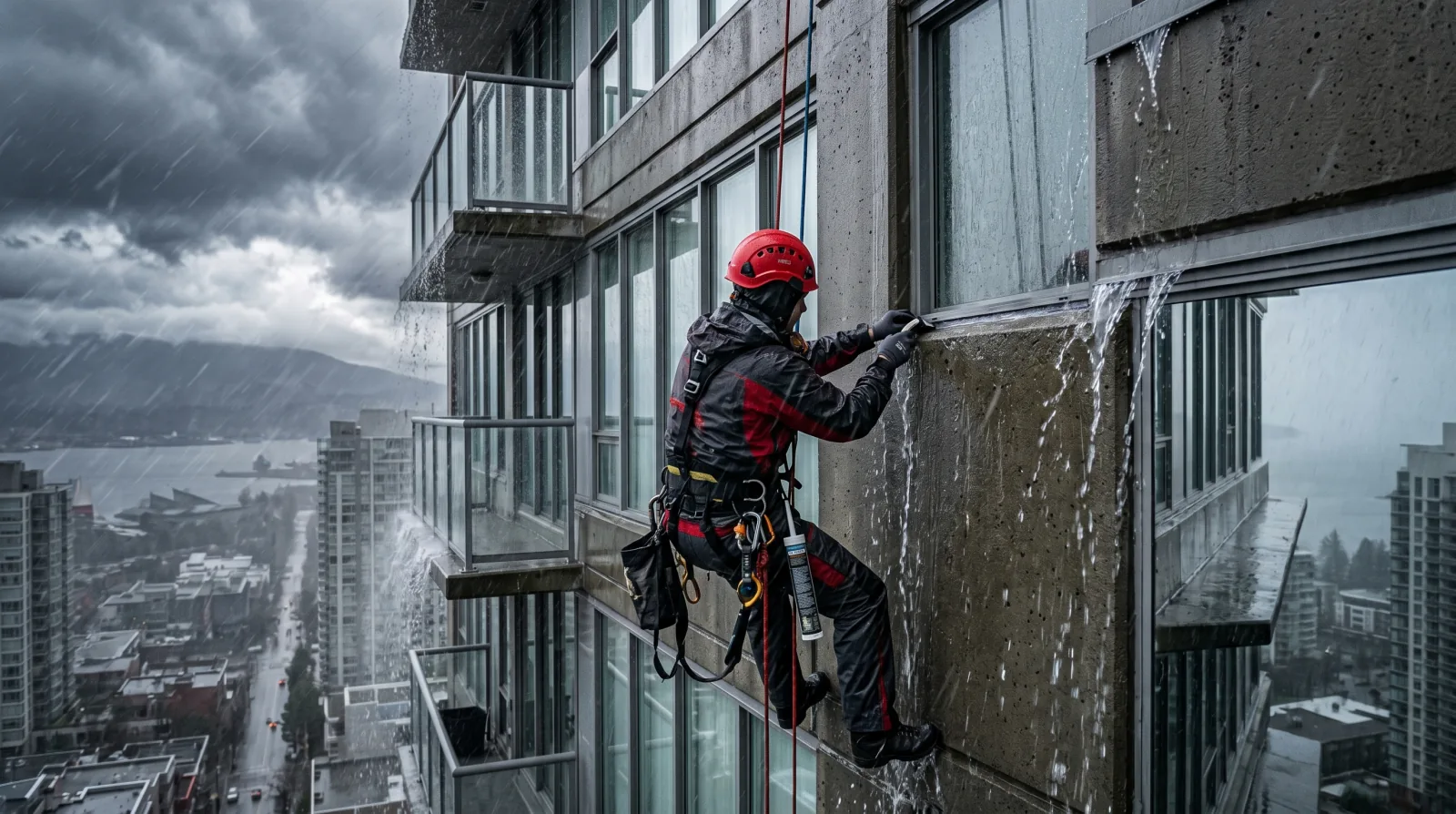
What the coast throws at a building every winter
Average annual precipitation at Vancouver International Airport (1991 to 2020), most of it arriving in the fall and winter months when envelopes are tested hardest.
Atmospheric rivers are long corridors of concentrated water vapour that deliver much of the BC coast's heaviest rain, loading an envelope continuously instead of in short showers.
Building envelope coverage, including water penetration defects, under BC's mandatory 2-5-10 home warranty on new homes. After that, the envelope is on the owners.
Understand, prepare, act, plan
The ten guides below follow the shape of the season itself: understand what coastal storms do to an envelope, prepare the building before the first system arrives, act correctly when damage shows up, and plan repair work around a wet climate.
 Understand
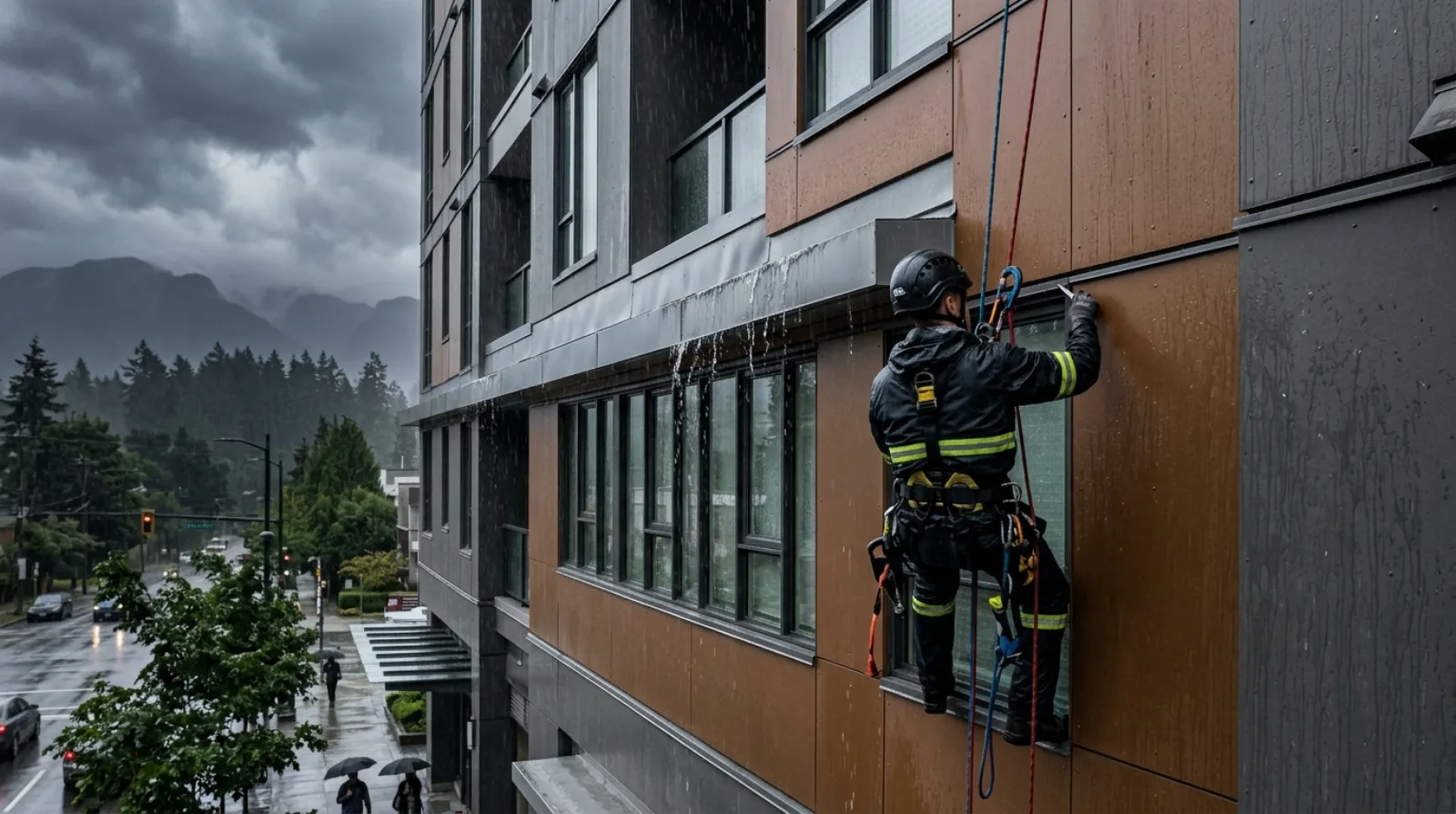
 Atmospheric rivers and your building
What a multi-day rain event actually does to an envelope: duration loading, wind-driven rain, and wall assemblies that never get a chance to dry out between systems.
Read the guide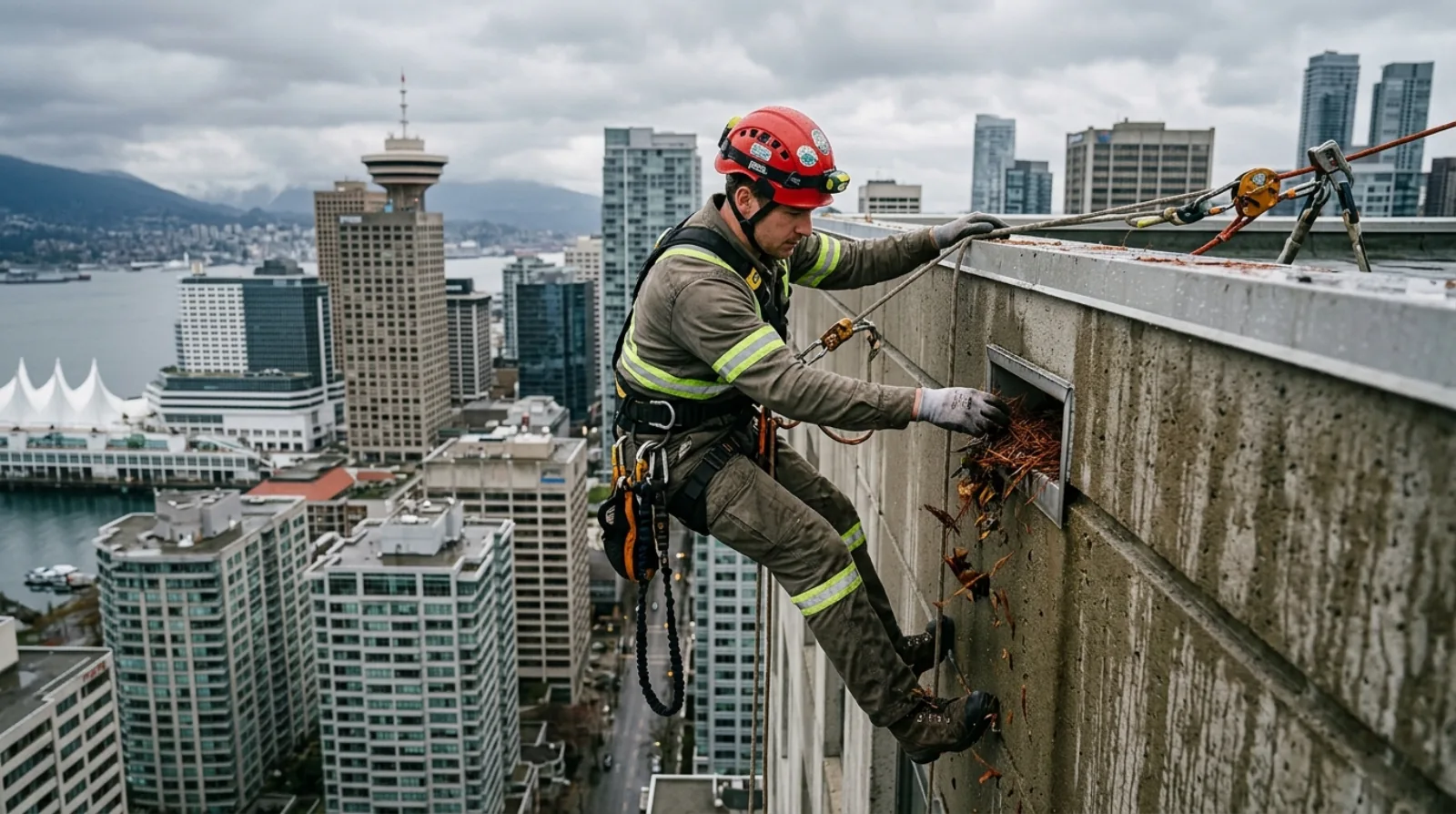 Prepare
 The pre-storm inspection checklist
The walk-around to do before the first fall storms: roof drains, scuppers, sealant joints, loose flashing, balcony doors, and the photos that record the starting condition.
Read the guide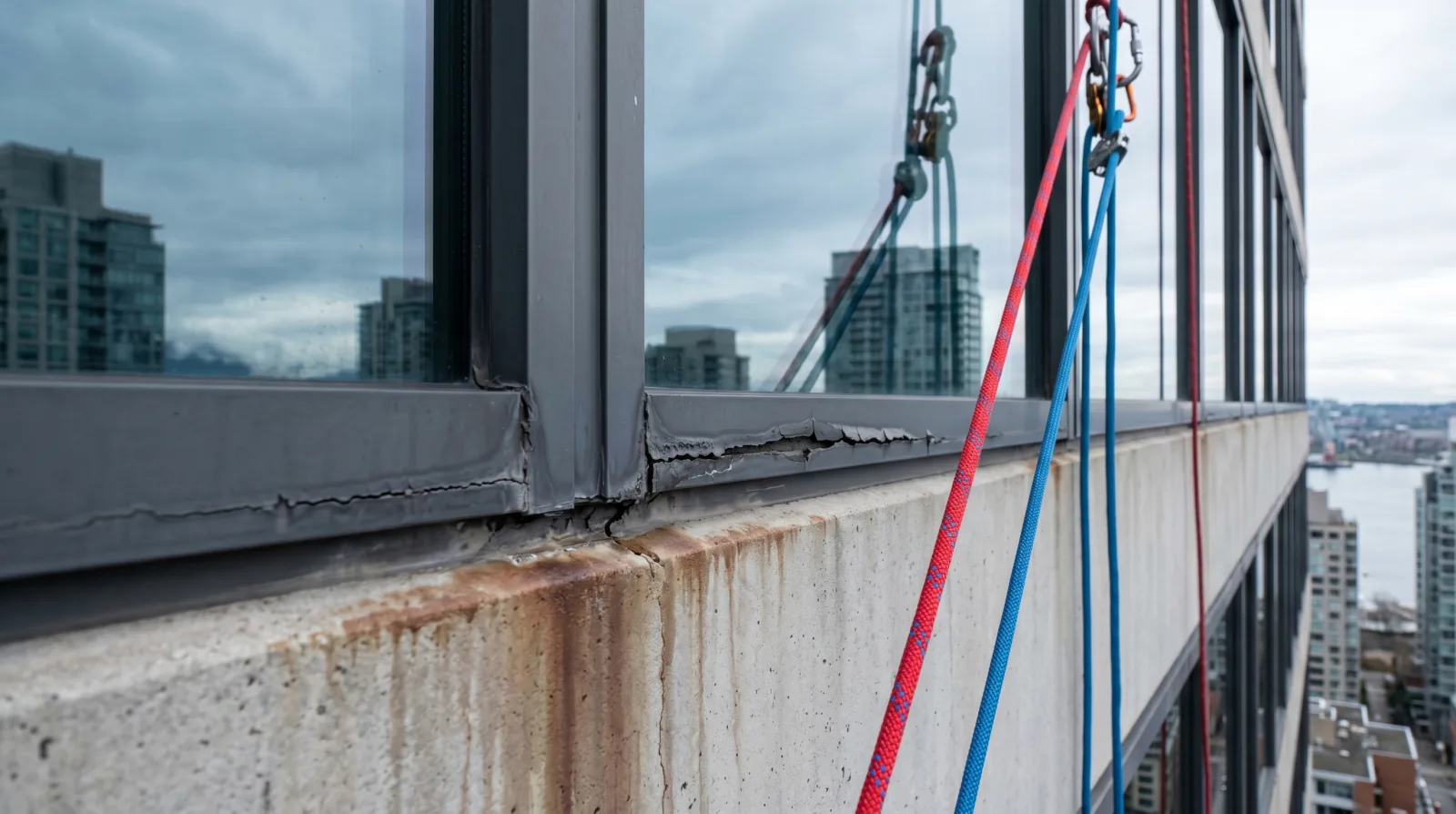 Understand
 Wind-driven rain explained
Why horizontal rain under wind pressure finds joints that vertical rain never touches, and how exposure changes by elevation and by height up the wall.
Read the guide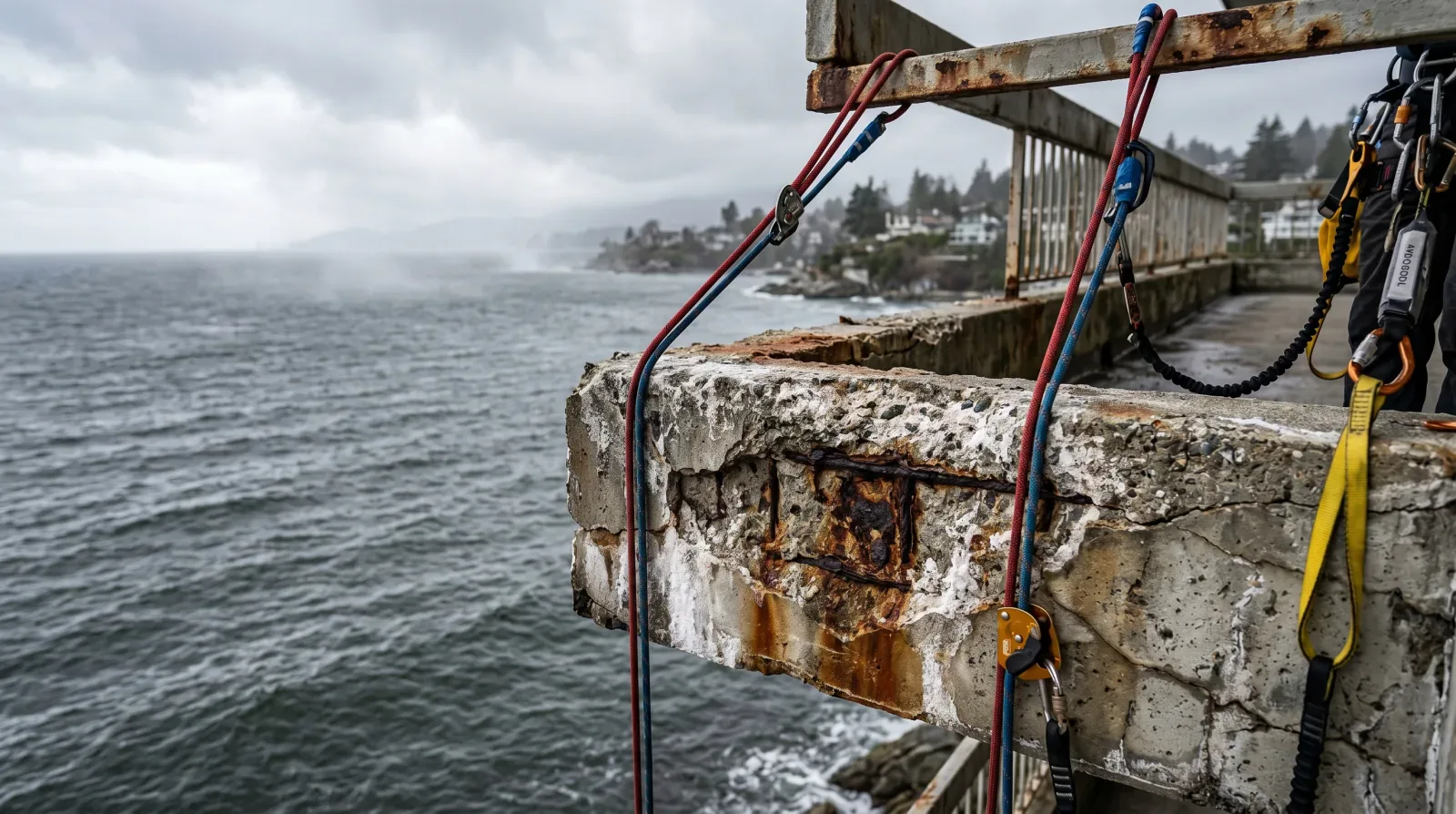 Understand
 Exposed and oceanfront buildings
West Vancouver and waterfront exposure: salt spray, long wind fetch over open water, and why these buildings need a tighter maintenance cadence than sheltered blocks.
Read the guide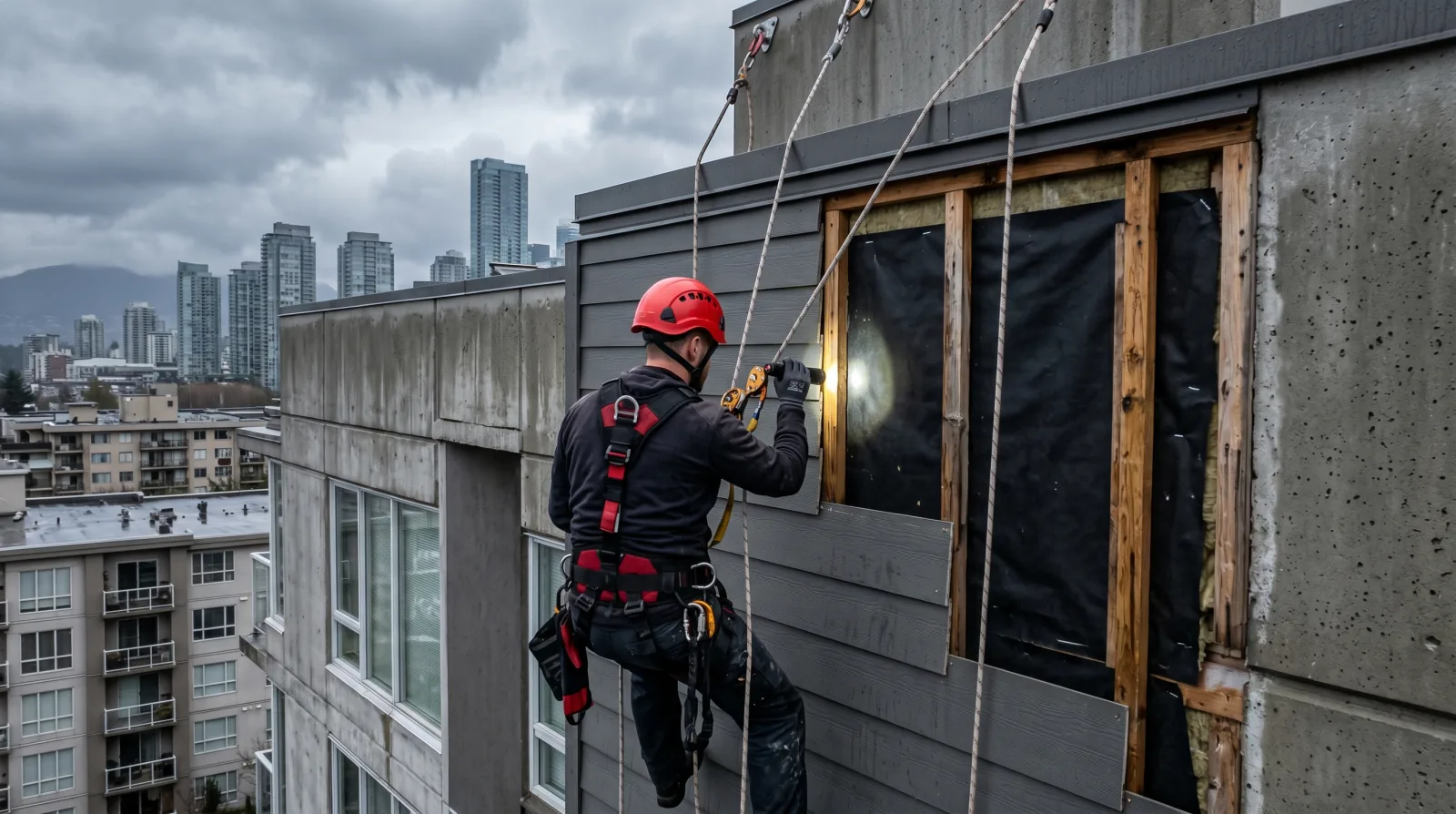 Act
Act Storm damage triage
After the storm passes: what to check first, what is urgent versus cosmetic, and why a dropped ceiling tile in a hallway can mean an envelope breach two floors up.
Read the guide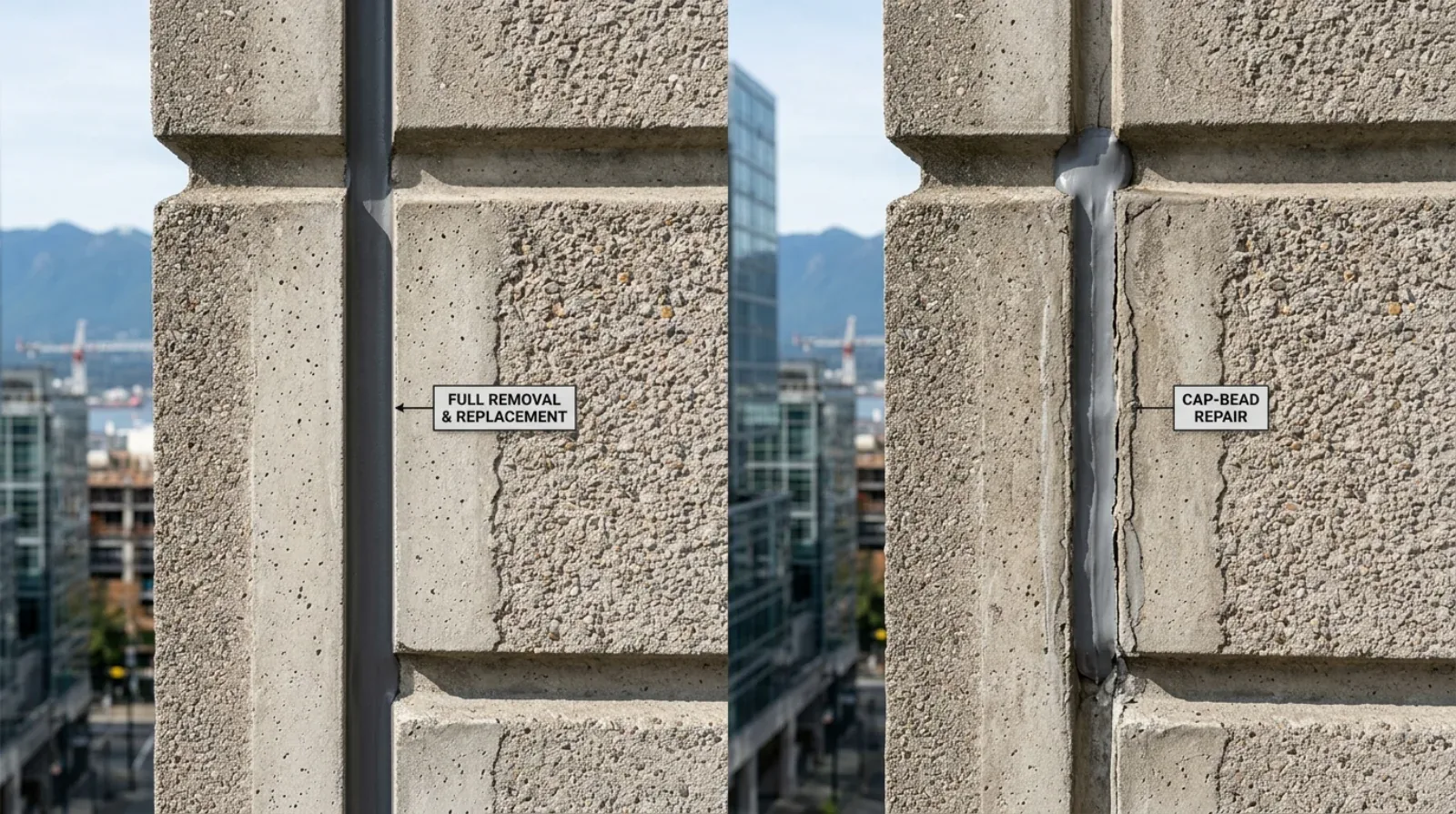 Act
Act Temporary repairs done right
Tarps, temporary sealant, and plywood: what buys real time until a proper repair, what traps water inside the assembly, and what quietly makes the damage worse.
Read the guide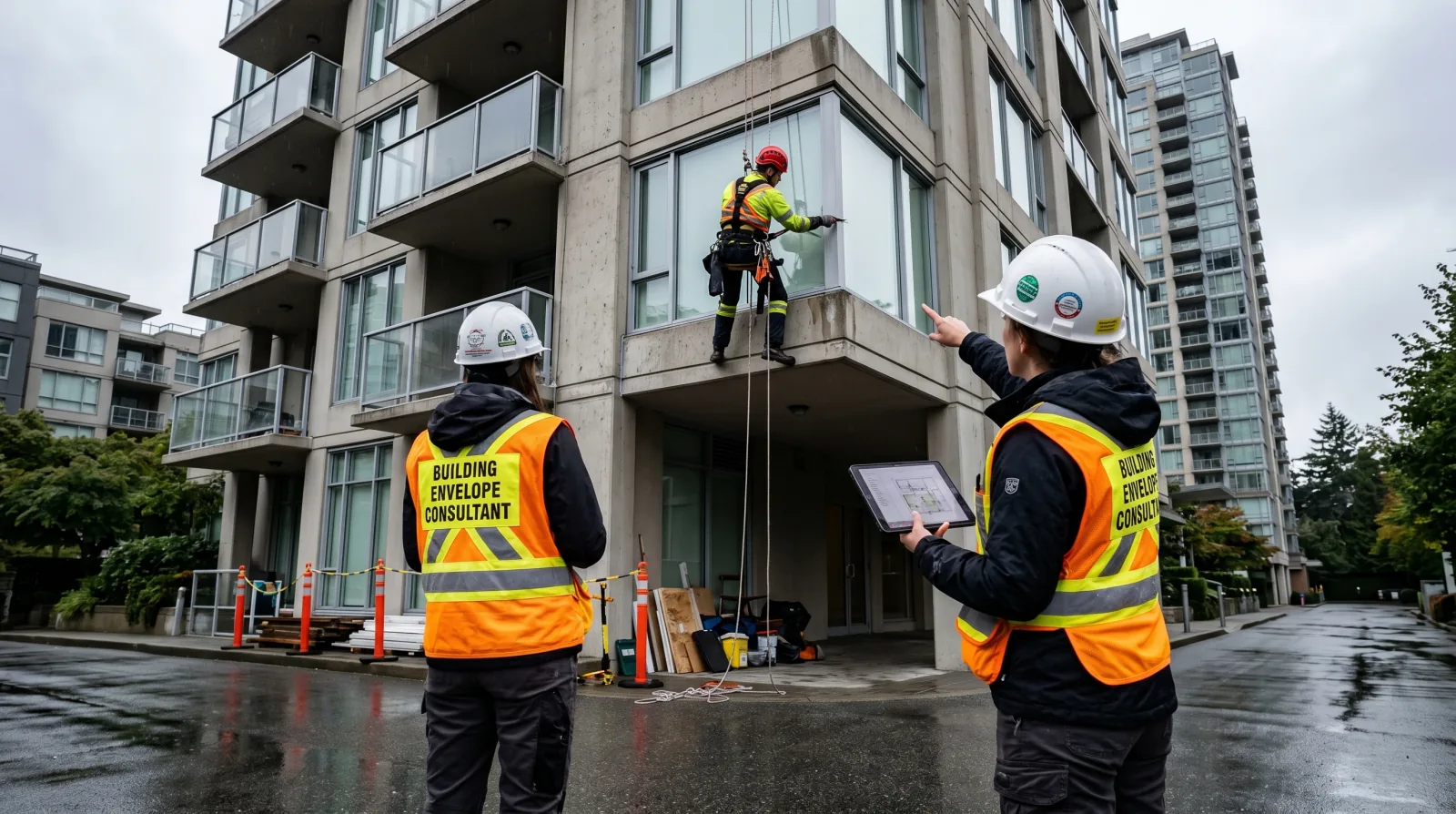 Act
Act Documenting damage for insurance
Photos, dates, moisture readings, and incident logs kept in the strata records. Practical record keeping that helps the council, the manager, and the broker do their jobs.
Read the guide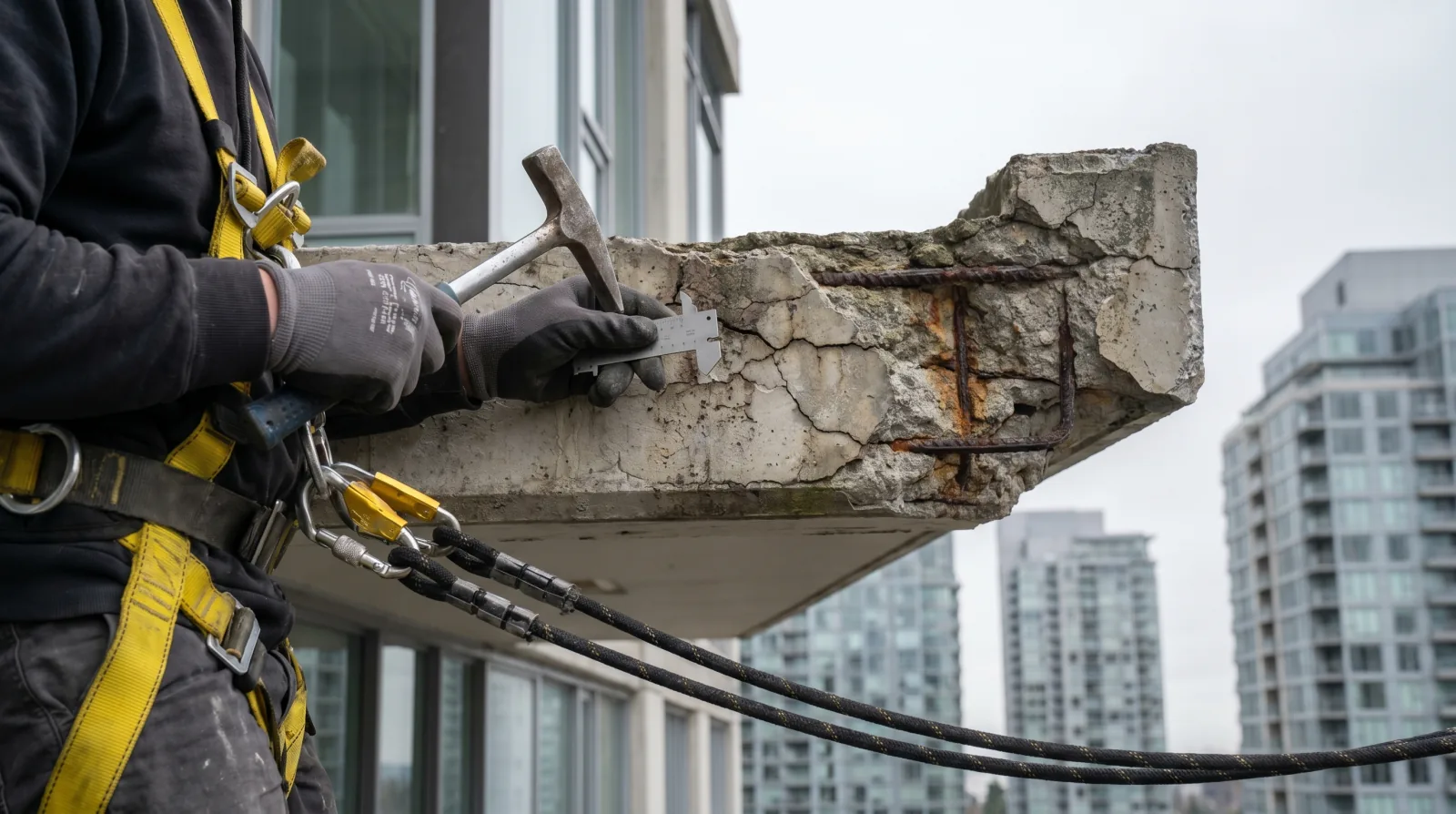 Understand
 Freeze-thaw after rain
What happens when a rain-saturated assembly hits a freezing night on the North Shore or at higher elevations, and why hairline cracks come out of winter wider than they went in.
Read the guide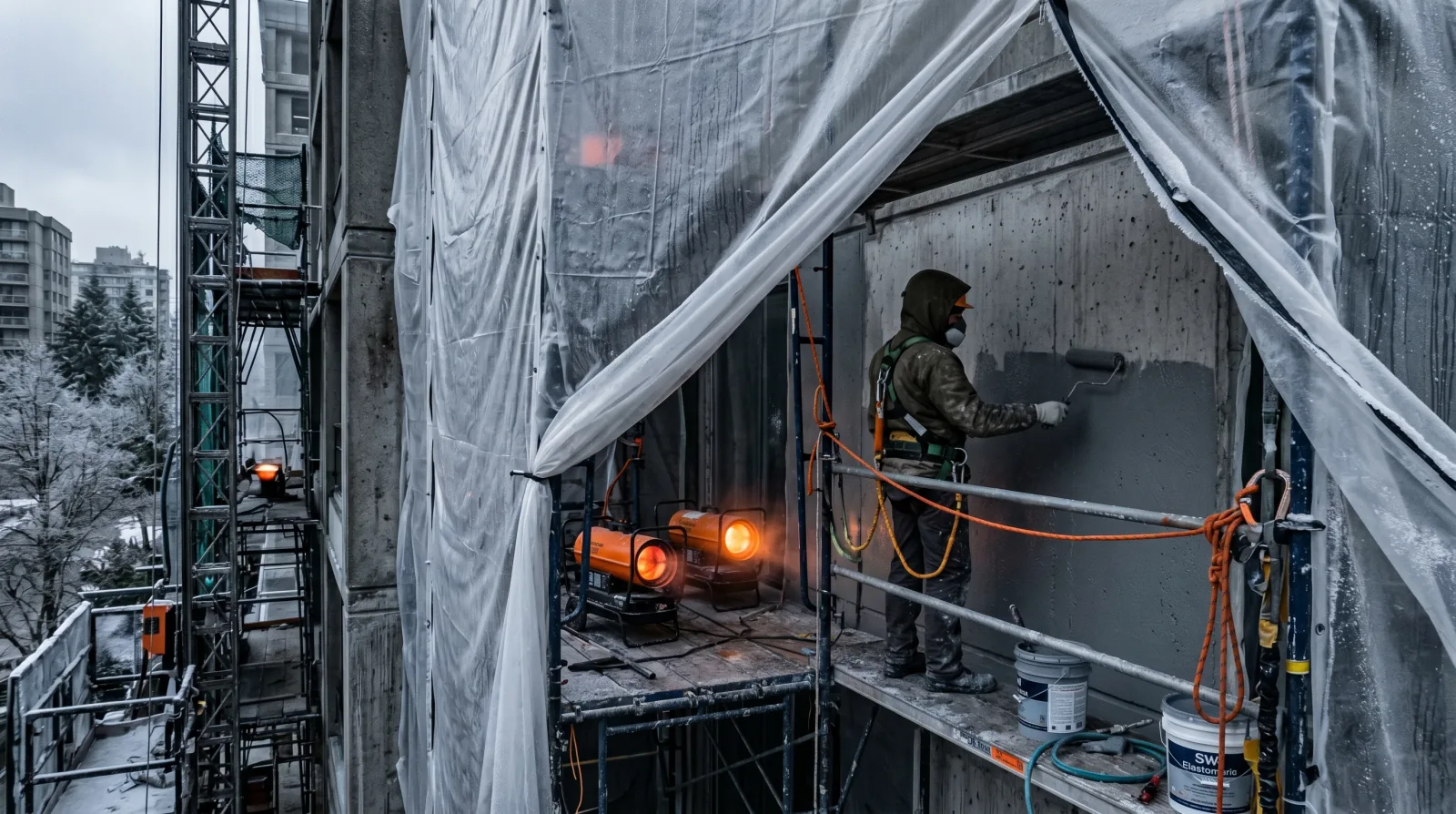 Plan
Plan Scheduling envelope work in a wet climate
Weather windows for coatings, sealants, and membranes in Metro Vancouver: why summer books out, what winter work is still realistic, and how to plan a season ahead.
Read the guide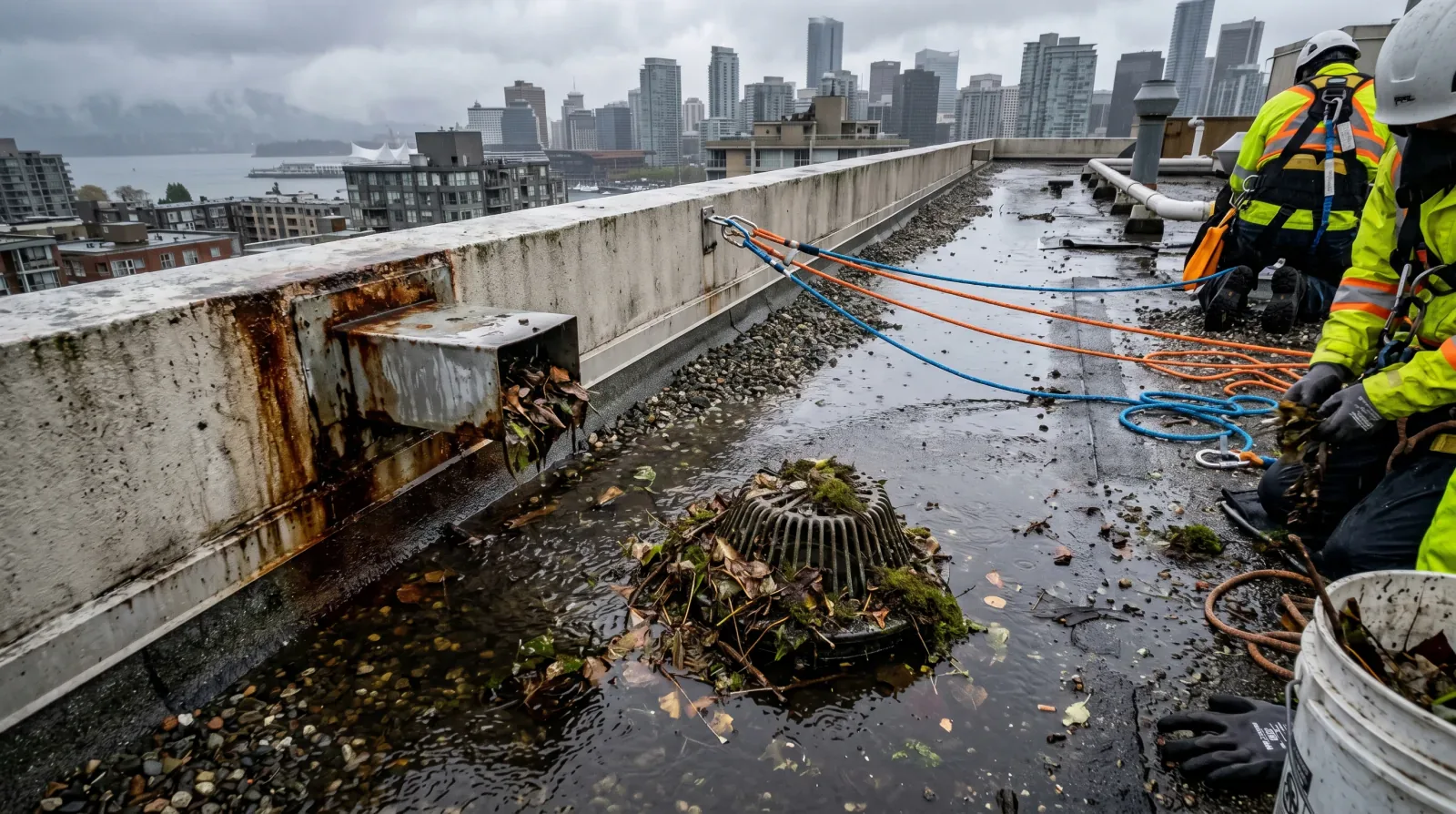 Plan
Plan Monitoring between storms
Moisture logs, recurring photo points, and drain checks after each event. How to turn one-off storm response into a routine the whole council can follow.
Read the guideWhy storm season is an envelope problem, not a weather problem
The weather is the same for every building on the block. What differs is the envelope that meets it. A building with clear drains, sound sealant, and tight flashing sheds a three-day rain event without drama. The building next door, with a blocked scupper and ten-year-old caulking at the window perimeters, takes on water at every weak detail. We see this every November: two towers of the same age on the same street, one dry, one with three active leak calls.
Storm readiness is mostly the boring work of restoring details before the season. Sealant joints get inspected and replaced where they have pulled away, which is the core of our sealant and caulking service. Drains and scuppers get cleared. Flashing gets refastened. None of it is glamorous, and all of it is cheaper than the leak investigation that follows a wet January.
There is also a legal frame around this in BC. Strata corporations are responsible for maintaining common property under the Strata Property Act, and depreciation reports track envelope components as funded line items. A storm-damaged membrane or corroded flashing does not appear from nowhere in those reports; the pre-storm inspection is how the condition data stays honest.
The fall sequence that works
The order matters. Start with the pre-storm inspection in early fall, while roofs are still dry enough to walk safely and sealant can still be replaced in good conditions. Repairs found during that walk get booked immediately, because every envelope contractor in Metro Vancouver is juggling the same shrinking weather window. By late October, the goal is a building with clear drainage paths, sound joints, and a photo record of its condition.
Then the season runs, and the job changes from preparation to response. After each major system, a short check: are the drains still clear, did anything move, did any resident report water? The monitoring routine takes an hour and catches problems while they are still small. When damage does show up, triage decides what needs a crew this week and what can wait for spring.
High-rise, low-rise, and waterfront are different jobs
A three-storey wood-frame walk-up in Burnaby and a 30-storey concrete tower in Coal Harbour face the same rain but fail differently. The low-rise depends heavily on its roof drainage and its stucco or siding details; a single blocked downspout can saturate a wall over one wet month. The tower concentrates its risk at window perimeters, panel joints, and anchors, where wind pressure at height drives water horizontally. And waterfront buildings in West Vancouver or White Rock add salt and wind fetch on top of everything else, which is why they get their own guide on exposed and oceanfront exposure.
Access drives the response too. On towers, rope access lets certified technicians reach a failed joint or damaged flashing days after a storm, without waiting weeks for scaffolding or a swing stage permit. That speed matters most in exactly the season when the next system is already on the forecast.
Where this hub connects
Storm season touches every other envelope topic on this site. Wind-driven rain finds failed joints, which is the territory of our sealant and caulking hub. Saturated balconies test membranes, covered in the balcony waterproofing hub. And the whole subject sits inside the larger question of how a wall keeps water out at all, which the building envelope hub covers from first principles. Use this hub for the seasonal work, and those for the systems underneath it.
Quick answers
What does storm season mean for a Metro Vancouver building?
Storm season is the stretch of the year, roughly fall through early spring, when Metro Vancouver takes most of its rain and wind. For a building it means the envelope gets tested for real: drains have to move serious volume, sealant joints face wind-driven rain, and any weak detail that got away with summer weather starts to leak. Readiness means checking those details before the weather arrives, not after the first ceiling stain.
What should a strata do before the first fall storms?
Before the first fall storms a strata should walk the building with a short list: clear roof drains and scuppers, look at sealant joints and flashing for gaps or lifting, check balcony drains and door thresholds, and photograph the current condition. Anything found broken gets repaired while the weather still allows it. The point of the pre-storm walk is to find the cheap fix in October instead of the expensive one in January.
How do storms damage building envelopes?
Storms damage envelopes in three main ways. Volume overwhelms drainage, so water ponds and finds seams. Wind drives rain horizontally into joints, window perimeters, and cladding laps that vertical rain runs past. And duration keeps assemblies wet for days, so water that gets in cannot dry out before the next system arrives. Most storm leaks trace back to a detail that was already marginal: a tired sealant joint, a blocked scupper, or lifted flashing.
From the resources library
Cold-Weather Exterior Restoration in Coastal BC: What Works in Winter
Winter restoration on a West Vancouver building is possible, but coatings, sealants, and concrete have temperature and dew-point limits. How crews manage it.
Read article ArticleStucco Crack Repair on Vancouver Low-Rise Buildings Before the Wet Season
Hairline cracks in stucco on a Lower Mainland low-rise turn into wet-season leaks if they're not sealed in late summer. What cracks matter, what to ignore, and how the repair is actually done before October.
Read article ArticleSpring and Fall Building Maintenance Checklist for Vancouver Strata Councils (2026)
A dual-season checklist for Vancouver strata councils and commercial property managers — spring post-winter recovery (April–May) and fall pre-storm prep (August–September). Covers balcony membranes, window sealants, parkade drainage, roof anchors, and concrete condition.
Read article ArticleAtmospheric Rivers and Your Building Envelope in Metro Vancouver
Atmospheric rivers drive extreme wind-driven rain at Metro Vancouver buildings. Here is how the storms find envelope weaknesses and what to check before the next one.
Read articleServices this guide connects to
Storm season questions
What does storm season mean for a Metro Vancouver building?
Storm season is the stretch of the year, roughly fall through early spring, when Metro Vancouver takes most of its rain and wind. For a building it means the envelope gets tested for real: drains have to move serious volume, sealant joints face wind-driven rain, and any weak detail that got away with summer weather starts to leak. Readiness means checking those details before the weather arrives, not after the first ceiling stain.
What should a strata do before the first fall storms?
Before the first fall storms a strata should walk the building with a short list: clear roof drains and scuppers, look at sealant joints and flashing for gaps or lifting, check balcony drains and door thresholds, and photograph the current condition. Anything found broken gets repaired while the weather still allows it. The point of the pre-storm walk is to find the cheap fix in October instead of the expensive one in January.
How do storms damage building envelopes?
Storms damage envelopes in three main ways. Volume overwhelms drainage, so water ponds and finds seams. Wind drives rain horizontally into joints, window perimeters, and cladding laps that vertical rain runs past. And duration keeps assemblies wet for days, so water that gets in cannot dry out before the next system arrives. Most storm leaks trace back to a detail that was already marginal: a tired sealant joint, a blocked scupper, or lifted flashing.
What is an atmospheric river?
An atmospheric river is a long, narrow corridor of concentrated water vapour in the atmosphere. When one makes landfall on the BC coast it delivers intense, prolonged rain, usually with strong wind behind it. These systems bring much of the coast's heaviest rain, and for a building the defining feature is duration: the envelope stays loaded for a day or more at a time instead of shedding a short shower and drying out.
Who is responsible for storm preparation in a strata building?
In a BC strata, storm preparation for common property sits with the strata corporation, in practice the council and the property manager. That covers the roof, exterior walls, drains, and building envelope. Residents still play a part: reporting leaks quickly, keeping balcony drains clear of pots and debris, and not sealing over vents or weep holes. The buildings that come through storm season well are the ones where council, manager, and residents each know their piece.
Does BC home warranty cover water penetration problems?
New homes in BC come with mandatory 2-5-10 home warranty insurance, and the building envelope portion, which includes defects that allow unintended water penetration, runs for 5 years. That coverage applies to construction defects, not to wear or deferred maintenance, and it only helps buildings still inside the coverage period. For an older building, the practical protection against storm water is maintenance and inspection, and the strata should speak to its broker about what its own policies cover.
Can envelope repairs be done during storm season?
Yes, envelope repairs happen all winter in Metro Vancouver, they just take more planning. Leak investigation and emergency response run year round. Sealant work proceeds on dry days when the substrate and temperatures allow it. Coating and membrane work in winter usually needs hoarding and heat so materials can cure. What changes in storm season is the size of the weather window, which is why non-urgent work is better booked into the drier months.
What parts of a building fail first in a storm?
The details fail first, almost never the open wall. Blocked roof drains and scuppers back water up under membranes. Aged sealant joints at windows and panel joints let wind-driven rain through. Loose or damaged flashing lets water behind the cladding. Balcony door thresholds and sliding tracks overflow. On exposed and oceanfront sites, corroded fasteners and anchors give way under wind load. Every one of those is checkable before the season starts.
How should a strata document storm damage?
Document storm damage the same way every time: date and time of the event, photos of each affected area from the same angles, notes on where water showed up and how much, and moisture readings if a contractor or manager can take them. Keep it all in the strata records with the correspondence. Good records help the council prioritize repairs, help contractors scope the work, and give the strata's insurance broker something concrete to work with.
How much rain does Vancouver get in a year?
Vancouver International Airport averages 1,189 mm of precipitation a year based on the 1991 to 2020 climate normals, and the North Shore mountains receive considerably more. Most of that arrives in the fall and winter months, often in concentrated multi-day events rather than spread evenly. That seasonal pattern is why pre-storm preparation in September and October matters more here than in cities where rain arrives gently all year.
Why does a small leak matter more during storm season?
A small leak in storm season repeats with every system that comes through, and between systems the assembly never fully dries. Wet framing, insulation, and sheathing stay wet for months, which is how rot and corrosion get established. The same drip that shows up twice a winter in a dry year can run weekly through a wet one. Small leaks found in fall are also far easier to trace and repair than the same leaks after months of saturation.
What storm-related services does Allweathercoating provide?
Allweathercoating handles the envelope side of storm season for strata and commercial buildings across Metro Vancouver: pre-storm inspections, roof drain and scupper clearing by rope access, sealant and caulking replacement, leak investigation and repair, and membrane and coating work scheduled around the weather. Crews are IRATA and SPRAT certified and work under WorkSafeBC Part 11 fall protection rules, which lets us reach storm damage on high-rise elevations without scaffolding the building.
Get the building checked before the first storm
We inspect drains, sealant joints, flashing, and membranes on strata and commercial buildings across Vancouver, North Vancouver, West Vancouver, and Burnaby, then fix what the storms would otherwise find for you.