Humidity management in a Vancouver winter
This is the guide to circulate to residents each October. The building sets where condensation can happen; how a suite is operated through the wet season sets how much moisture is available to condense. Six habits, none costing more than a cheap hygrometer, carry most of the load, and the same guide tells owners when the problem has stopped being theirs.
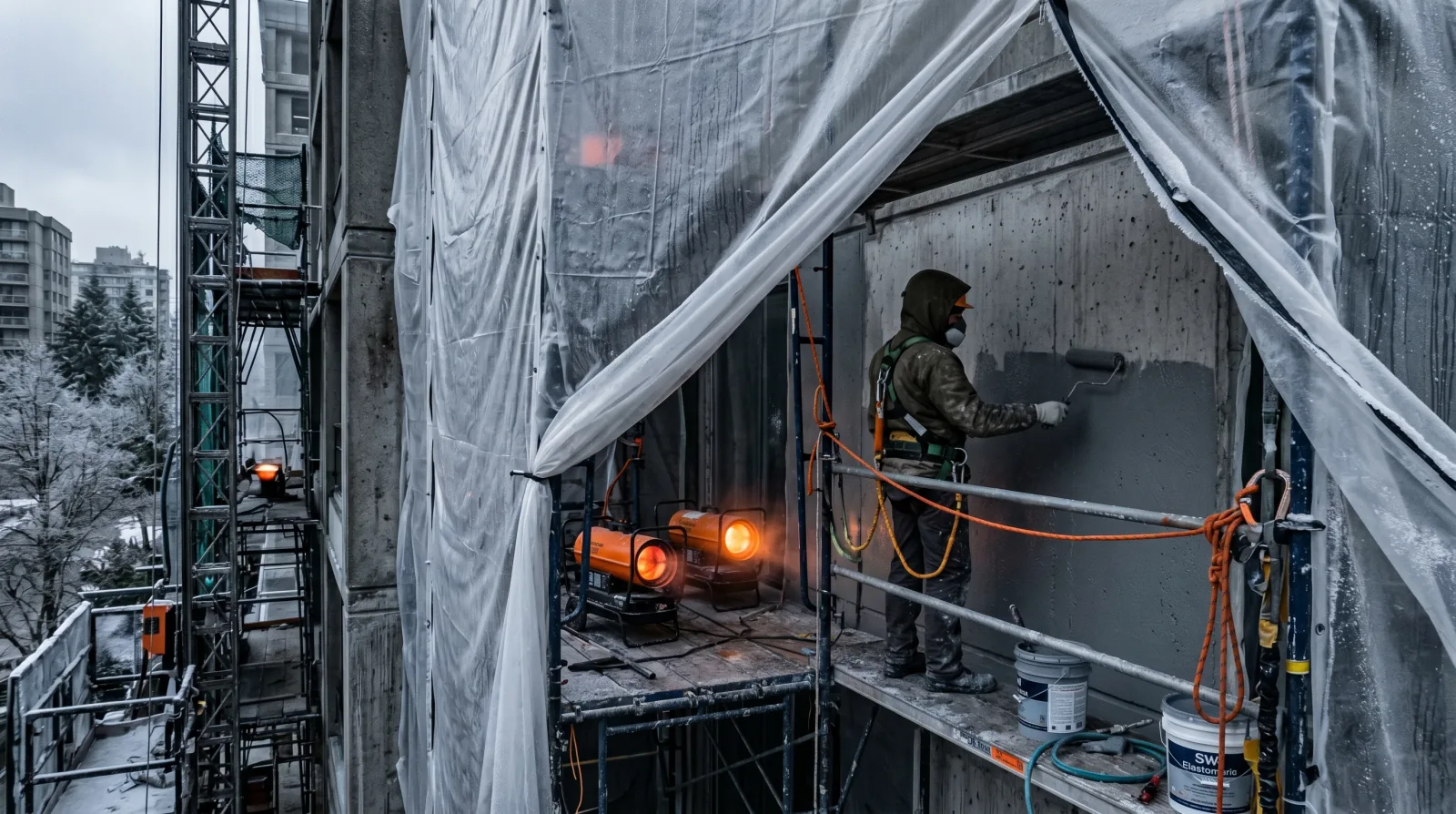
Why winter operation matters here specifically
Vancouver's condensation season is long because its winter is mild and wet rather than cold and dry. Suites stay closed up from the first cool weeks of fall until spring, outdoor air spends months too damp to do much drying, and the region's rainfall, 1,189 mm a year at YVR in the 1991 to 2020 normals, keeps the building fabric cool and moist from the outside. Indoors, every shower and simmering pot adds to a moisture account that only ventilation can settle.
The good news is proportion: on the winter damp complaints we assess across Vancouver and Burnaby, suite operation is a contributing factor more often than any single building defect. That means the cheapest fixes in the entire condensation and moisture hub are the ones in this guide. Timing matters as much as the habits themselves: the suites that start these routines with the first cool nights of October stay ahead of the season, while the ones that start after the January complaints spend the rest of the winter drying out a suite that has already banked weeks of moisture in its cool corners.
Six habits that do most of the work
Put a hygrometer where you can see it
A basic digital hygrometer costs less than a tank of gas and turns humidity from a guess into a reading. Put one in the main living space and glance at it the way you glance at a clock. The trend matters more than any single number: humidity that climbs day over day means the suite is storing moisture faster than it sheds it.
Let the windows be your second gauge
Condensation on the glass is the suite telling you the air is carrying more moisture than the coldest surfaces can tolerate. A morning haze that clears is life as normal. Streaming glass, pooled sills, or damp that lingers into the afternoon is a running instruction to ventilate more and add less.
Exhaust during and after every moisture event
Showers, baths, boiling pots, dishwasher steam: run the fan through the event and keep it running until the room reads dry. Lids on pots, shorter and cooler showers, and bathroom doors kept closed while the fan clears the room all shrink the deposit before it spreads through the suite.
Keep furniture a hand's width off exterior walls
A wardrobe tight to an exterior wall makes a still, cold pocket where damp condenses and never dries. Pull large furniture a few centimetres off any wall that faces the weather, keep closet doors on exterior walls ajar in winter, and avoid stacking storage against perimeter corners. Air movement is free drying.
Heat steadily rather than in bursts
Surfaces in a suite that cools deeply overnight fall further below the dew point, so the morning condensation is heavier and takes longer to dry. Steady modest heat keeps walls, frames, and glass warmer through the cold hours. Rooms kept unheated with doors closed become condensation reservoirs for the whole suite.
Dry laundry with an exit for the moisture
Every litre that leaves the clothes enters the air. A vented dryer exports it; a rack in the living room delivers it to the windows and cold corners. If indoor rack drying is unavoidable, do it in a room with the exhaust fan running and the door closed, never draped over perimeter furniture.
Ventilation is the other half of every habit
Each habit above reduces deposits into the suite's moisture account; the exhaust system makes the withdrawals. A suite whose bathroom fan cannot hold a tissue to the grille is operating with its main drain half-blocked, and no amount of lid discipline compensates. The ventilation and exhaust guide covers testing the fans, the ducts behind them, and the make-up air that lets them actually move air. Check the equipment once each fall, before the season starts.
Short, deliberate window ventilation still earns its keep in this climate. A few minutes of cross-draught after a shower or a cooking session exchanges the suite's moist air for outdoor air that, once warmed, lands drier. That beats a window cracked open all day, which mainly chills the wall around it and hands the room a new cold surface to condense on.
Knowing when the suite has done its part
Habits have a ceiling, and it is set by the building. A suite over an unheated parkade, a bedroom corner on an uninsulated slab edge, or a wall of 1970s aluminum frames will condense responsibly managed air, because those surfaces run cold enough to wring moisture out of almost anything. The mechanics are covered in the thermal bridging guide, and the tell is persistence: damp that keeps returning to the same spots after the habits are genuinely in place.
Weather correlation is the other flag. Habit-driven condensation tracks cold snaps and heavy-occupancy evenings. Damp that arrives with storms is water getting in, a different problem with a different owner, and the condensation versus leak guide walks through separating them. Either way, once the evidence points at the building, the next step is a strata-level conversation and, where the envelope is implicated, an assessment through our building envelope repair service. A resident who has run the habits and kept a dated log of what stayed wet hands that assessment its starting evidence, and moisture problems, whatever their source, should be dealt with promptly rather than wiped and tolerated.
Quick answers
How should I monitor humidity in my suite?
With an inexpensive digital hygrometer in the main living space, read casually but regularly. What you are watching is the trend and the consequences: readings that climb day after day, paired with condensation appearing on windows and cold corners, mean moisture is accumulating faster than the suite sheds it. The glass itself is the second instrument; persistent condensation is a humidity problem announcing itself regardless of what any number says.
What humidity level should a suite run at in winter?
Low enough that the suite's coldest surfaces stop collecting water, and that level differs by building. A new tower with warm interior surfaces tolerates more moisture than a 1970s suite full of thermally bridged corners and aluminum frames. That is why the practical target is behavioural: if windows and corners are condensing nightly and drying slowly, the suite needs less moisture and more ventilation, whatever the hygrometer reads.
Why should furniture sit off exterior walls?
Because furniture against a weather-facing wall traps a layer of still air that the room's heat cannot reach. The wall surface behind it runs colder than the open wall beside it, condensation forms in the gap, and nothing dries because no air moves. The back panel of a wardrobe on a north wall is one of the most common staining sites we see in Vancouver suites. A few centimetres of gap restores airflow.
Winter humidity questions
How should I monitor humidity in my suite?
With an inexpensive digital hygrometer in the main living space, read casually but regularly. What you are watching is the trend and the consequences: readings that climb day after day, paired with condensation appearing on windows and cold corners, mean moisture is accumulating faster than the suite sheds it. The glass itself is the second instrument; persistent condensation is a humidity problem announcing itself regardless of what any number says.
What humidity level should a suite run at in winter?
Low enough that the suite's coldest surfaces stop collecting water, and that level differs by building. A new tower with warm interior surfaces tolerates more moisture than a 1970s suite full of thermally bridged corners and aluminum frames. That is why the practical target is behavioural: if windows and corners are condensing nightly and drying slowly, the suite needs less moisture and more ventilation, whatever the hygrometer reads.
Why should furniture sit off exterior walls?
Because furniture against a weather-facing wall traps a layer of still air that the room's heat cannot reach. The wall surface behind it runs colder than the open wall beside it, condensation forms in the gap, and nothing dries because no air moves. The back panel of a wardrobe on a north wall is one of the most common staining sites we see in Vancouver suites. A few centimetres of gap restores airflow.
Does heating a suite reduce condensation?
Yes, through the surfaces. Warm air holds moisture without complaint; the trouble starts when that air meets a surface below its dew point. Steady heating keeps walls, glass, and frames warmer, which lifts them above the dew point of the room air for more hours of the day. Heating does not remove a single gram of moisture, so it works alongside ventilation rather than instead of it: warmth for the surfaces, exhaust for the supply.
Is turning the heat way down at night or when away a problem?
For condensation, it can be. Deep nightly setbacks let every surface in the suite cool for hours, and the moisture of the evening, cooking, showers, and sleeping occupants, condenses on glass and corners that steady heat would have kept above the dew point. The heavy morning window streaming many residents accept as normal is often the overnight setback at work. Modest setbacks with morning ventilation manage both bills and damp.
Do humidifiers belong in a Vancouver winter?
Rarely, and never running unwatched. Vancouver's marine winter air, once heated indoors, is drier than outdoor humidity suggests, and some households run humidifiers out of habit brought from drier climates. In a suite already showing window condensation, a humidifier is directly feeding the problem. Anyone using one for comfort should watch the windows and a hygrometer, and stop the machine the moment glass starts collecting water.
Are dehumidifiers worth running in a suite?
As a targeted tool, yes; as a substitute for ventilation, no. A dehumidifier genuinely removes moisture and helps in defined situations: drying a suite after a flood or leak repair, managing a chronically damp room while a building-side fix is being arranged, or handling unavoidable indoor laundry drying. A suite that needs a dehumidifier running all winter just to keep windows clear has a ventilation or cold-surface problem that deserves diagnosis.
Do closed doors and unused rooms make winter damp worse?
Often. A bedroom kept cool with the door shut receives moisture from the rest of the suite whenever the door opens but has neither the warmth to keep its surfaces above the dew point nor the airflow to dry them. Guest rooms and storage rooms on exterior corners are the classic case, discovered stained in spring. Leaving interior doors open, and heating unused perimeter rooms at least modestly, keeps them from becoming collection points.
Why is damp worst in bedrooms overnight?
Sleeping people humidify the room all night through breathing, the door is usually closed, the heat is usually lowered, and no fan is running. Eight hours of that combination delivers moisture to windows and corner walls exactly when they are coldest. The morning ritual of wiping bedroom glass is so common in Metro Vancouver that residents stop reporting it. Cracking the door, modest overnight heat, and a morning airing-out all, in our experience, help noticeably.
What daily habits add the most moisture to a suite?
Showers and baths lead, followed by cooking, especially long simmering and boiling without lids, indoor laundry drying, dishwashers opened mid-cycle to steam off, and simply the occupants breathing, which no one can reduce but everyone can ventilate for. Aquariums and large plant collections contribute quietly. All of it is ordinary living, and together it adds litres of water per day that the suite must export through fans and windows or surrender to its coldest surfaces.
When is winter damp beyond what habits can fix?
When disciplined ventilation and sensible moisture habits leave surfaces wet anyway. Damp that returns nightly to the same corner, staining that spreads on an exterior wall, water arriving with storms rather than cold snaps, or a musty smell with no visible source all point at the building: cold-running assemblies, failed exhaust equipment, or water entering the envelope. At that point the suite has done its part, and the diagnosis belongs at the strata level with professional assessment.
Habits in place and still wiping windows?
We assess winter damp on strata and commercial buildings across Vancouver, Burnaby, and the North Shore, and we identify which part of the problem the building owns.