Condensation, damp, and indoor moisture in Vancouver buildings
Every winter, strata councils across Vancouver and Burnaby field the same reports: wet windows, black corners in closets, a musty smell nobody can place. Some of it is water getting in through the envelope. A lot of it is moisture the building made itself, condensing on the coldest surface it could find. This hub is the reference we hand councils and property managers for telling those apart and fixing the building-side causes.
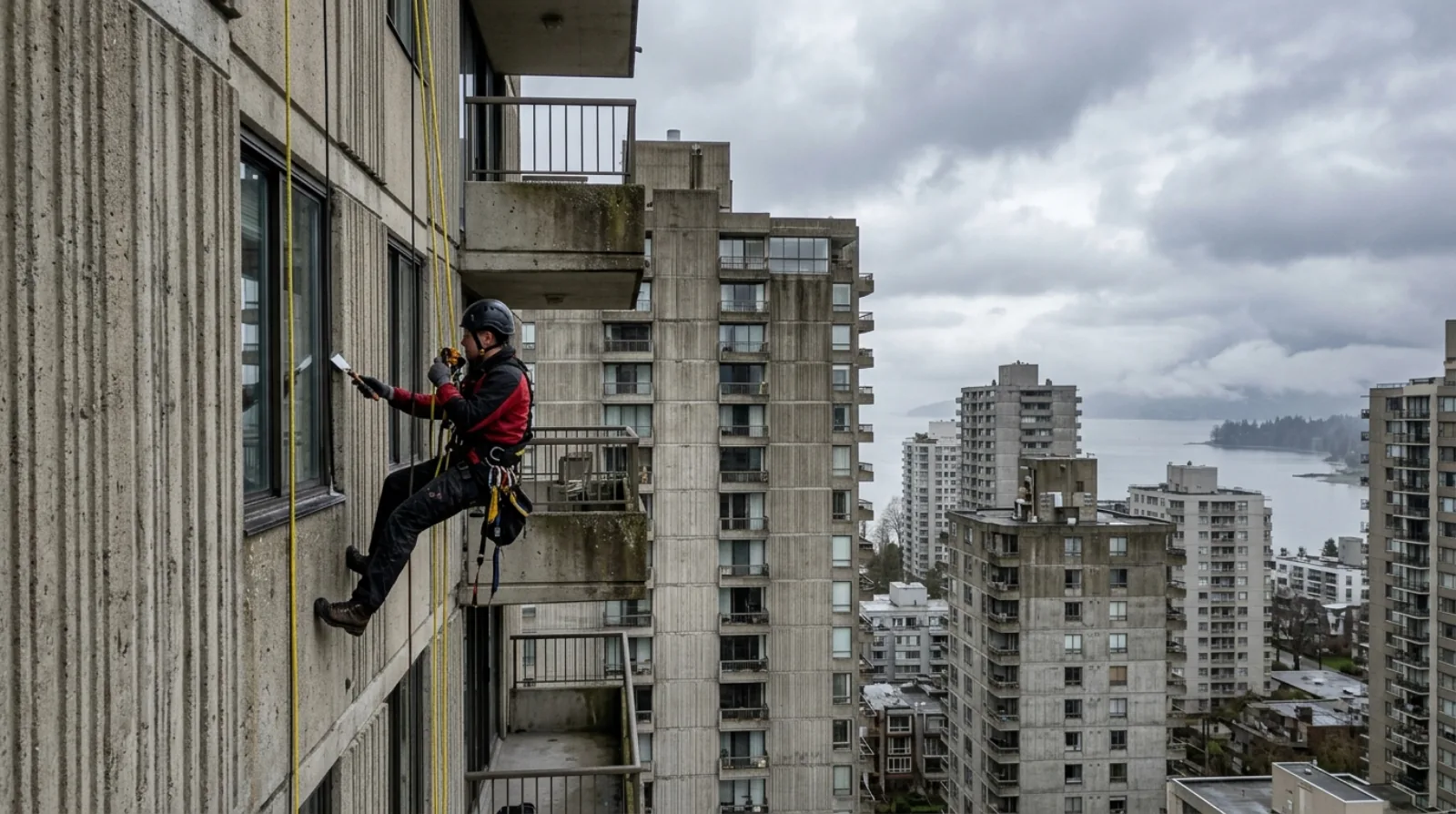
The moisture math a Vancouver building lives with
Average annual precipitation at Vancouver International Airport (1991 to 2020). Months of damp, mild air outside means indoor moisture has a long season to find cold surfaces.
Roughly $4 billion in damage across 900+ Lower Mainland buildings in the leaky condo crisis, proof of what hidden moisture does to wood-frame assemblies over time.
The depreciation-report cycle required of BC strata corporations of 5+ lots under the Strata Property Act, where windows, cladding, and ventilation get tracked as funded components.
Ten guides, from diagnosis to prevention
Start with the diagnosis guides if water is showing now: the first question on any damp report is whether the building made the moisture or let it in. The understand guides explain the mechanisms, and the fix and prevent guides cover what councils and owners can actually change.
 Diagnose
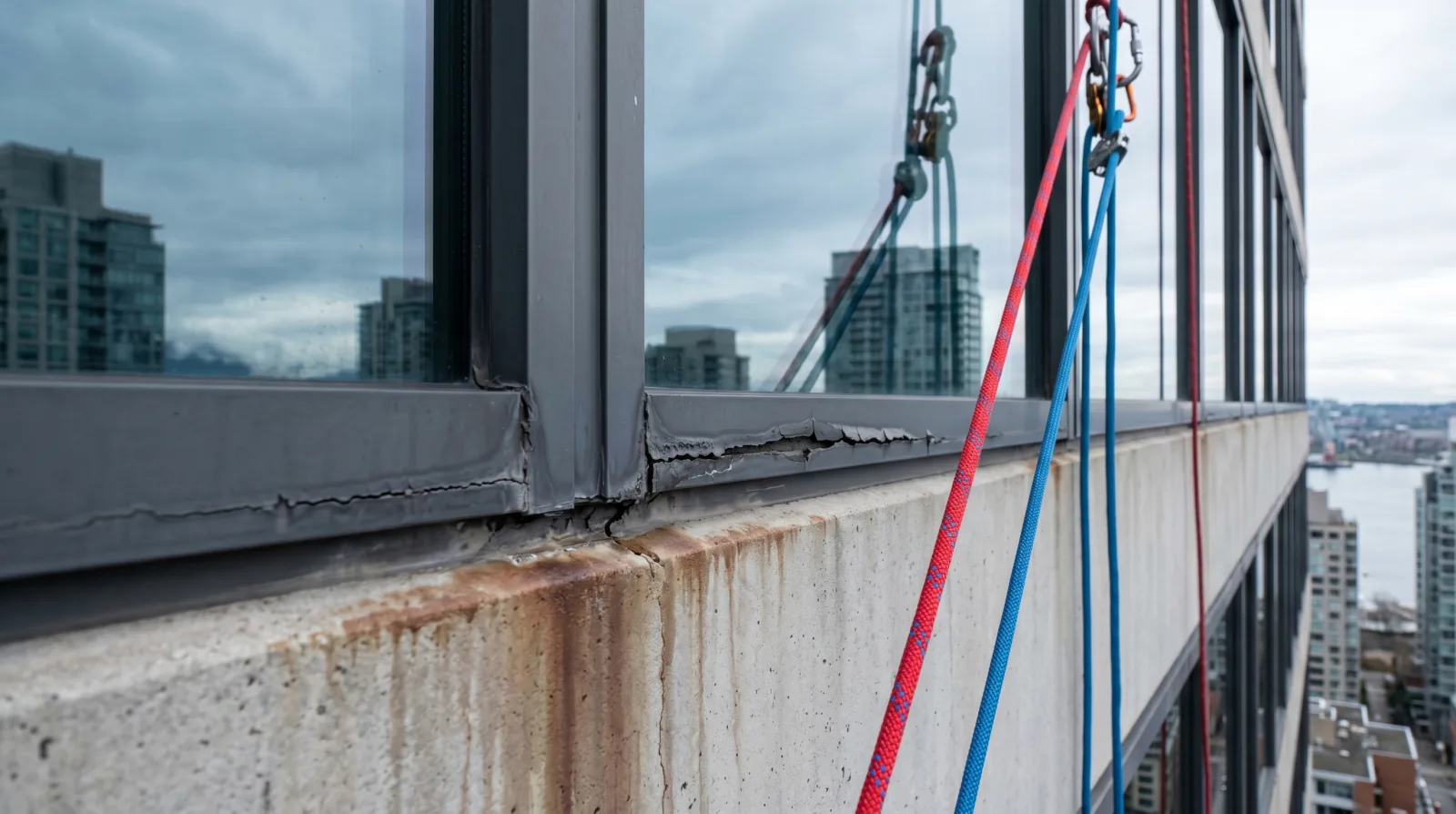
 Condensation or a leak? How to tell
Pattern, timing, location, and weather correlation: the four reads that separate indoor moisture from envelope leakage, and the single most common misdiagnosis we see on Metro Vancouver buildings.
Read the guide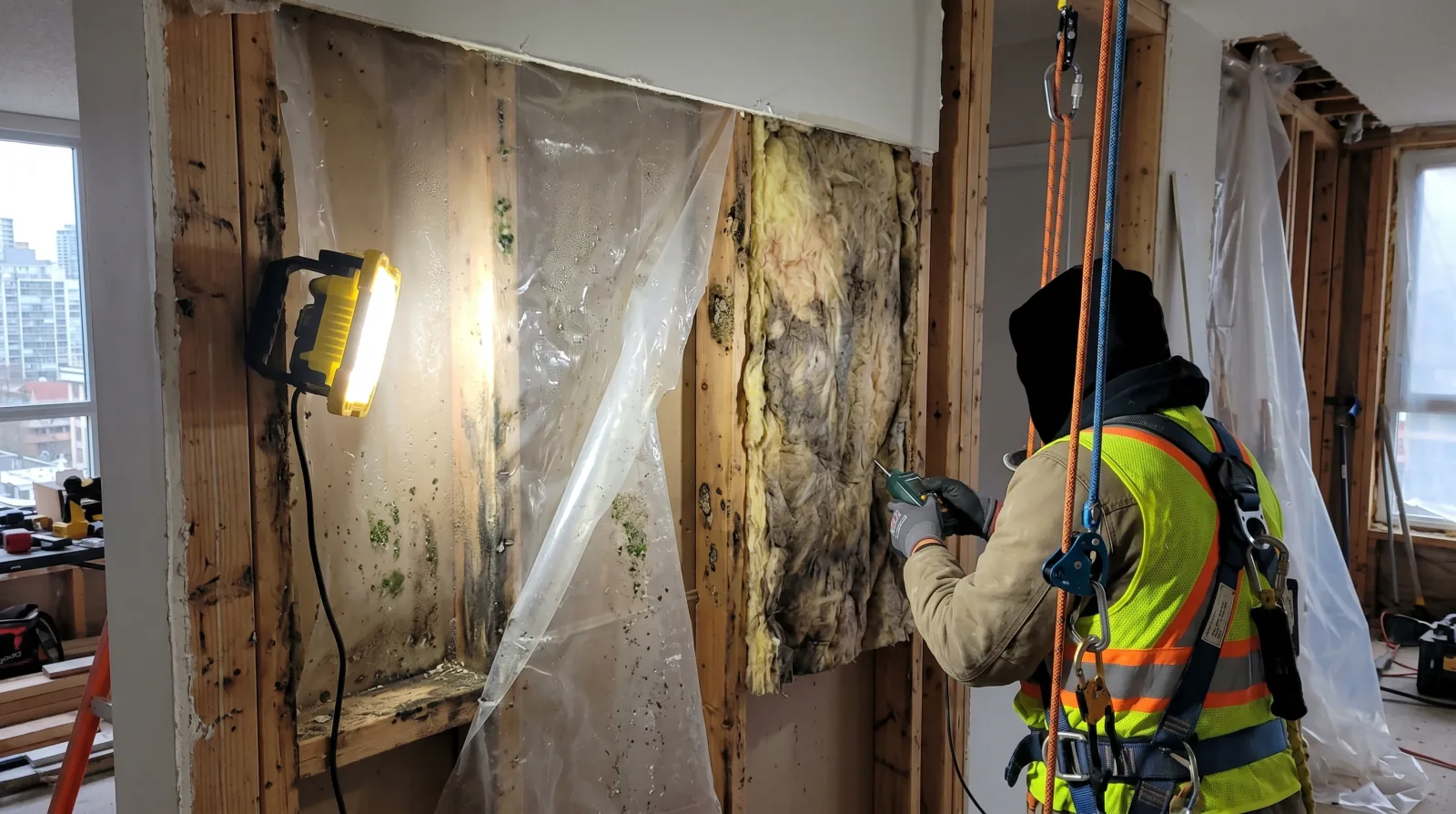 Understand
 Condensation inside the wall assembly
Warm moist indoor air meets a cold surface hidden within the wall. Why interstitial condensation mimics a leak, which assemblies it favours, and how it gets confirmed on site.
Read the guide Diagnose
 Window condensation: glass, panes, or frames
Water on the glass, fog trapped between the panes, and drips off the frame are three different findings. Which ones are cosmetic, which mean a failed sealed unit, and which point at the wall.
Read the guide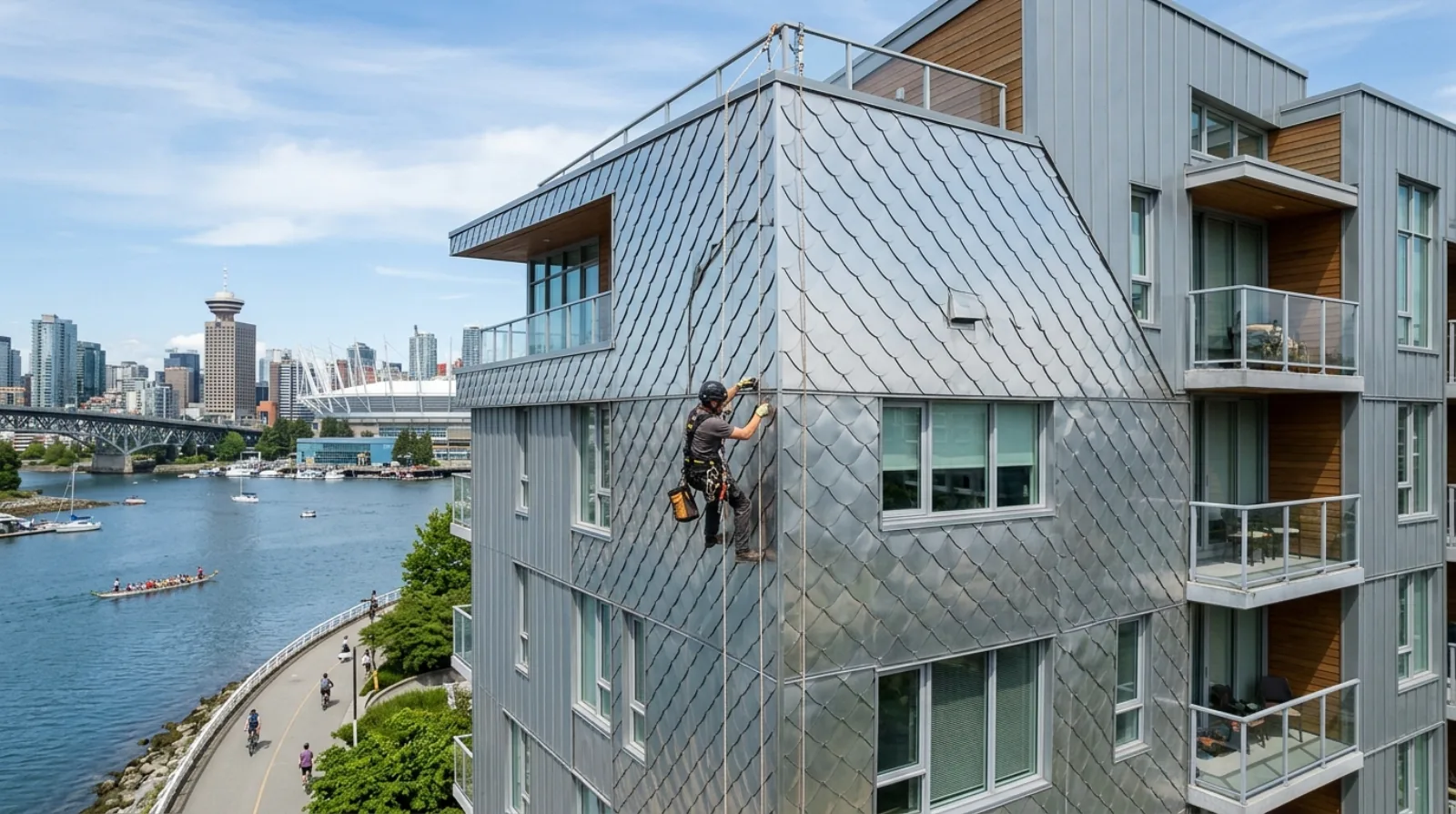 Fix
Fix Ventilation, exhaust fans, and make-up air
Bathroom and kitchen exhaust, run times, and the make-up air nobody thinks about. Why sealed-up suites get wet windows, and what a working ventilation routine looks like in practice.
Read the guide Diagnose
 Parkade and crawlspace damp
Below-grade humidity, damp slabs, and efflorescence. How to tell soil moisture and seasonal humidity from a waterproofing failure before anyone scopes a membrane repair.
Read the guide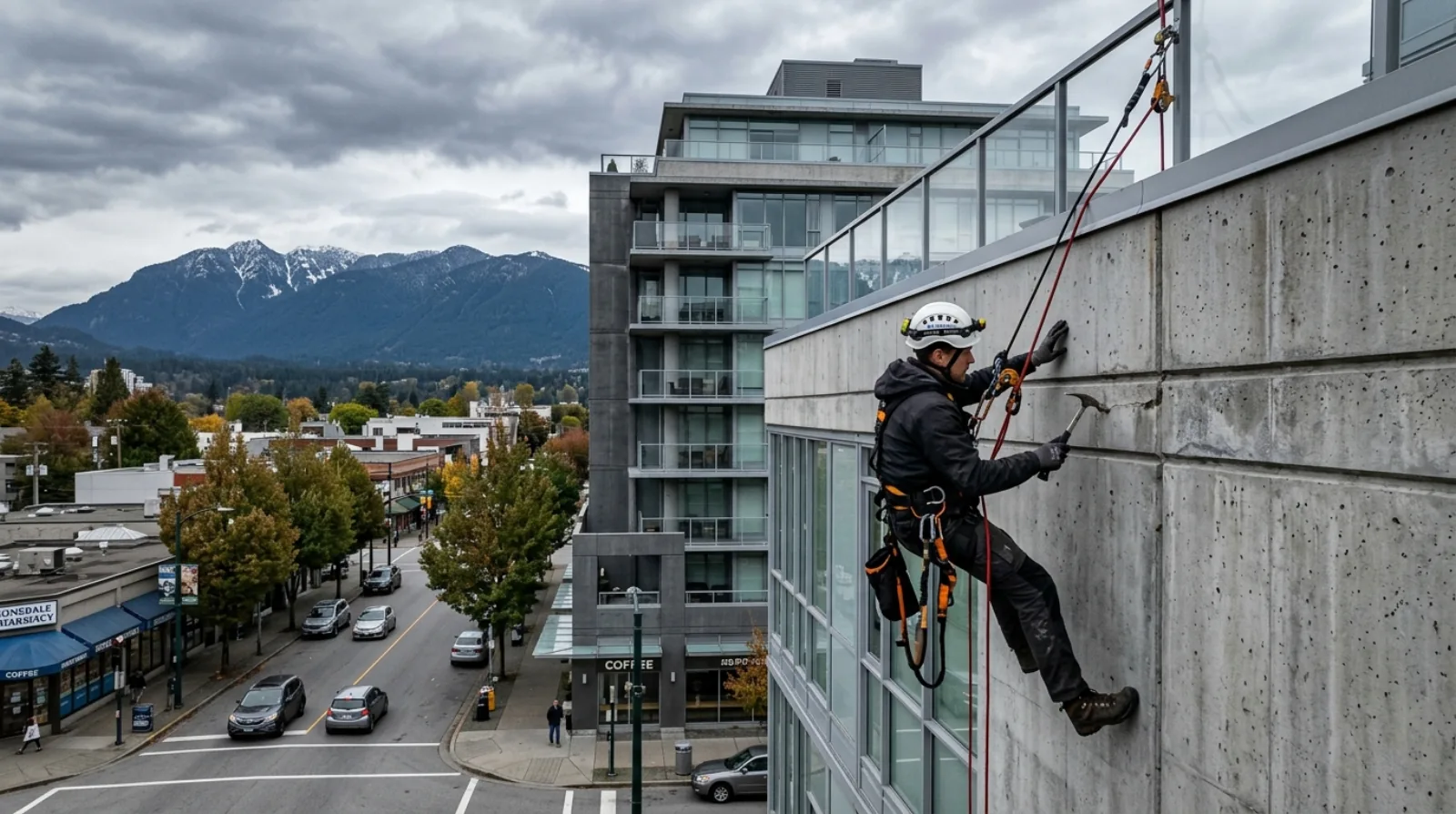 Prevent
 Mould prevention for strata buildings
The building-side conditions that let mould establish: chronic damp, cold spots, and poor ventilation. What councils can fix at the building level, and when to bring in qualified professionals.
Read the guide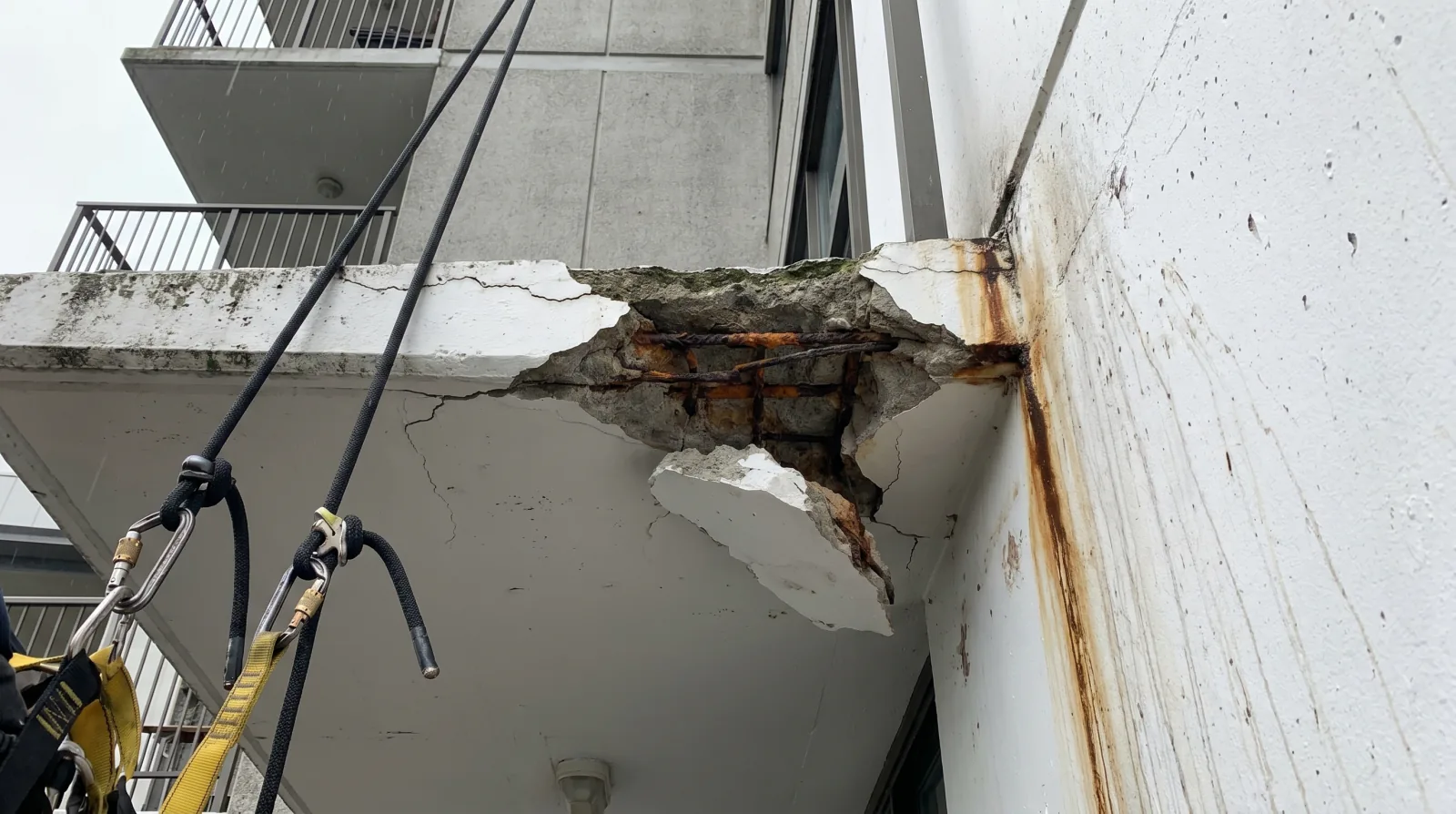 Understand
 Thermal bridging and cold spots
Why closet corners and the wall behind the headboard go black first, and why uninsulated slab edges in older concrete towers make every balcony a cooling fin for the suite behind it.
Read the guide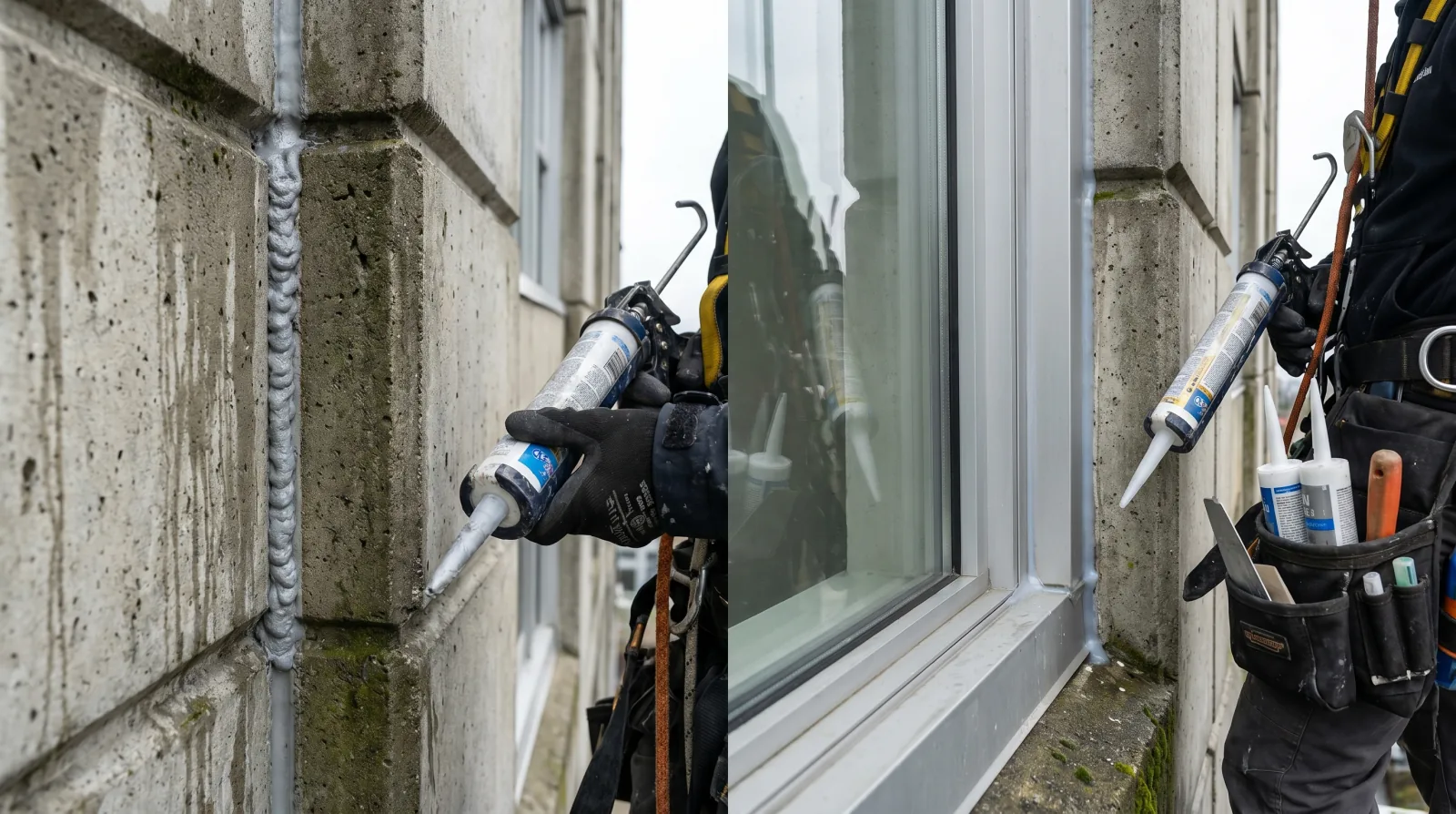 Understand
 Vapour barriers and airtightness
Vapour control and air leakage move moisture by two different mechanisms, and one of them moves far more of it. Why airtightness matters more than most owners think.
Read the guide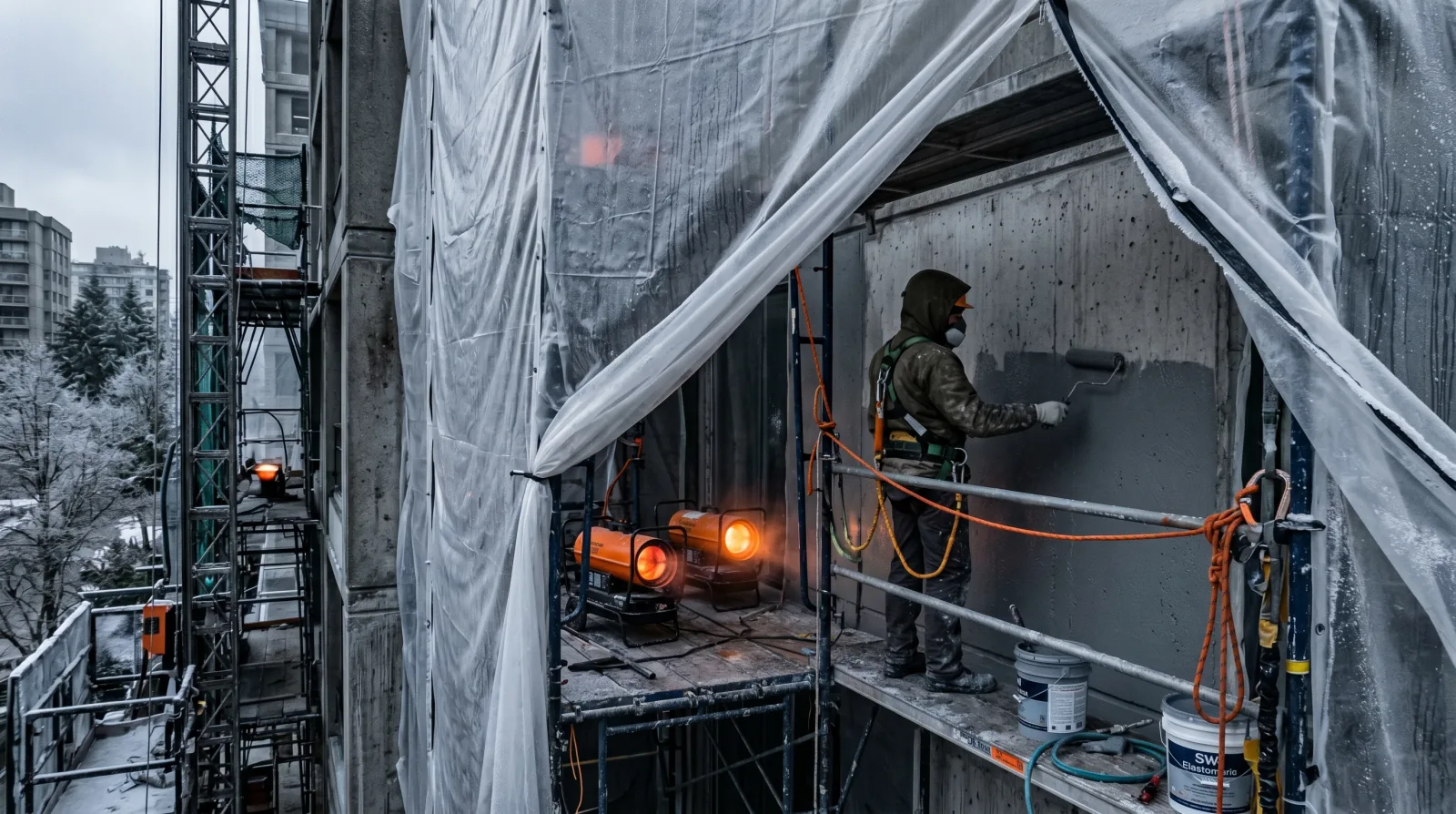 Fix
Fix Humidity management in a Vancouver winter
Operating a suite through the wet season: hygrometer monitoring, heating and venting habits, laundry, and why furniture needs a gap off the exterior walls.
Read the guide Understand
 Condensation in new vs older buildings
Airtight new construction condenses differently from leaky 1970s stock. The era-specific moisture patterns we see across Metro Vancouver, from West End towers to brand-new wood frame.
Read the guideTwo sources of water, one set of symptoms
Water on a wall looks the same whether it crossed the envelope during a storm or condensed out of the room air overnight. That is the trap. The repair for one is envelope work: sealants, flashings, membranes. The repair for the other is thermal and ventilation work: insulation at cold spots, working exhaust, sensible humidity habits. Pick the wrong one and the strata pays for a repair that changes nothing. Our condensation or leak guide covers the reads that separate them, and the water ingress hub takes over when the answer turns out to be a leak.
The physics behind the indoor side is short: air holds moisture, cold surfaces pull it back out. A family of four adds litres of water vapour to their suite every day through cooking, showers, and breathing. In July that vapour drifts out open windows. In January it hunts for the coldest surface in the suite, and in much of Metro Vancouver's building stock that surface is a single-glazed window frame, an uninsulated slab edge, or a closet corner on a north wall in Burnaby that never sees the sun.
Where the building decides the outcome
Two identical families can live identically in two suites and only one suite grows black corners. The difference is the building: how cold its interior surfaces run, how much air its exhaust fans actually move, and how much moisture its assemblies trap. Thermal bridging sets the cold spots. Ventilation sets how fast moisture leaves. And the air and vapour control layers inside the walls decide whether moisture passes through, escapes, or accumulates where nobody can see it.
That last case is the expensive one. Interstitial condensation, moisture forming inside the wall assembly itself, produces stains that look exactly like a roof or window leak and has sent more than one strata chasing phantom envelope failures. It deserves its own guide, and it gets one.
Era matters more than most owners expect
A 1975 concrete tower in the West End, a face-sealed 1992 wood-frame walk-up, and a 2023 rainscreened mid-rise in Olympic Village all handle moisture differently, because each era built its walls differently. The old towers leak heat through their slab edges and condense at the perimeter. The leaky condo era stock traps rain in the assembly. New construction is airtight enough that suite moisture stays inside until mechanical ventilation removes it, which is why brand-new buildings produce wet-window complaints in their very first winter. The new versus older buildings guide maps the patterns by era.
Below grade, the rules change again. Parkade slabs and crawlspaces sit against cool soil year-round, so summer air condenses on them exactly when owners least expect damp. Before anyone scopes a membrane repair, the parkade and crawlspace guide walks through separating seasonal humidity from a genuine waterproofing failure, with the parkade waterproofing hub on standby for the real failures.
What a strata can actually do
Councils control the building side: envelope repairs that close the cold spots, exhaust systems that work, and windows renewed before every sealed unit on the weather elevations fogs. Owners control the suite side: ventilation habits, humidity sources, and furniture kept off exterior walls. The mould prevention guide covers the building-side conditions worth fixing first, and the winter humidity guide is the one to circulate to residents each October. Where the diagnosis points at the envelope itself, that becomes a scoped repair through our building envelope repair service or, for active water entry, leak repair.
Quick answers
What is condensation in a building?
Condensation is water that forms when moist indoor air touches a surface cold enough to push that air past its saturation point. The moisture comes from cooking, showers, laundry, and the people breathing inside the suite. In a Vancouver winter the coldest surfaces are window glass, metal frames, and poorly insulated wall corners, which is why those spots run wet first while the rest of the room stays dry.
Why are condensation problems so common in Metro Vancouver?
Vancouver winters are long, mild, and wet. Outdoor air stays damp for months, so opening a window buys less drying here than it would in a colder, drier city, and well over a metre of rain in an average year keeps the building fabric itself cool and moist. Add progressively tighter construction, and indoor moisture has fewer escape routes. The condensation season runs roughly from the first cool nights of October through to spring.
Can condensation damage a building the way a leak does?
Yes, given time. Condensation wets the same materials a leak wets: drywall, framing, insulation, and interior finishes. A cold closet corner that runs damp every winter grows staining and deteriorates the finishes, and condensation forming inside a wall assembly can rot sheathing and studs exactly the way slow water ingress does. The damage arrives slower than a storm leak, which is why it gets ignored longer.
From the resources library
Efflorescence on Vancouver Concrete Walls: Causes and Fixes
The white salt bloom on a North Vancouver concrete wall is a map of water moving through the structure. What it signals and how to fix the real cause.
Read article ArticleEnvelope work on a low rise: what changes when the building is three storeys
The physics of a leaking building are the same at three storeys as at thirty. Access, occupancy and sequencing are not. What differs on low rise envelope work.
Read article ArticleWindow Perimeter Sealant Failure on Vancouver Curtain Wall Towers
The sealant around window and curtain wall joints is the first line of defence against wind-driven rain on a Vancouver tower — and the first thing to fail. How to spot it, why it happens, and what restoration actually involves.
Read article ArticleWhat Causes Water Ingress in High-Rise Buildings?
Water ingress can cause major structural damage. We break down the top causes of leaks in concrete structures, from wind-driven rain bypassing failed window perimeters to structural expansion joint tears and cracked stucco.
Read articleServices this guide connects to
Condensation and indoor moisture questions
What is condensation in a building?
Condensation is water that forms when moist indoor air touches a surface cold enough to push that air past its saturation point. The moisture comes from cooking, showers, laundry, and the people breathing inside the suite. In a Vancouver winter the coldest surfaces are window glass, metal frames, and poorly insulated wall corners, which is why those spots run wet first while the rest of the room stays dry.
Why are condensation problems so common in Metro Vancouver?
Vancouver winters are long, mild, and wet. Outdoor air stays damp for months, so opening a window buys less drying here than it would in a colder, drier city, and well over a metre of rain in an average year keeps the building fabric itself cool and moist. Add progressively tighter construction, and indoor moisture has fewer escape routes. The condensation season runs roughly from the first cool nights of October through to spring.
Can condensation damage a building the way a leak does?
Yes, given time. Condensation wets the same materials a leak wets: drywall, framing, insulation, and interior finishes. A cold closet corner that runs damp every winter grows staining and deteriorates the finishes, and condensation forming inside a wall assembly can rot sheathing and studs exactly the way slow water ingress does. The damage arrives slower than a storm leak, which is why it gets ignored longer.
Does condensation come from how a suite is used or how the building is built?
Both sides contribute, and the split matters for who fixes what. Occupant habits set how much moisture enters the air: showers, cooking, drying laundry indoors, ventilation use. The building sets where that moisture lands: cold window frames, uninsulated slab edges, weak exhaust fans, missing make-up air. One damp suite in a dry building points toward use. The same stain repeating across a whole elevation points at the building.
What is dew point in plain terms?
Dew point is the temperature at which the air you have, with the moisture it carries, starts giving that moisture up as liquid water. Air holds less water vapour as it cools. Chill a surface below the dew point of the room air, and water appears on it, exactly like a cold glass sweating in summer. Every condensation problem in a building is some surface sitting below the dew point of the air touching it.
Does opening windows in winter reduce condensation?
Usually yes, in short controlled bursts. Winter air outside Vancouver suites is cool and, once warmed indoors, relatively dry, so exchanging inside air for outside air lowers the moisture load even on a rainy day. A few minutes of cross-ventilation after showers and cooking does more good than a window cracked all day, which mostly chills the wall around it and creates a new cold surface for moisture to find.
How did the leaky condo era change how BC handles building moisture?
The leaky condo crisis put building envelope failure on every strata agenda in the province. Rot hidden inside wall assemblies caused billions of dollars of damage across hundreds of Lower Mainland buildings, and it pushed BC toward rainscreen construction, mandatory home warranty coverage for the envelope, and depreciation reporting. It also taught the industry that hidden moisture, whether it enters as rain or forms as condensation, destroys wood-frame buildings quietly.
Do depreciation reports track the components behind condensation problems?
The physical components, yes. A BC depreciation report inventories windows, cladding, roofing, and mechanical systems and projects their renewal, and BC strata corporations of five or more lots must keep the report current on a five-year cycle under the Strata Property Act. What the report will rarely say is that the aging windows on the north elevation are why six suites wipe their sills every morning. Connecting those dots takes an envelope assessment.
Is some window fog normal on cold mornings?
A light haze at the bottom edge of the glass on the coldest mornings of the year is common in occupied suites and clears as the day warms. Persistent water that pools on sills, drips off frames, soaks curtains, or shows up as staining on the wall below the window sits outside normal. So does fog trapped between the panes of a double-glazed unit, which signals the sealed unit itself has failed.
When should a strata bring in professional moisture testing?
When damp reports repeat, spread, or resist the simple fixes. One suite with wet windows that improves after ventilation changes can be managed by council. Reports from multiple suites on the same elevation, staining that returns after repainting, musty odours without a visible source, or any suspicion that moisture is forming inside the walls justify moisture meters, thermal imaging, and exploratory openings run by people who do this for a living.
What does a condensation assessment on a strata building involve?
A structured look at both sides of the problem. Inside: where the moisture shows, which suites, which orientations, what the ventilation is doing, and surface readings across the suspect walls. Outside: the envelope details that create cold spots and the state of windows, sealants, and insulation. The output is a diagnosis that separates use factors from building factors, and a scope for whichever repairs the building side actually needs.
How quickly should indoor moisture problems be dealt with?
Promptly, and faster the wetter it gets. Materials that dry within a day or two generally recover; materials that stay damp week after week deteriorate and can support mould growth. A wet window sill wiped each morning is a maintenance habit. A wall that stays damp to the touch, staining that spreads, or a musty smell that lingers deserves diagnosis this season, and anyone with health concerns about mould should speak with a qualified health professional.
Damp showing up every winter?
We assess condensation and moisture problems on strata and commercial buildings across Vancouver, North Vancouver, West Vancouver, and Burnaby, and we tell you plainly which part is the building's to fix and which part is habits.