Water ingress and leak diagnosis in Vancouver buildings
A stain on the ceiling is the end of the story, not the start of it. By the time water shows inside a suite, it has already crossed the envelope somewhere else, often a floor higher and half a wall over. This hub is the reference we hand strata councils and property managers across Vancouver, North Vancouver, and Burnaby when they ask the two questions every leak raises: what is this water telling us, and where is it actually getting in?
The water load a Vancouver envelope carries
Average annual precipitation at Vancouver International Airport (1991 to 2020). Every joint, flashing, and termination on the envelope has to shed that load, year after year.
Roughly $4 billion in damage across 900+ Lower Mainland buildings in the leaky condo crisis, the price of water ingress caught late instead of early.
Building envelope coverage, including water penetration defects, under BC's mandatory 2-5-10 home warranty. Ingress documented inside that window can be a claim instead of a levy.
Ten guides, from symptom to source
Read them in whatever order the water dictates. If something is running right now, start with emergency response. If you are staring at a stain and wondering what it means, start with the signs guide, then work through the location guides for the detail your building is most likely leaking at.
 Diagnose
 Signs of water ingress, ranked by urgency
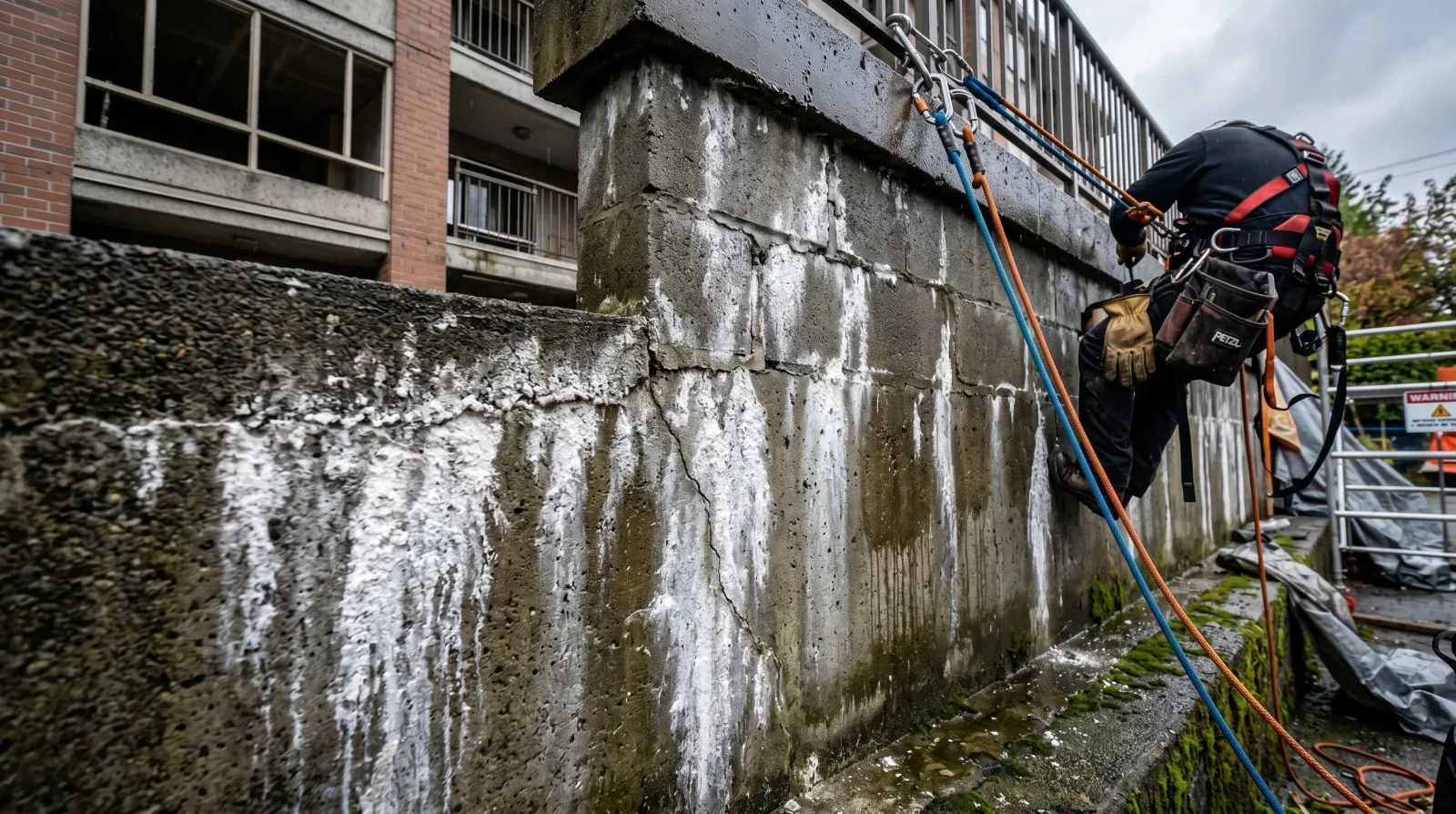
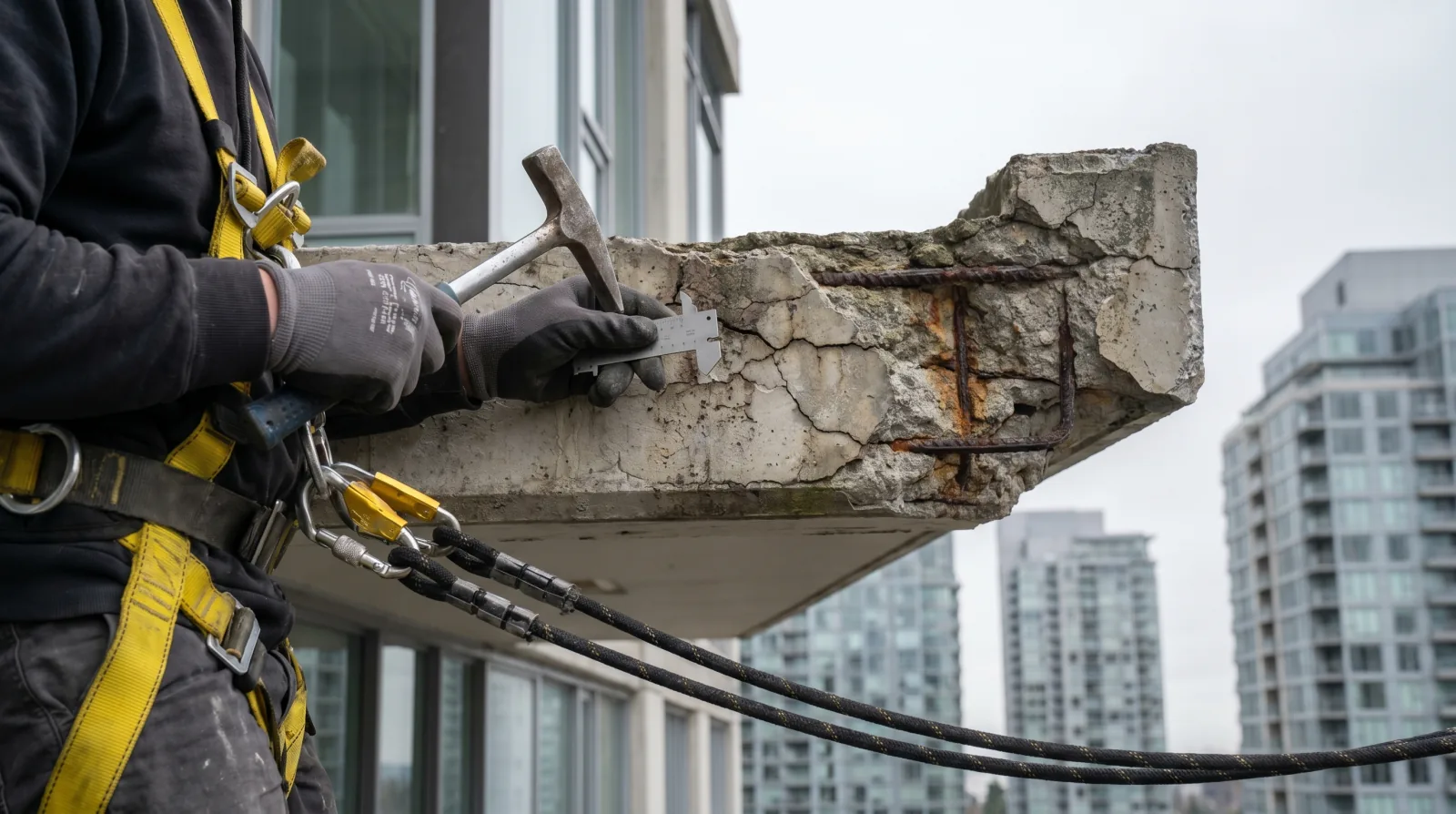
Ceiling stains, efflorescence, rust bleed, musty smells, blistering paint, swollen trim: what each sign means, and which ones say act now rather than watch and wait.
Read the guide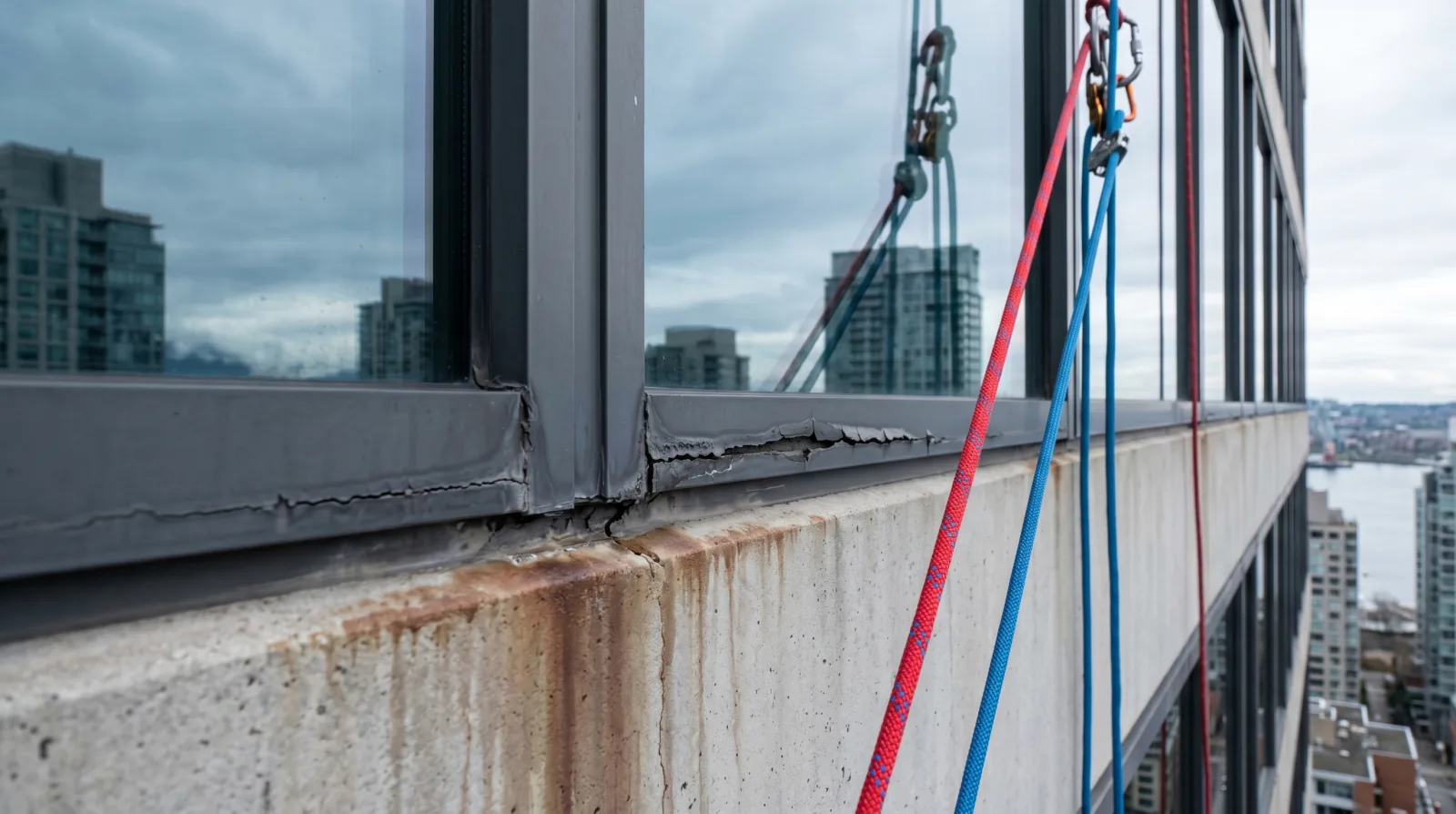 Locate
 Window leaks: perimeter, glazing, or sill pan
Three different failures get blamed on "the window". How to tell a perimeter seal leak from a fogged glazing unit from a failed sill pan, and why the frame itself is rarely the problem.
Read the guide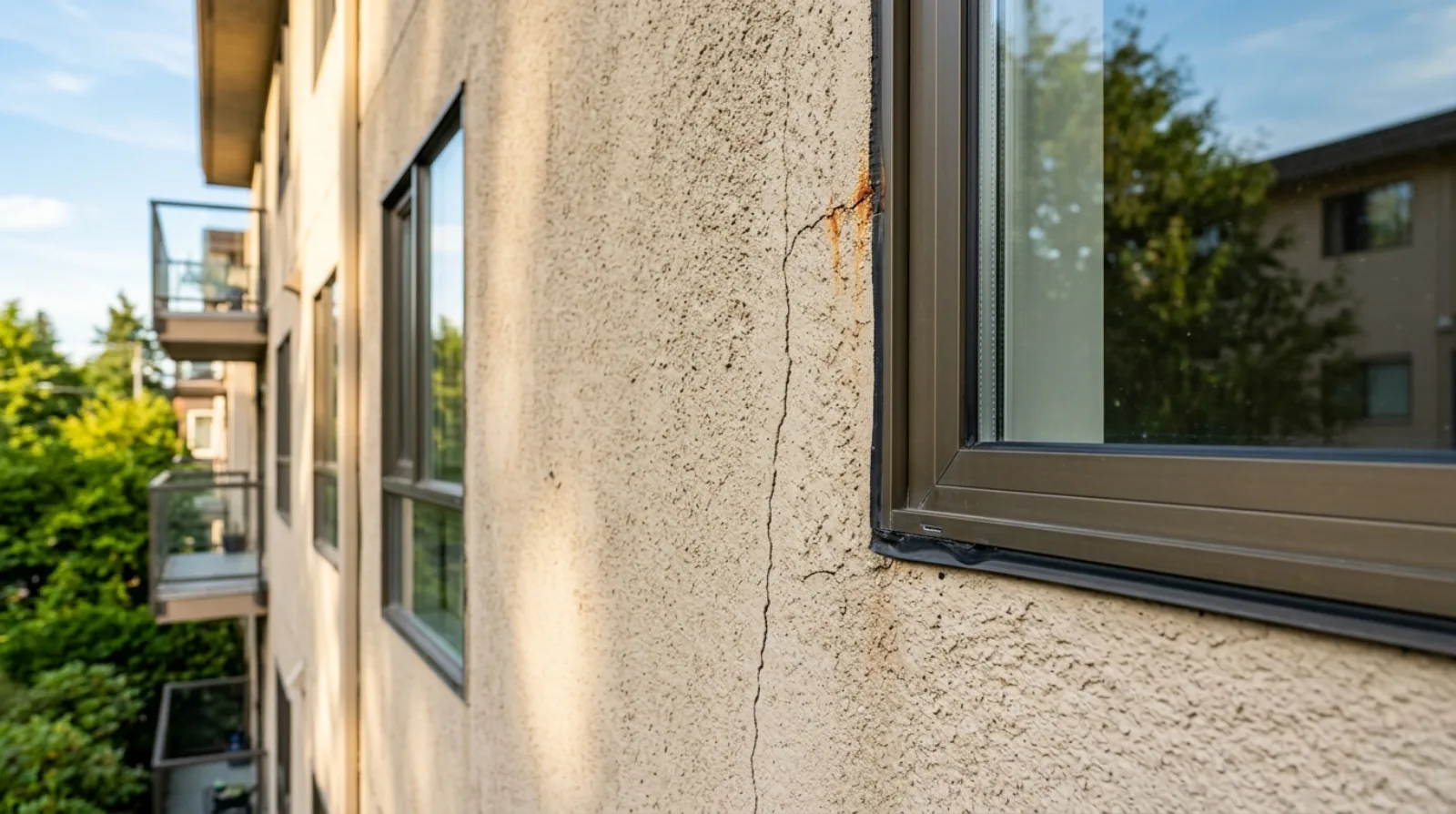 Locate
 Wall leaks through stucco and cladding
How water gets through stucco, EIFS, and panel systems, why a face-sealed wall saturates from the outside in, and what a wet wall assembly does to the structure behind it.
Read the guide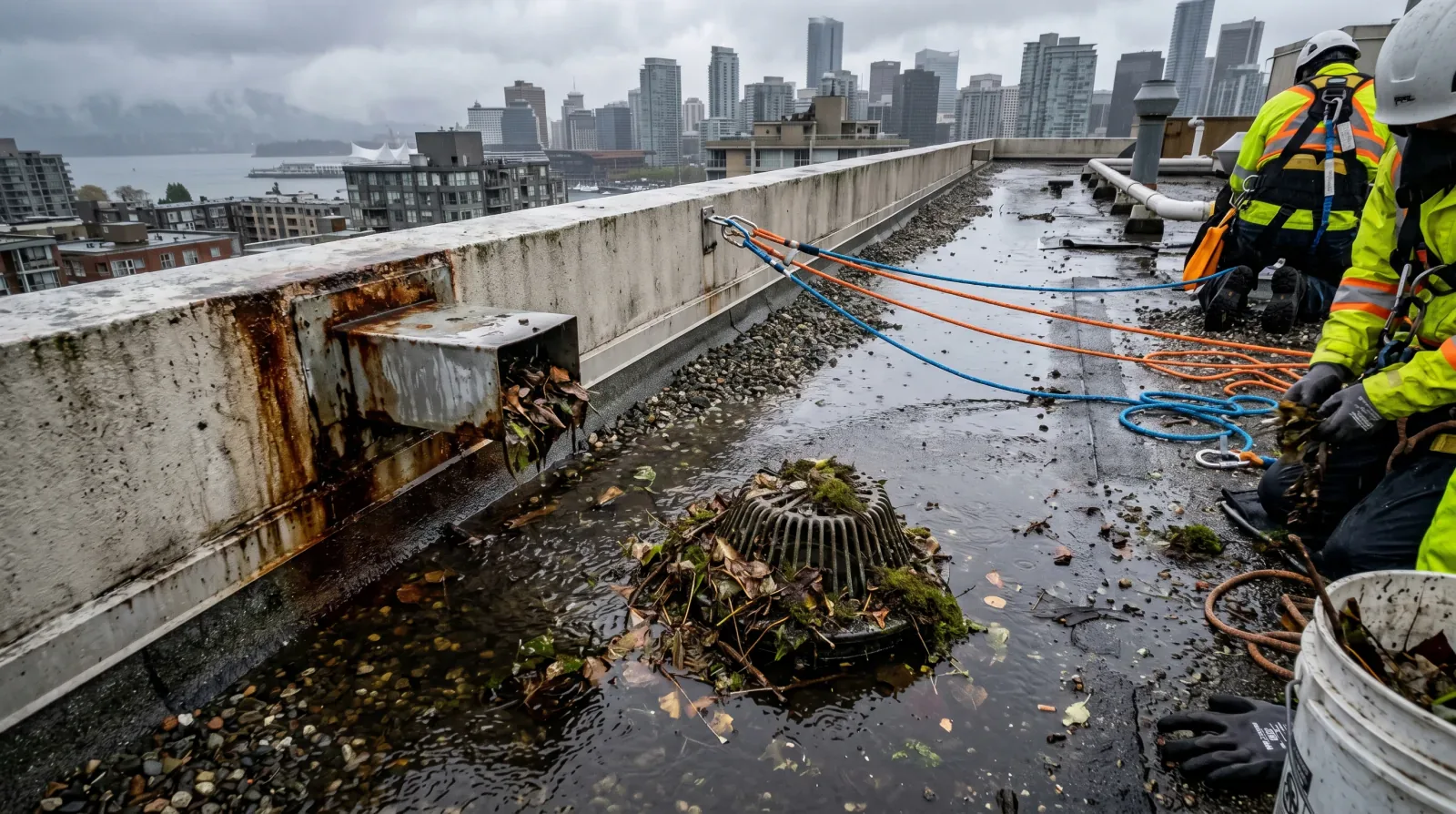 Locate
 Roof-to-wall junction and parapet leaks
Missing kickout flashings, open parapet caps, failed counterflashing: the junction details that leak for years before anyone connects the interior stain to the roof edge.
Read the guide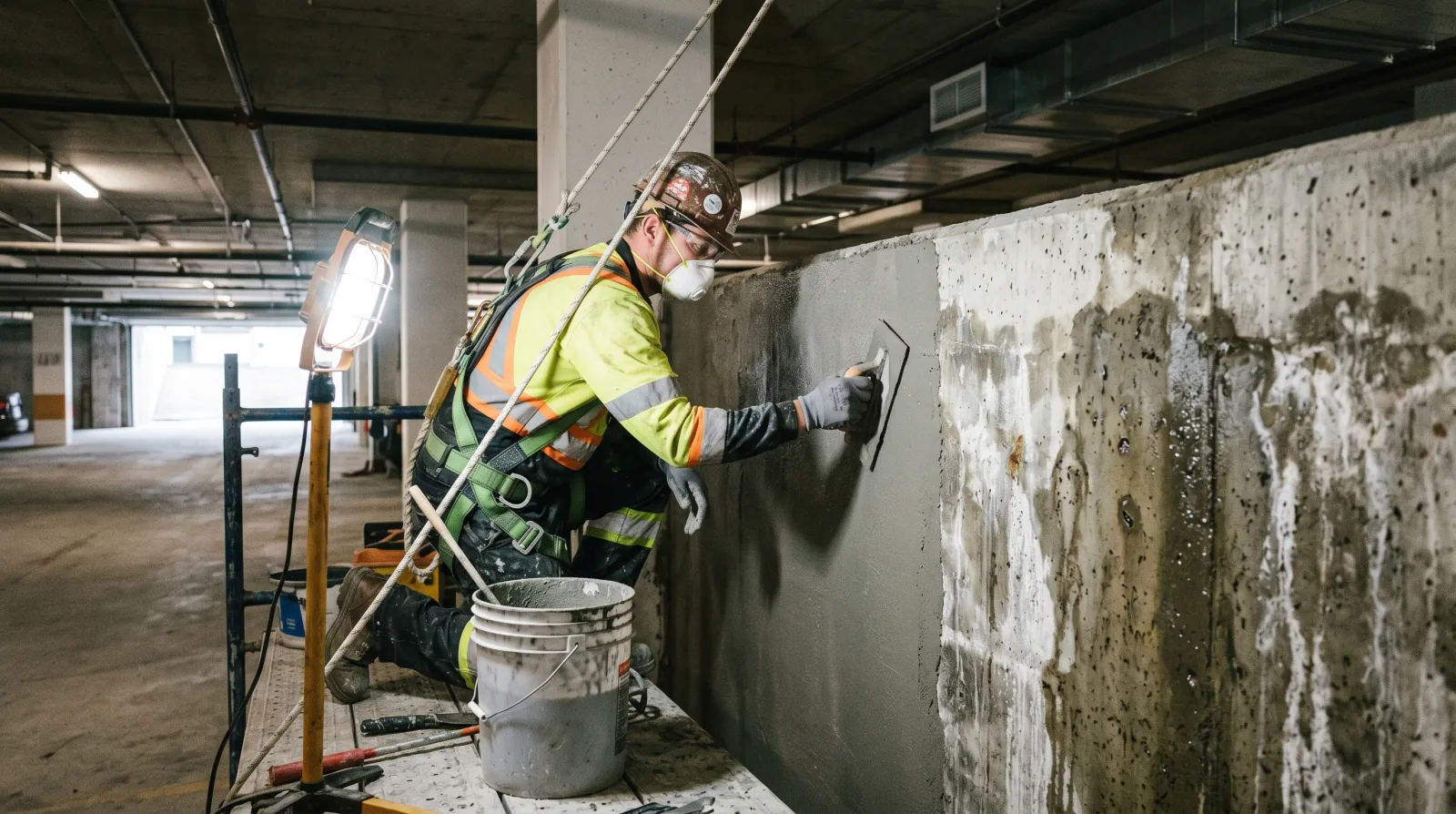 Locate
 Below-grade and planter leaks
Foundation walls, planters built over occupied space, and the hydrostatic pressure that pushes water through concrete. Why parkade leaks behave differently from wall leaks.
Read the guide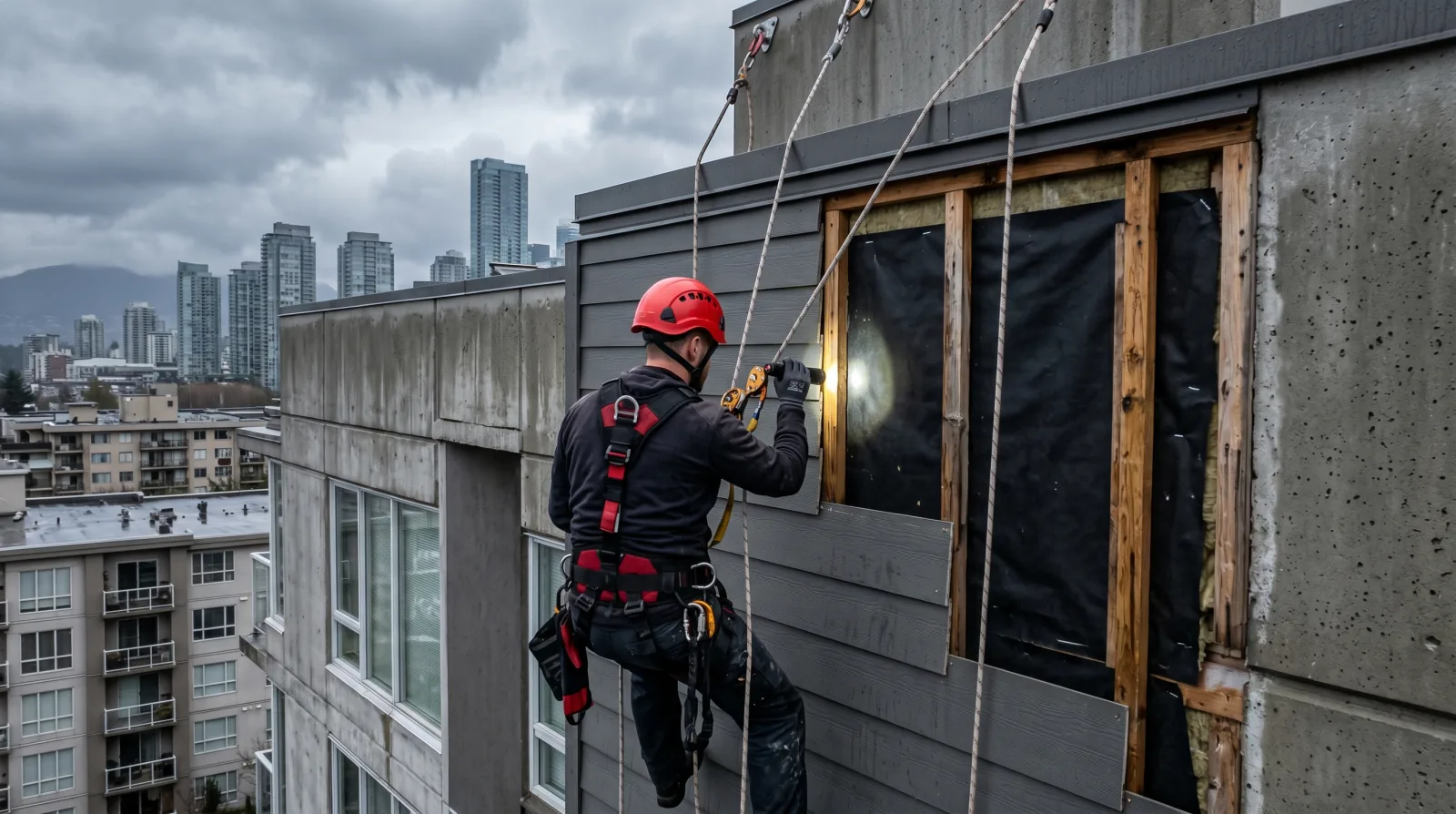 Understand
 Why leaks show far from the source
Water runs along framing, membranes, and conduit before it drops out where you see it. Why the stain location misleads, and why patching at the stain almost never works.
Read the guide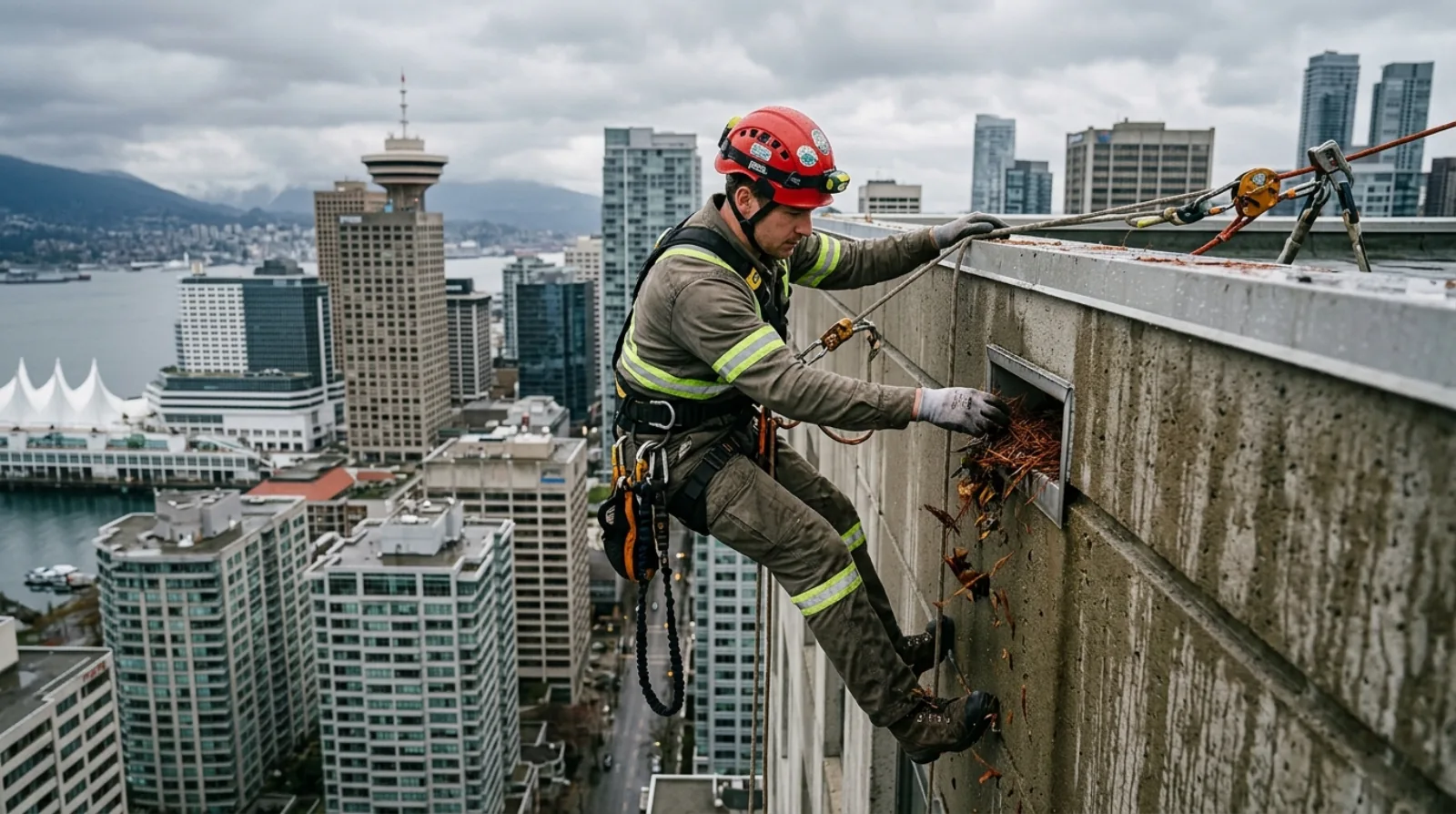 Act
Act Emergency leak response: the first 48 hours
What a strata council or property manager should do while the water is still coming in: containment, documentation, protecting finishes, and when to call for envelope triage.
Read the guide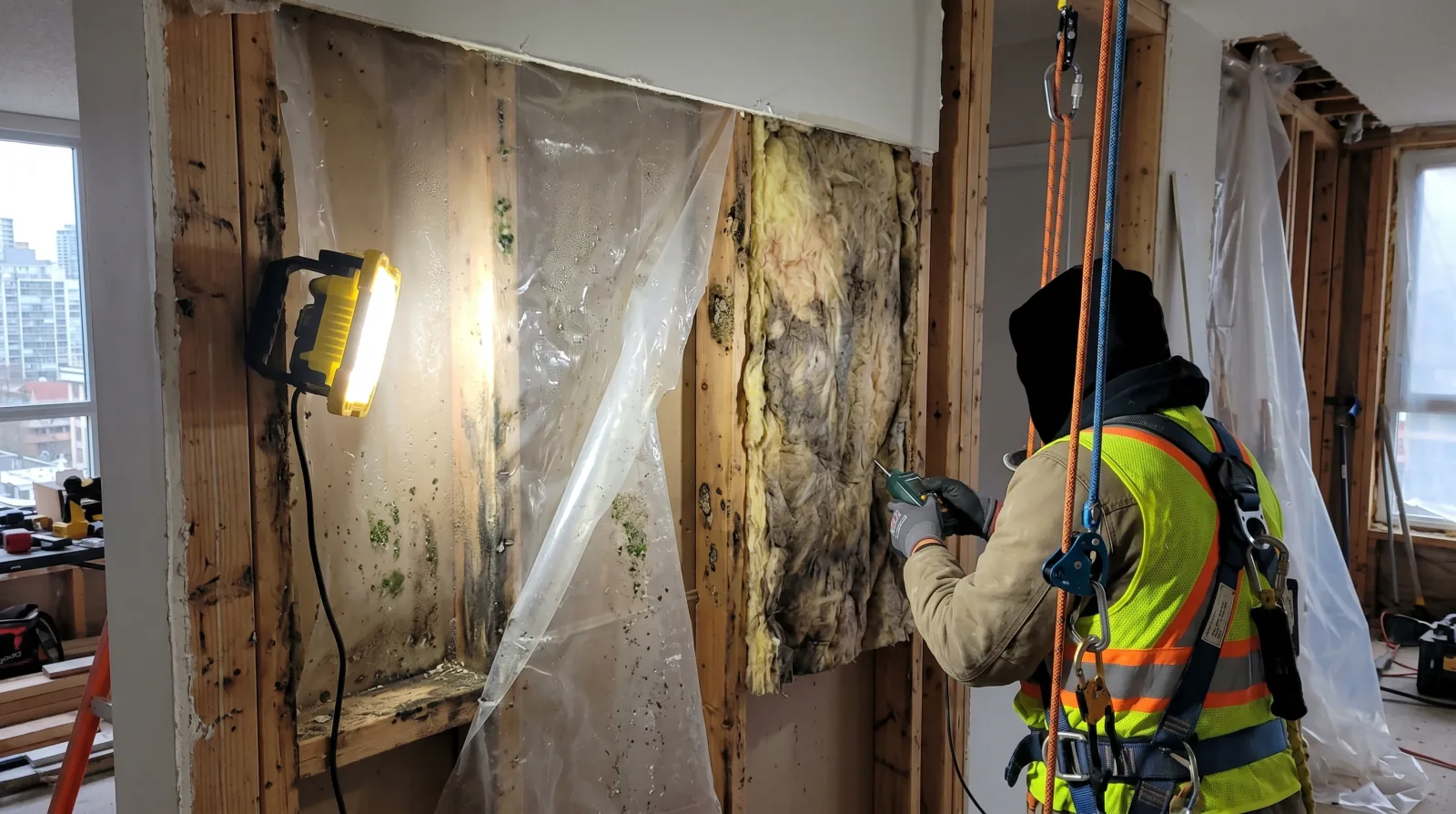 Understand
 Moisture testing methods compared
Moisture meters, thermal imaging, water spray testing, and exploratory openings. What each method can tell you, what it cannot, and the order a proper investigation runs them in.
Read the guide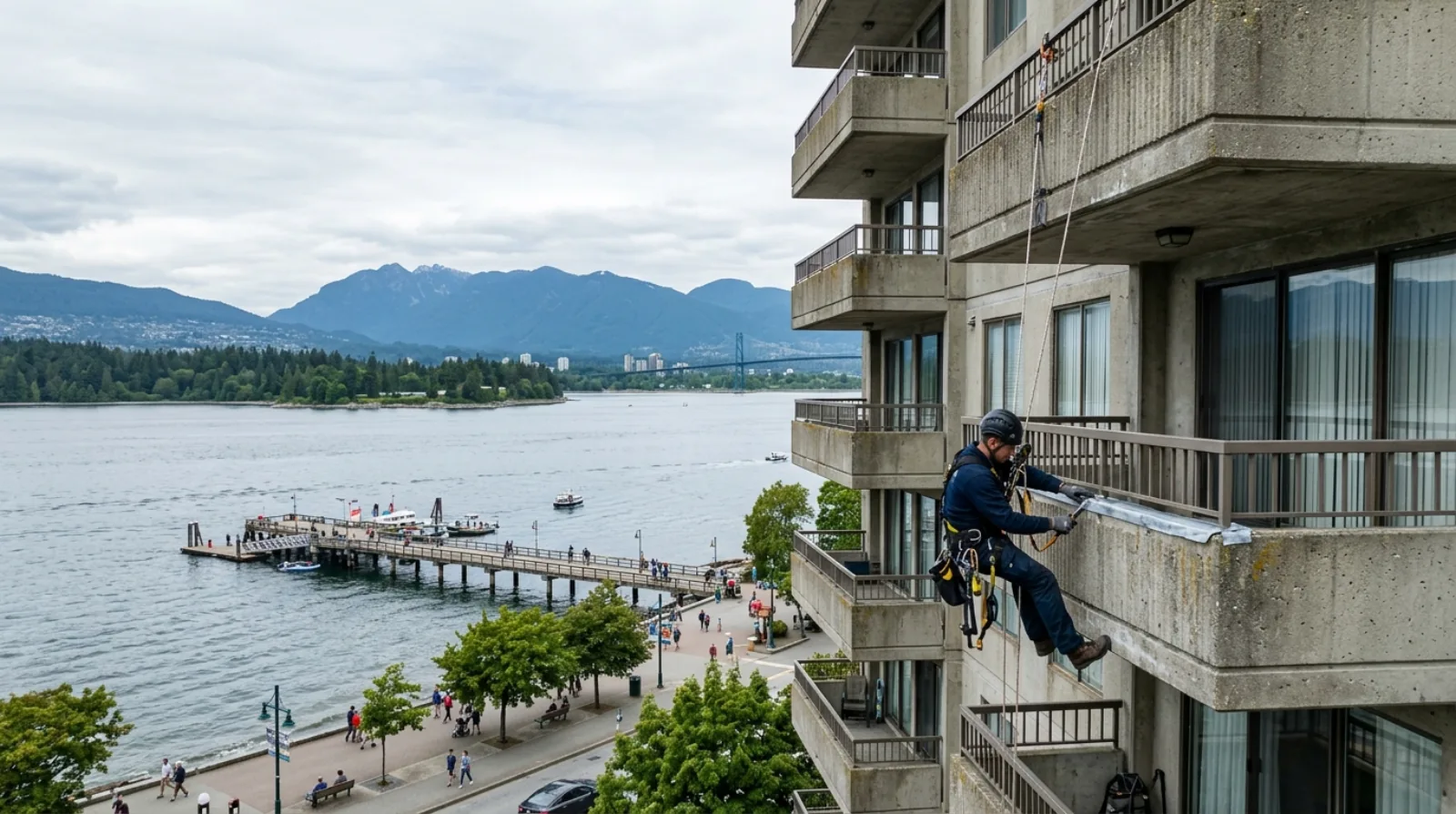 Diagnose
 Leaks that start after renovations
New windows, a deck recoat, a cladding patch, and then a leak that was never there before. Tie-in failures: where new work meets old, and why that line is where water gets in.
Read the guide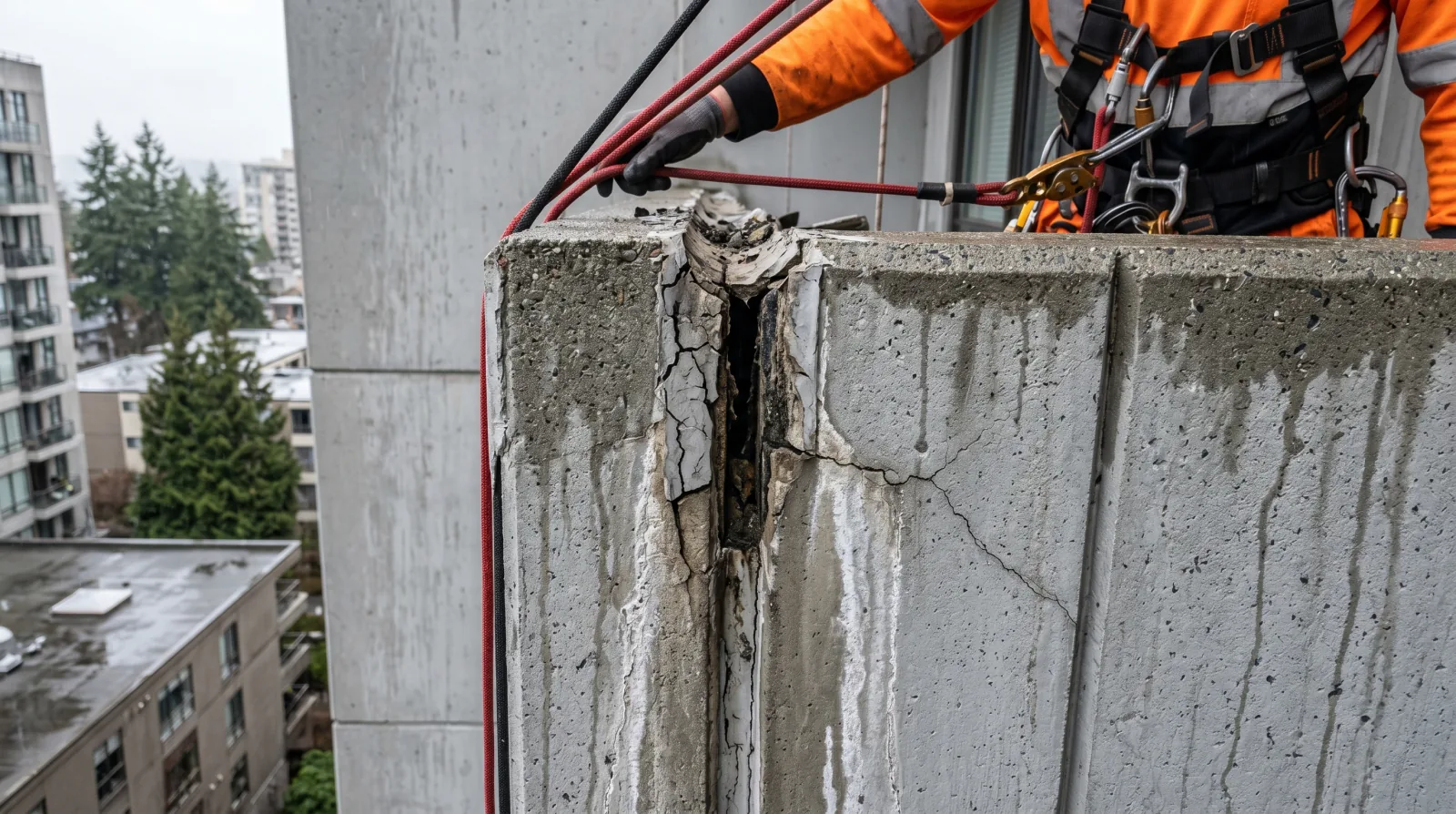 Understand
 Storm leaks vs chronic leaks
A leak that only shows in wind-driven rain points to a different failure than a slow, constant drip. How to read the pattern before anyone opens a wall.
Read the guideWhere water actually gets in
Almost never through the middle of a wall. Water enters at details: the joint where a window meets the cladding, the flashing where a roof meets a wall, the sealant bead in a panel joint, the termination where a deck membrane turns up. On the coast, wind-driven rain does not just fall on these details, it gets pushed into them sideways and, in a good southeasterly, upward. A detail that sheds vertical rain fine can pump water into the assembly during a storm.
That is why the guides in this hub are organized by location. Windows, walls, roof-to-wall junctions, and below-grade concrete each fail in their own way, and each failure leaves its own pattern of evidence inside the building. Balcony decks are their own subject, covered in our balcony membrane failure guide, and glass canopies over entrances have a dedicated page on canopy leak repair.
Why the stain lies to you
The single most expensive mistake in leak repair is trusting the stain. Water that crosses the envelope lands on something solid, a stud, a sheathing membrane, a run of conduit, and follows it until gravity wins. The suite that reports the leak is regularly not the suite below the entry point. Crews get sent to recaulk the window beside the stain, the leak comes back, and the cycle repeats while the framing stays wet. The guide on why leaks show far from the source covers the travel paths, and the moisture testing guide covers the tools that trace them.
When the pattern is genuinely unclear, the answer is a structured investigation rather than more guessing. We keep a separate walkthrough of how a professional leak investigation runs: the sequence from records review through testing to a scoped repair, and what it should hand a strata council at the end.
Timing is evidence
Before anyone opens a wall, the leak's schedule has already narrowed the suspects. A leak that appears only during wind-driven storms points at a joint or flashing on the weather-facing elevation. A slow, steady dampness that ignores the forecast points at ponded water, a below-grade source, or a plumbing line. A leak that started three weeks after a renovation points at a tie-in. The guides on storm versus chronic leaks and leaks after renovations read those patterns in detail.
And sometimes there is no time to read patterns, because water is coming in now. The first 48 hours guide covers containment, documentation, and protecting finishes on an occupied strata or commercial building, in the order that protects both the structure and the paper trail.
What this costs a building that waits
We do not quote repair pricing on a page, because access, substrate condition, and how far the water has travelled drive every scope. What can be said plainly: the gap between a sealant joint repaired this year and a rotted wall assembly rebuilt five years from now is the widest cost gap in building maintenance. BC strata corporations already track envelope components through their depreciation reports under the Strata Property Act; a leak diagnosed early folds into that planning. A leak ignored becomes the special levy nobody planned for, and the leaky condo era is the province-scale proof.
Quick answers
What is water ingress in a building?
Water ingress is water getting past the building envelope: through windows, walls, roof details, joints, or below-grade concrete, into places designed to stay dry. It is different from a plumbing leak, which comes from a pipe inside the building, and from condensation, which forms when indoor moisture hits a cold surface. On Metro Vancouver buildings, ingress usually enters at a detail such as a flashing, joint, or termination rather than through the middle of a wall.
How do you find out where a leak is coming from?
Finding a leak source starts with the pattern, not the stain. Note when the leak runs (only in wind-driven rain, or constantly), which elevation of the building faces the weather, and what sits above and outside the stain. Water travels along framing and membranes before it shows, so the entry point is usually higher and further away than the damage. From there, moisture testing and small exploratory openings confirm the path before any repair is scoped.
Why do Vancouver buildings leak so often?
Vancouver buildings leak often because the exposure is severe and part of the building stock was built for a drier climate. The city gets well over a metre of rain in an average year, much of it arriving as wind-driven storms off the Strait of Georgia that push water sideways into walls and window joints. Add the face-sealed assemblies of the leaky condo era, decades of UV on sealants, and coastal freeze-thaw on the North Shore, and ingress is a routine finding.
From the resources library
Efflorescence on Vancouver Concrete Walls: Causes and Fixes
The white salt bloom on a North Vancouver concrete wall is a map of water moving through the structure. What it signals and how to fix the real cause.
Read article ArticleWindow Perimeter Sealant Failure on Vancouver Curtain Wall Towers
The sealant around window and curtain wall joints is the first line of defence against wind-driven rain on a Vancouver tower — and the first thing to fail. How to spot it, why it happens, and what restoration actually involves.
Read article ArticleAtmospheric Rivers and Your Building Envelope in Metro Vancouver
Atmospheric rivers drive extreme wind-driven rain at Metro Vancouver buildings. Here is how the storms find envelope weaknesses and what to check before the next one.
Read article ArticleWhat Causes Water Ingress in High-Rise Buildings?
Water ingress can cause major structural damage. We break down the top causes of leaks in concrete structures, from wind-driven rain bypassing failed window perimeters to structural expansion joint tears and cracked stucco.
Read articleServices this guide connects to
Water ingress questions
What is water ingress in a building?
Water ingress is water getting past the building envelope: through windows, walls, roof details, joints, or below-grade concrete, into places designed to stay dry. It is different from a plumbing leak, which comes from a pipe inside the building, and from condensation, which forms when indoor moisture hits a cold surface. On Metro Vancouver buildings, ingress usually enters at a detail such as a flashing, joint, or termination rather than through the middle of a wall.
How do you find out where a leak is coming from?
Finding a leak source starts with the pattern, not the stain. Note when the leak runs (only in wind-driven rain, or constantly), which elevation of the building faces the weather, and what sits above and outside the stain. Water travels along framing and membranes before it shows, so the entry point is usually higher and further away than the damage. From there, moisture testing and small exploratory openings confirm the path before any repair is scoped.
Why do Vancouver buildings leak so often?
Vancouver buildings leak often because the exposure is severe and part of the building stock was built for a drier climate. The city gets well over a metre of rain in an average year, much of it arriving as wind-driven storms off the Strait of Georgia that push water sideways into walls and window joints. Add the face-sealed assemblies of the leaky condo era, decades of UV on sealants, and coastal freeze-thaw on the North Shore, and ingress is a routine finding.
What was the leaky condo crisis?
The leaky condo crisis was a wave of building envelope failures across BC, concentrated in Lower Mainland wood-frame condos built from the 1980s through the late 1990s. Face-sealed stucco walls, missing flashings, and poor detailing let rain into wall assemblies that could not dry, causing rot on a huge scale. Hundreds of buildings needed full envelope remediation, and the repair bill ran into the billions. It is why rainscreen construction became standard practice in coastal BC.
Does the BC home warranty cover water ingress?
BC's mandatory 2-5-10 home warranty on new homes includes building envelope coverage, and water penetration defects fall under that envelope component. The envelope coverage runs five years from the start of the warranty, which is why envelope condition reviews before the five-year mark matter so much for newer stratas: ingress found and documented inside the window can become a warranty claim instead of a special levy. The details of any specific claim depend on the policy documents.
Who is responsible for a leak in a strata building?
Responsibility for a leak in a strata building usually follows where the water enters, not where the damage shows. The envelope, including exterior walls, windows in many strata plans, roofs, and decks, is typically common property maintained by the strata corporation, while finishes inside a suite are typically the owner's. The strata plan and bylaws decide the split for each building, so the practical first step is always the same: report it to council in writing and get the source diagnosed.
Is water ingress an emergency?
Active water ingress sits between emergency and maintenance, and the volume decides which. Water running during a storm, spreading across a ceiling, or near electrical fixtures needs same-day containment and documentation. A faint stain that has not changed in months can wait for a scheduled assessment. What ingress never is, is self-resolving: the entry point does not close on its own, and every wet season enlarges the damage behind the finishes.
Can water ingress dry out on its own?
The surface can dry; the problem does not. Between storms, a stain may fade and a wall may read dry at the surface while the sheathing, insulation, and framing behind it stay wet, because wall assemblies dry far more slowly than they wet. Wood-frame construction that stays damp grows rot and mould, and concrete that stays wet feeds rebar corrosion. A leak that "went away" in July almost always comes back with the October storms, larger.
What is the difference between water ingress and condensation?
Water ingress comes from outside through the envelope; condensation is indoor moisture turning to water on a cold surface. They can look identical on a wall or window. The tells: condensation tracks weather cold snaps and indoor humidity, shows on window glass and cold corners, and appears across many suites at once. Ingress tracks rain events and wind direction, and concentrates near a specific detail. Diagnosing which one you have comes before any repair, because the fixes are completely different.
Do leaks always mean the building envelope has failed?
A leak does not mean the whole envelope has failed. Most ingress on Metro Vancouver buildings enters at one detail: a cracked sealant joint, a blocked scupper, a missing kickout flashing, a lifted membrane termination. The envelope around it can be sound. That is the case for diagnosing before repairing: a targeted joint or flashing repair, done early, is a maintenance item, while the same water left running for years can turn into a wall assembly rebuild.
How are leaks on a high-rise investigated without scaffolding?
High-rise leak investigation mostly runs on ropes. IRATA or SPRAT certified rope access technicians rig from engineered roof anchors on two independent lines under WorkSafeBC Part 11 fall protection rules, and descend the elevation to inspect and test the suspect details up close. That keeps sidewalks open and avoids scaffolding or swing-stage costs for what is often a few drops of inspection and testing. Scaffold only enters the picture when the repair itself needs sustained access.
How quickly should a strata respond to a reported leak?
A reported leak deserves a same-week response even when it looks minor, because the report is usually late: by the time water shows inside a suite, it has been in the assembly for a while. Log the report in writing, photograph the damage, note the weather at the time, and get eyes on the likely exterior details. Quick, documented response also protects the strata if the leak later becomes an insurance or warranty matter.
Water showing up where it shouldn't?
We diagnose and repair water ingress on strata and commercial buildings across Vancouver, North Vancouver, West Vancouver, and Burnaby, and we trace the leak to its entry point before anyone opens a wall or writes a scope.