The rainscreen inspection checklist
A rainscreen wall fails slowly and telegraphs everything, if someone walks the building once a year and knows where to look. This checklist is the walk we recommend to councils and property managers across Vancouver and Burnaby: what to photograph, what to check by hand, the one thing a lay inspector may gently probe, and the line past which the file goes to an envelope consultant.
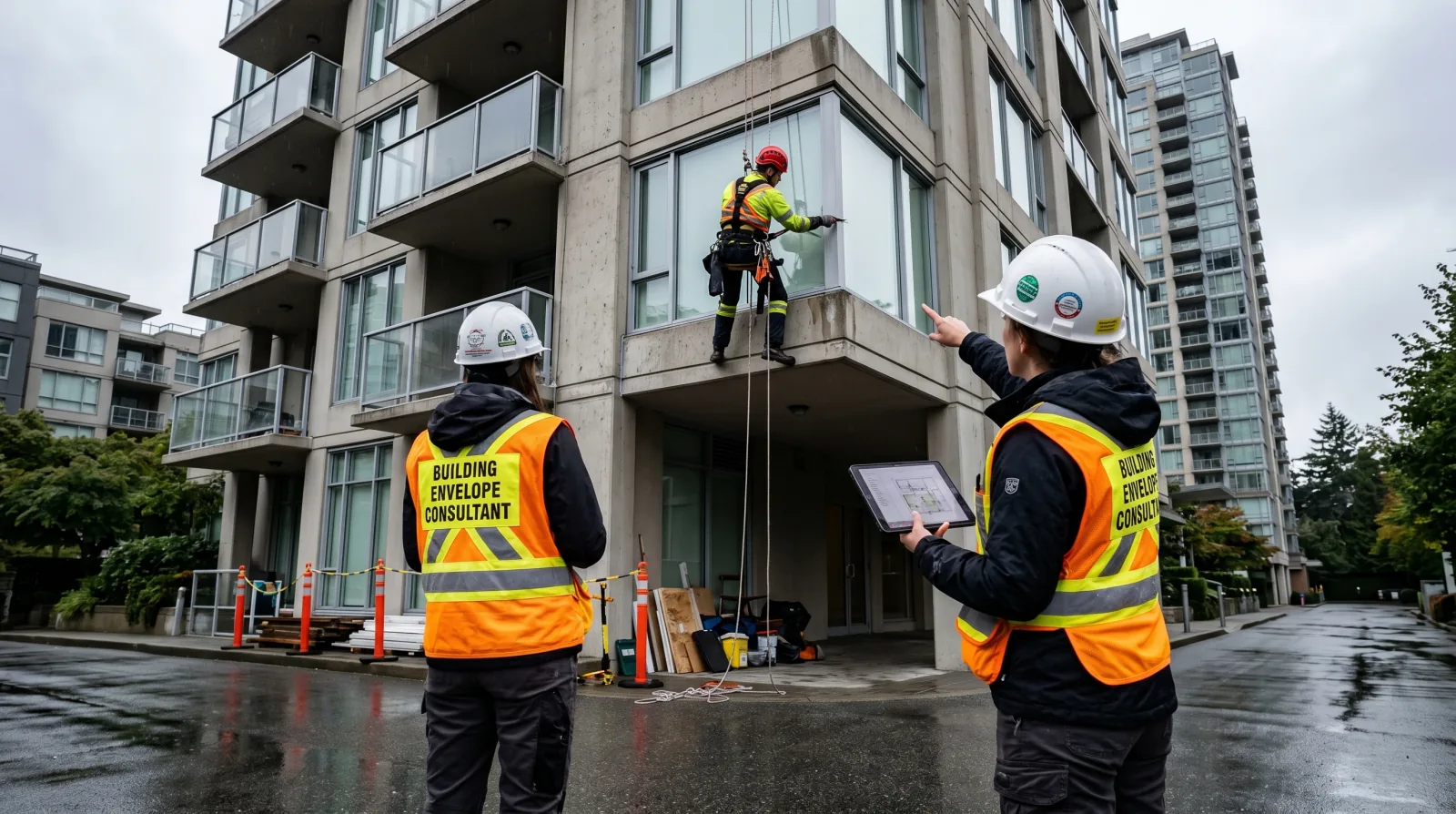
Why an annual walk, and why fall
The failures that cost stratas real money, blocked weeps, lifted flashings, dead sealant, develop over the years and cost little to correct when caught in season one. The annual walk exists to catch them there. Fall is the right slot on the coastal calendar: summer trade work (roofing, painting, window swaps) has just finished creating this year's new defects, and the wet season that will exploit them has not started.
The walk also builds the asset that makes every future decision cheaper: a dated photo record. An envelope consultant handed five years of fixed-position photographs can see trajectory instead of a snapshot, and trajectory is what separates a watch item from a work order.
The checklist
Cladding base and weep lines
Walk the full perimeter at the base of the cladding. Confirm open gaps or clean vent strips, no paint bridges, no sealant beads, no soil or paver contact. Photograph each elevation base straight-on from the same spots every year so the record shows change, and shoot close-ups of anything blocked.
Flashings at heads, roofs, decks, parapets
With binoculars, work the window heads, roof-to-wall junctions, deck connections, and parapet caps. Look for lifted metal, open lap joints, missing kickouts, rust tracks from fasteners, and stain stripes on the cladding below any detail. Photograph every suspect location with a wide shot for position and a zoom for condition.
Sealant joints at windows and penetrations
At reachable locations, look and press: sealant should be flexible and bonded on both sides. Cracked, chalked, hardened, or debonded joints go on the renewal list. Count the storeys of joints you cannot reach; that quantity sizes the rope access scope when renewal time comes.
Stains, moss, algae, and efflorescence
Biological growth and mineral staining are moisture maps. A wall that dries evenly grows little; a band of moss, a green shadow under one window, or a white efflorescence bloom on masonry each marks somewhere staying wet. Map them on an elevation sketch and compare against last year’s photos.
Suspect soft spots at reachable height
Where staining suggests trouble at ground-reachable height, press gently: sound sheathing behind cladding feels firm, and a wall that flexes, feels spongy, or crumbles at a fastener is telling you something. Gentle hand pressure only. This is the outer limit of lay probing, and its findings are for the consultant, never for a repair scope.
Interior reports and unit checks
Collect resident reports of stains, musty smells, swollen trim, or window condensation, and walk any repeat-complaint suites. Interior evidence often shows before exterior evidence on a failing wall, and a pattern of complaints stacked on one elevation is diagnostic gold that no exterior walk can see.
Anything requiring opening, cutting, or height
Exploratory openings, moisture meter surveys inside walls, and close inspection above reach belong to a building envelope consultant, with rope access crews providing the hands at height on towers. The walk-around’s job is to aim these professionals precisely, which is what the photo file and elevation map accomplish.
Reading what you find
Single observations mean little; patterns mean everything. One stained panel after a windstorm is weather. The same stain, in the same place, in two consecutive photo sets, is a path: water is entering somewhere above and the wall is not clearing it. Stack the evidence by elevation, because envelope failures cluster by exposure, and a south or southeast wall taking the brunt of Metro Vancouver's storm winds will fail first and worst. If the pattern points at a wall you suspect was never rainscreened at all, detour through is my building rainscreened before spending on repairs designed for the wrong assembly.
Assign the walk to a named person, and keep the assignment stable. On self-managed stratas that is usually one council member with the building file; on managed buildings, the property manager or a standing contractor. What breaks inspection programs is diffusion: everyone assumed someone walked the building this year, and the photo series develops a three-year hole exactly when a slow failure needed the record. One name, one calendar entry each fall, one folder convention for the photos.
Resist the two classic wrong turns. Caulking over a stain treats the exit while the entry keeps feeding the wall; the methodical alternative is laid out in our leak investigation guide. And skipping the record because "nothing changed" destroys the baseline that makes next year's walk meaningful. Nothing changing is data.
When the file leaves your hands
Escalation is a handoff, and a good walk-around makes it a precise one. The consultant receives the photo file, the elevation sketch, and the complaint log, and starts with openings aimed at known suspects instead of a blind survey; what that engagement looks like is covered in our article on what a building envelope condition assessment covers. On towers, the consultant's eyes at height are rope access crews, and ours carry cameras, moisture meters, and repair materials on the same descent through our rope access building maintenance service, so an inspection finding can become a completed minor repair in the same mobilization.
File everything back into the strata record when the loop closes. The rainscreen hub exists because walls outlive councils; the inspection file is how each council hands the wall to the next one in better shape than it found the paperwork.
Quick answers
What should an annual rainscreen inspection cover?
An annual rainscreen inspection covers the drainage path and its evidence: weep lines and vents at the cladding base, flashings at heads, roofs, decks, and parapets, sealant joints, and the moisture map written in stains, moss, and efflorescence, plus resident reports from inside. The output is a photo file and an elevation sketch, compared year over year. Anything needing opening, instruments, or height goes to an envelope consultant.
What should I photograph during a building envelope walk-around?
Photograph each elevation straight-on from fixed positions you repeat every year, then close-ups of the cladding base, each suspect flashing, failed sealant, and every stain or growth pattern, wide shot for location plus zoom for condition. Date the files and organize by elevation. The repeated fixed-position shots matter most, because envelope problems announce themselves as change, and change only shows against last year’s frame.
What can a strata council check without a consultant?
A council can walk the perimeter checking weeps for paint, sealant, and grade blockages, scan flashings and cladding with binoculars for lifted metal and stain stripes, press reachable sealant joints for flexibility, log resident complaints by elevation, and photograph all of it. That covers most of the early warning value at the cost of a morning. What a council cannot do is open walls, take moisture readings, or diagnose causes.
Inspection questions
What should an annual rainscreen inspection cover?
An annual rainscreen inspection covers the drainage path and its evidence: weep lines and vents at the cladding base, flashings at heads, roofs, decks, and parapets, sealant joints, and the moisture map written in stains, moss, and efflorescence, plus resident reports from inside. The output is a photo file and an elevation sketch, compared year over year. Anything needing opening, instruments, or height goes to an envelope consultant.
What should I photograph during a building envelope walk-around?
Photograph each elevation straight-on from fixed positions you repeat every year, then close-ups of the cladding base, each suspect flashing, failed sealant, and every stain or growth pattern, wide shot for location plus zoom for condition. Date the files and organize by elevation. The repeated fixed-position shots matter most, because envelope problems announce themselves as change, and change only shows against last year’s frame.
What can a strata council check without a consultant?
A council can walk the perimeter checking weeps for paint, sealant, and grade blockages, scan flashings and cladding with binoculars for lifted metal and stain stripes, press reachable sealant joints for flexibility, log resident complaints by elevation, and photograph all of it. That covers most of the early warning value at the cost of a morning. What a council cannot do is open walls, take moisture readings, or diagnose causes.
When should an envelope consultant be brought in?
Bring in an envelope consultant when the walk-around finds something it cannot explain: recurring stains, soft sheathing, a spreading moss band, interior complaints stacked on one elevation, or blocked drainage you suspect has been blocked for years. Consultants also belong at scheduled moments, before recladding-scale decisions and when the depreciation report needs envelope input. The walk-around aims the consultant; the consultant opens, measures, and diagnoses.
What tools help with a rainscreen walk-around?
Four cheap tools cover the lay walk-around: binoculars for flashings and upper storeys, a phone or camera with zoom for the photo record, a flashlight for weep lines and soffits, and a plastic zip tie to feel for bridges in vent gaps without damaging anything. Add a printed elevation sketch for marking stains and findings. Moisture meters and drones add little in lay hands; pattern and repetition do the real work.
What are the early signs of hidden water damage behind cladding?
Hidden water damage telegraphs through patterns: a stain stripe or moss band that returns after cleaning, efflorescence blooming on masonry, coating blisters in one zone, sealant joints failing early in one area, a musty smell in the same suite each winter, or trim swelling around one window. Each points to somewhere staying wet. One sign earns a note and a photo; the same sign twice in the same place earns a consultant.
Should sealant joints be part of the annual inspection?
Sealant joints belong in every annual inspection, because they age faster than any other envelope component and their failure feeds water into the assembly at windows and penetrations. Check reachable joints by eye and touch: live sealant flexes and stays bonded; failed sealant cracks, chalks, hardens, or pulls away. Estimate the condition of unreachable runs with binoculars, and treat widespread failure as a renewal project for certified crews at height.
How are the upper storeys inspected on a high-rise?
Upper storeys get inspected from the ground with binoculars and zoom photography first, which catches stain patterns, lifted flashings, and displaced cap metal. For close work, IRATA or SPRAT certified rope access technicians descend the elevations under WorkSafeBC Part 11 fall protection rules, photographing and hand-checking details a lens cannot resolve. Rope access suits inspection well because the work is light, scattered, and high, with no scaffold mobilization to amortize.
Where should envelope inspection records be kept?
Envelope inspection records belong in the strata’s permanent file alongside the depreciation report, organized by year and elevation: photos, the marked-up sketch, sealant notes, resident complaints, and every consultant or contractor report that followed. Continuity is the point. Councils turn over, property managers change, and the photo series is the institutional memory that lets the next decision-makers see a slow failure developing instead of rediscovering it.
What should a lay inspector never probe or open?
A lay inspector should never cut, drill, or pry into cladding, remove trim or flashings, peel back membranes, or lean on anything at height, and gentle hand pressure at reachable, already-suspect spots is the outer boundary. Opening a wall without a repair plan creates a new leak and can void warranty positions. The walk-around gathers evidence from the surface; making holes is consultant and contractor work, scoped and sealed properly the same day.
Want professional eyes on your walls this fall?
We inspect rainscreen walls, flashings, and sealant on strata and commercial buildings across Vancouver, Burnaby, and the North Shore, with rope access for every elevation a ladder cannot reach.