BC Strata Building Envelope Guide
Practical guidance for strata councils and property managers navigating depreciation reports, building condition assessments, maintenance responsibilities, and major envelope projects across Metro Vancouver. Written from the contractor's perspective — not legal theory.

What strata councils ask us most often
Strata depreciation report: what the building envelope section actually means
Lifecycle benchmarks for membranes, sealants, and coatings — what red-flag language looks like, and the six steps after a depreciation report flags your building envelope.
Read guide → ReportsBECA vs. depreciation report: what's the difference?
One budgets for the future; the other diagnoses what's failing now. Side-by-side comparison of scope, outputs, cost, and when you need each one.
Read guide → LegalWho pays for balcony waterproofing — strata or owner?
Under the BC Strata Property Act, balcony membranes are almost always common property. The strata pays. Here's the legal basis and what happens when bylaws try to change that.
Read guide → ComplianceMissed the July 2026 depreciation report deadline? Here's what that means
The deferral vote is gone and the deadline has passed. What non-compliance actually exposes a strata to, and the fastest path back into compliance.
Read guide →Funding and scope decisions for major envelope projects
When a building envelope restoration is coming, the hard questions are how to pay for it and how much of the wall to rebuild. These guides walk through the choices under the BC Strata Property Act, from the contractor's point of view, so your council can bring owners a clear decision.
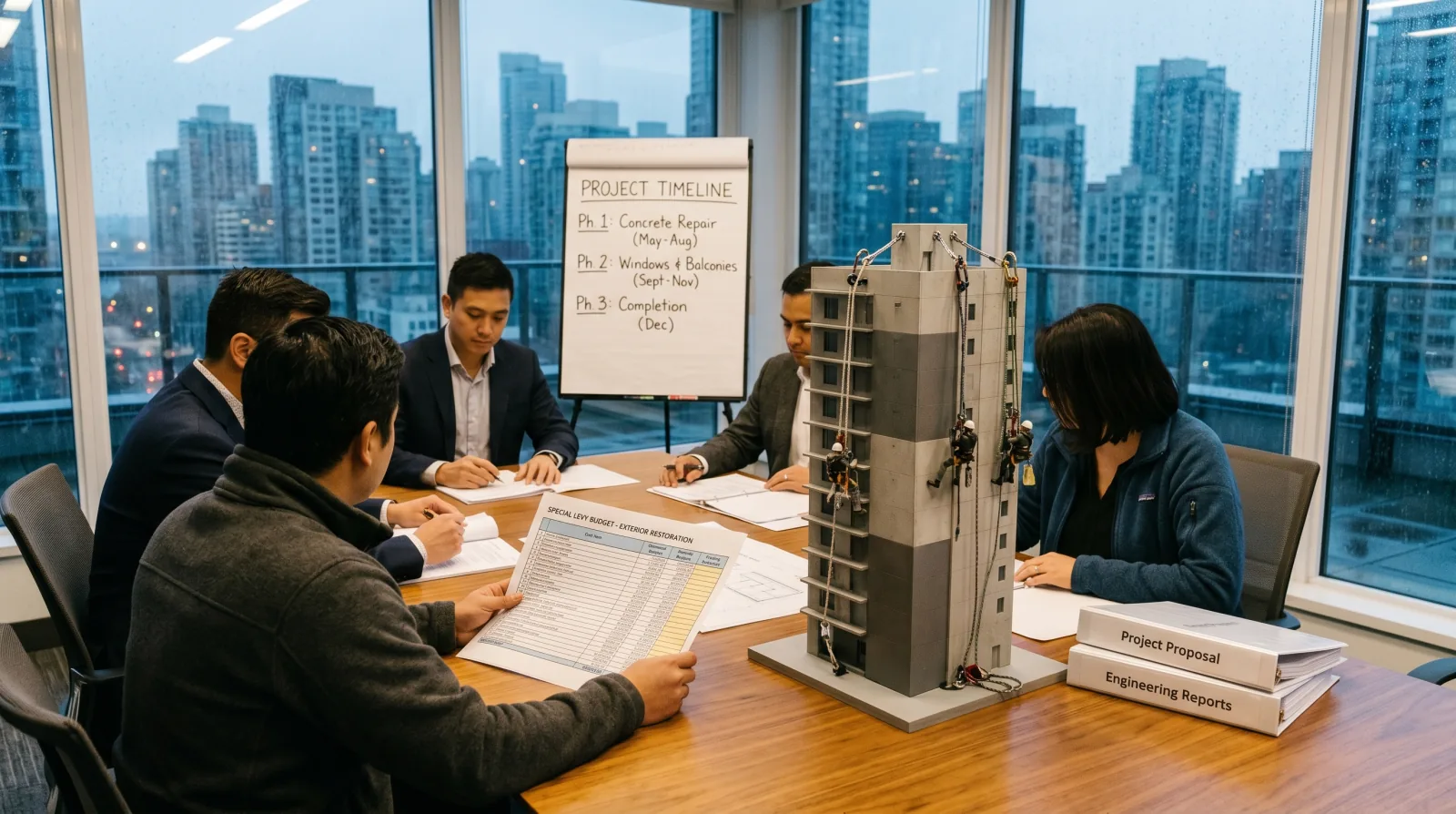 Compare
 Special levy vs. strata loan for a building envelope restoration
Both need a 3/4 vote under the Strata Property Act. A levy keeps the strata debt-free but hits owners with a lump sum; a loan spreads the cost with interest and lets urgent work start now. Cash-flow, interest, and resale effects compared.
Read the guide →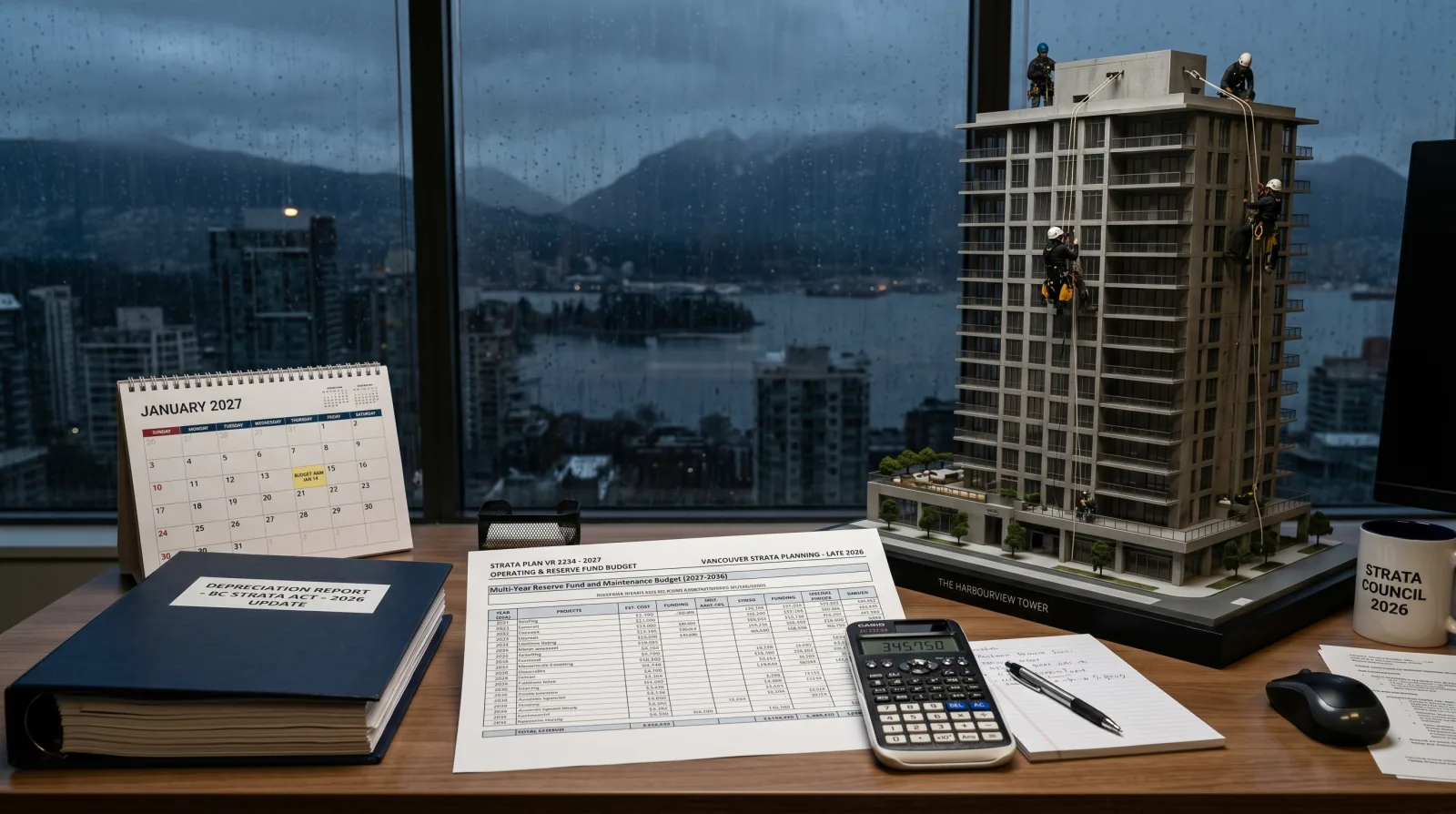 Compare
 Contingency reserve fund vs. special levy
How the reserve fund and a levy work together under the Strata Property Act, why a healthy CRF and a current depreciation report cut surprise levies, and when a levy is unavoidable for a major envelope project.
Read the guide →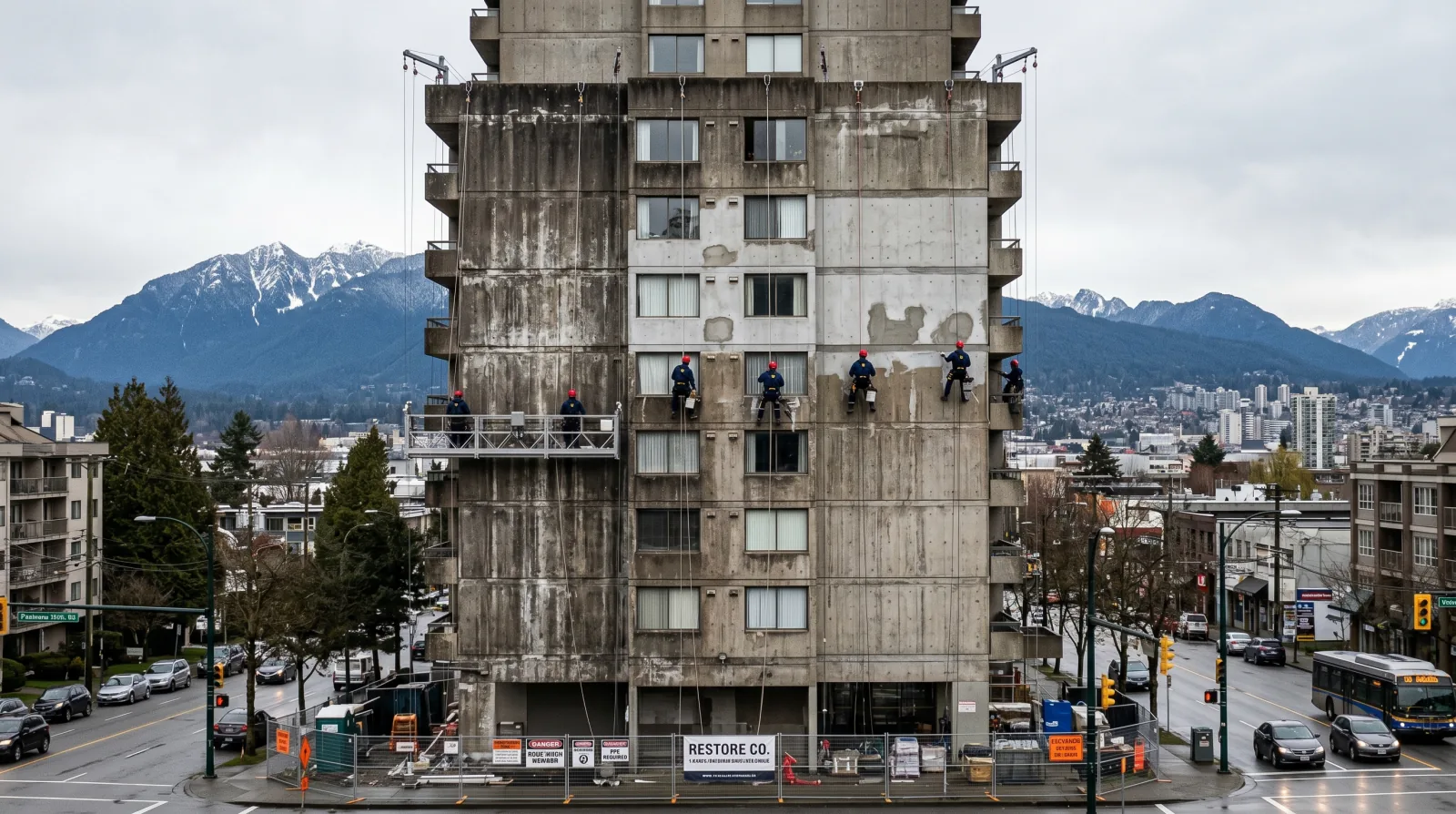 Compare
 Full envelope replacement vs. targeted (phased) repair
How the depreciation report and the engineer's assessment drive the choice between recladding the whole building and fixing only the components that have failed. Disruption, cost certainty, and service life compared.
Read the guide →Building envelope maintenance by season
Strata envelope articles
Building Envelope Warranty Claims for BC Strata Corporations
When a New Westminster strata finds an envelope defect, the first question is who pays — the 2-5-10 warranty or the owners. How to tell a warranty defect from maintenance, document it, and meet the deadlines that decide the answer.
Read article →Building Envelope Engineer vs Contractor: Roles on a BC Strata Project
On a Coquitlam strata restoration, the engineer specifies and the contractor builds. Who does what, who warranties what, and why you need both on a project.
Read article →Building Envelope Due Diligence for Vancouver Condo Buyers
Before you write an offer on a Metro Vancouver condo, the building envelope is the single biggest source of surprise costs. What to ask, what documents to read, and what red flags to walk away from — written for buyers, not for engineers.
Read article →Atmospheric Rivers and Your Building Envelope in Metro Vancouver
Atmospheric rivers drive extreme wind-driven rain at Metro Vancouver buildings. Here is how the storms find envelope weaknesses and what to check before the next one.
Read article →Rainscreen Walls and the Leaky Condo Legacy in Metro Vancouver
Why rainscreen wall design exists in BC, what the leaky condo crisis taught the industry, and how Metro Vancouver towers still depend on it to shed wind-driven rain.
Read article →The BC 2-5-10 Home Warranty and Your Building Envelope Explained
BC's 2-5-10 new home warranty covers the building envelope for 5 years. Here is what that means for Metro Vancouver strata owners and how it ties to envelope repairs.
Read article →Coordinating a Strata Exterior Restoration Project in BC
From engineer to permit to resident notice — how a Metro Vancouver strata runs an exterior restoration project, and the BC rules that govern envelope renovations.
Read article →What a Building Envelope Condition Assessment Covers in BC
A building envelope condition assessment (BECA) tells a Metro Vancouver strata what shape its exterior is really in. Here is what it inspects, tests, and reports.
Read article →The July 1, 2026 Strata Depreciation Report Deadline in Metro Vancouver
The Metro Vancouver depreciation report deadline of July 1, 2026 has passed. Here is what that means for stratas without a current report, and which building envelope work drives the 30-year reserve forecast.
Read article →Why this guide exists
Allweathercoating has worked with strata councils and property managers across Metro Vancouver for over 40 years. The same questions come up before every major project: what does the depreciation report actually mean? Who's supposed to pay for this? Why does the BECA cost so much more than the depreciation report estimated? What has to happen before we can bring this to the owners?
These guides answer those questions plainly — not as legal advice, and not as marketing, but as the answers a competent contractor gives a property manager who needs to understand the situation well enough to manage it. We reference BC law directly where it's relevant and link to primary government sources so you can verify for yourself.
If your building has a specific envelope issue — a leaking balcony, spalling concrete, failed sealants — our services pages cover the technical work. The strata guide is for the decisions that happen before the work starts.
Managing a strata with envelope work coming up?
We provide site assessments, scopes of work, and written quotes for strata and commercial envelope projects across Vancouver, North Vancouver, West Vancouver, and Burnaby. One point of contact for sealants, membranes, concrete, coatings, and access.